Operational disruption on Karlskrona-Poland route: Stena Spirit immobilised after mooring incident
A significant operational disruption occurred in the port of Karlskrona, where the passenger and car ferry Stena Spirit, operated by Stena Line, was temporarily immobilised following a mooring incident compounded by adverse weather conditions. The vessel was taken out of service, interrupting its scheduled rotation on the Karlskrona-Poland route.
logistics worldwide pomerania ports transport and forwarding tricity news28 march 2026 | 10:10 | Source: Gazeta Morska | Prepared by: Kamil Kusier | Print
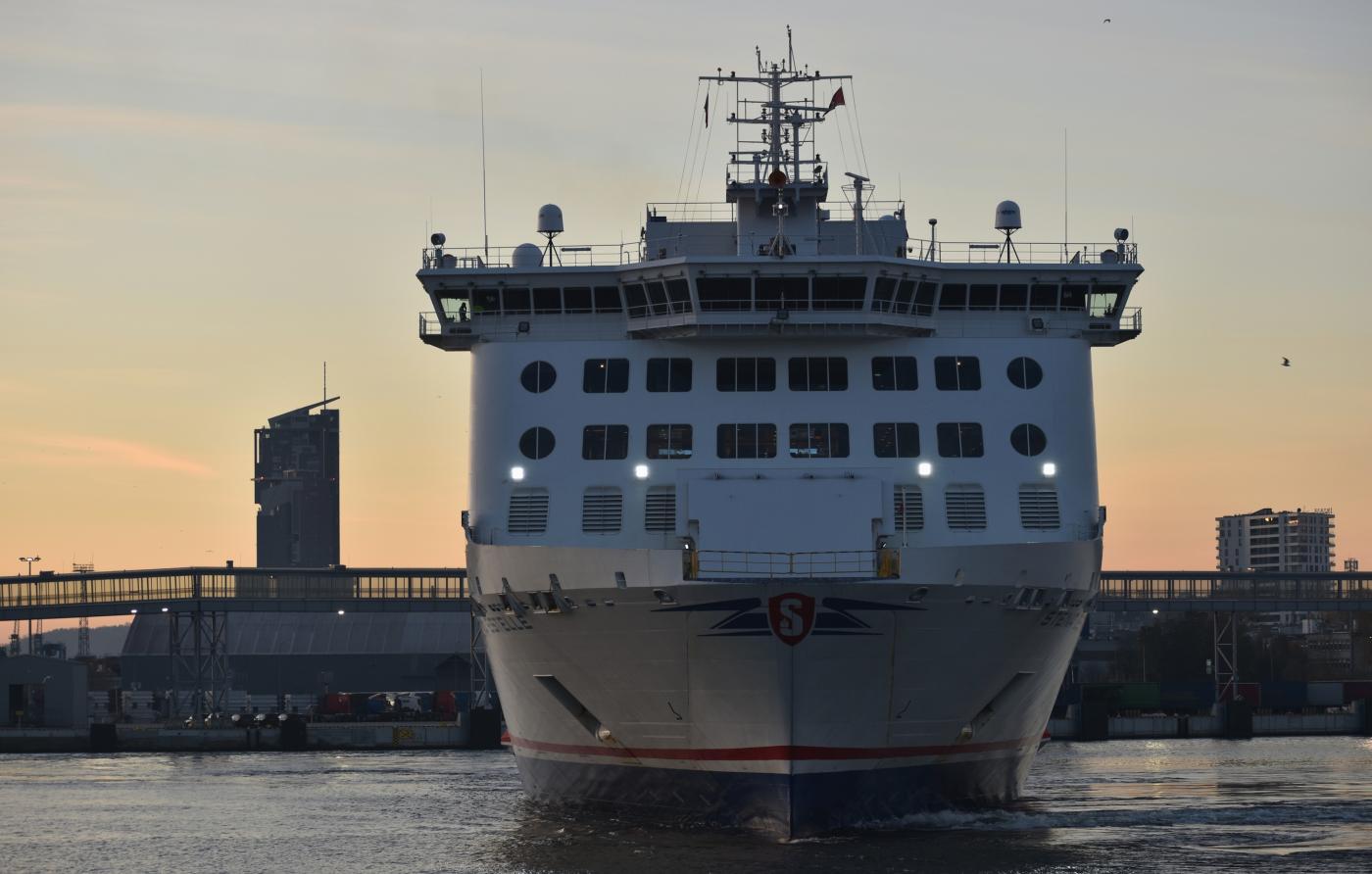
fot. Kamil Kusier / Gazeta Morska
Technical failure and harbour constraints
The direct cause of the disruption was damage to a mooring component during berthing in strong wind conditions. As a result, the vessel could not safely depart the quay without assistance. Tugboats were deployed, and additional technical inspections and safety procedures were required before the ship could be cleared for further navigation.
Passengers affected and onboard conditions
Passengers onboard faced an extended and unplanned delay, remaining on the vessel while awaiting clearance for departure. The prolonged wait represented a significant deviation from standard ferry operations. During this period, passengers experienced uncertainty regarding onward travel, while crew members maintained essential onboard services under constrained operational conditions.
Operational impact on the route
The incident triggered a ripple effect across the ferry schedule. Disruption to a single vessel’s rotation led to delays and adjustments in subsequent sailings, requiring operational rescheduling across both terminals. On a high-frequency route such as Karlskrona–Poland, even a localized incident can propagate through the wider timetable and affect multiple departures.
Public response and social media activity
The situation gained considerable attention on social media platforms, where passengers shared updates, images, and personal accounts from onboard. These real-time reactions highlighted both the human dimension of the disruption and the importance of clear and timely communication during maritime incidents. From an industry perspective, the case underscores the role of crisis communication and passenger information systems in maintaining trust during irregular operations.
Broader operational context
The Karlskrona-Poland route is a key corridor in Baltic Sea transport, serving both passenger and freight traffic. Disruptions of this nature illustrate the sensitivity of ferry networks to environmental conditions, port infrastructure performance, and vessel readiness. In tightly coordinated systems, the unavailability of a single unit can affect not only individual voyages but also the broader logistics chain.
Return to service
Following completion of required technical checks and approval procedures, the vessel resumed operations and began its voyage toward Poland. Upon arrival, further inspections are expected to confirm full operational readiness before returning to the regular schedule.
Buy us a coffee, and we’ll invest in great maritime journalism! Support Gazeta Morska and help us sail forward – click here!
Kamil Kusier
redaktor naczelny
comments
Add the first comment
see also
Drifting tanker near Malta highlights risks linked to the global “shadow fleet”
RAS exercises in the Caribbean. Dutch patrol vessel Zr.Ms. Friesland conducts joint operations with French Navy
Hormuz Strait disruptions hit container shipping as booking cancellations surge
Swedish ports record lowest ship calls in 18 years. Implications for the maritime sector
First month of Jantar Unity operations. Polsca ferry paves the way for Batory program units
Hapag-Lloyd to acquire ZIM for $4.2bn: strategic consolidation in the container shipping market
Baltic Sea water levels at a record low: a meteorological-oceanographic anomaly with major implications
Poland as Europe’s food hub. Minister Stefan Krajewski on export, security, and global competition
Gdańsk - Karlshamn ferry route strengthens Baltic shipping network
Ukraine maintains a safe maritime corridor amid ongoing war
ADVERTISEMENT
ADVERTISEMENT