Drifting tanker near Malta highlights risks linked to the global “shadow fleet”
In early March 2026 maritime authorities across the Mediterranean turned their attention to a single damaged vessel drifting between Malta and the Italian islands of Lampedusa and Linosa. The Russian LNG tanker, reportedly carrying tens of thousands of tonnes of liquefied natural gas, raised concerns among regional authorities and maritime safety experts due to the potential environmental risks associated with the incident.
security maritime economy logistics worldwide transport and forwarding news16 march 2026 | 15:44 | Source: Gazeta Morska | Prepared by: Kamil Kusier | Print
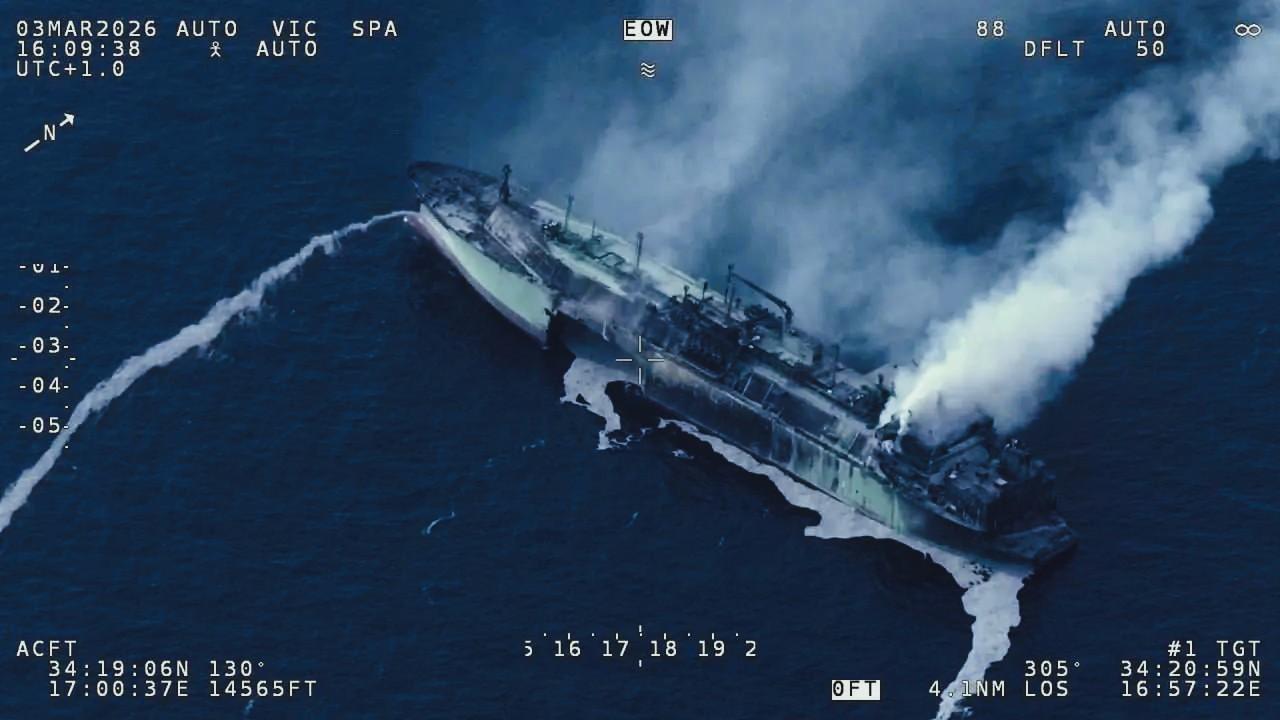
fot. x.com
According to available information, the vessel sustained significant damage earlier in the month. Some reports suggest that the damage may have been caused by an explosion or a strike involving unmanned surface vehicles, although the exact circumstances remain unclear. The crew was evacuated shortly after the incident, leaving the ship drifting temporarily without personnel on board.
The tanker is believed to be carrying approximately 60,000 tonnes of LNG as well as around 900 tonnes of marine fuel. While LNG itself does not create long-lasting marine pollution in the same way as crude oil, the sudden release of large quantities of gas could trigger fires or explosions and pose a serious hazard to nearby shipping.
Authorities in Malta established a safety exclusion zone around the vessel, while monitoring operations have been carried out both from the air and at sea. Italian authorities have also been involved in tracking the situation given the potential impact on nearby waters.
A broader context: the so-called shadow fleet
The incident quickly attracted attention within the maritime sector because of its potential link to what is commonly referred to as the “shadow fleet.” The term has been widely used in recent years to describe networks of tankers transporting oil or gas outside the framework of international sanctions and standard regulatory oversight.
The scale of these operations expanded significantly after sanctions targeting Russian energy exports were introduced in 2022. To maintain export flows, a growing number of vessels began operating through complex ownership structures involving shell companies, frequently registered in offshore jurisdictions.
Many of these ships change flags, operators and management companies over time, making it difficult to identify the ultimate beneficial owner or establish liability in case of an accident.
Estimates vary widely, but analysts suggest that several hundred tankers worldwide may currently operate within such networks.
These vessels often share several characteristics. Many are relatively old by industry standards, sometimes exceeding two decades in service. Insurance arrangements can fall outside the main Western P&I clubs, and vessel tracking is occasionally complicated by the disabling of AIS systems. In addition, ship-to-ship transfers at sea are frequently used to obscure the origin of cargoes.
For coastal states and maritime regulators, these practices raise concerns about both navigational safety and environmental liability.
Previous tanker incidents illustrate similar risks
Although the “shadow fleet” concept has gained prominence only in recent years, incidents involving damaged or drifting tankers are not new to global shipping.
Tanker Pablo explosion (2023)
In May 2023 the tanker Pablo suffered a major explosion off the coast of Malaysia. The vessel was reportedly involved in transporting Iranian crude oil outside official trade channels.
The blast caused multiple casualties among the crew and left the vessel heavily damaged. For a period of time the tanker remained adrift before emergency response teams were able to stabilise the situation. Investigations later highlighted concerns regarding the vessel’s age and maintenance standards.
The Prestige disaster (2002)
One of the most notorious tanker accidents in European waters occurred in 2002 when the tanker Prestige broke apart off the coast of Spain.
After suffering structural damage during a storm, the vessel drifted for several days while authorities debated whether it should be towed to port or moved further offshore. Eventually the hull fractured, releasing more than 60,000 tonnes of fuel oil into the Atlantic.
The spill contaminated hundreds of kilometres of coastline and became one of Europe’s worst maritime environmental disasters.
The Sanchi collision (2018)
Another major incident occurred in 2018 when the tanker Sanchi collided with a bulk carrier in the East China Sea.
The vessel was carrying more than 130,000 tonnes of condensate. After the collision it burned for several days while drifting at sea before eventually exploding and sinking. All 32 crew members on board lost their lives.
Mediterranean waters under growing pressure
The current incident near Malta highlights the particular sensitivity of the Mediterranean basin. The region is one of the busiest maritime corridors in the world, connecting European, Middle Eastern and North African energy markets.
At the same time, the Mediterranean is a semi-enclosed sea with relatively limited water exchange with the Atlantic. As a result, pollution incidents can have long-lasting environmental consequences compared with similar events in more open ocean areas.
This explains the rapid response from Maltese and Italian authorities once the drifting tanker was identified as a potential hazard.
Shipping, sanctions and maritime risk
Events such as the drifting LNG tanker near Malta illustrate how modern shipping increasingly intersects with geopolitical tensions and energy trade dynamics.
Sanctions regimes, alternative trading routes and the emergence of loosely regulated tanker networks have created new operational realities for maritime authorities and coastal states. When incidents occur, the consequences can extend beyond routine maritime safety concerns and evolve into broader environmental or political issues.
For the Mediterranean region in particular, the episode serves as a reminder that the intersection of global energy logistics and maritime safety remains a critical challenge for the years ahead.
Buy us a coffee, and we’ll invest in great maritime journalism! Support Gazeta Morska and help us sail forward – click here!
Kamil Kusier
redaktor naczelny
comments
Add the first comment
see also
MS Kapitan Poinc to deploy FRB 850 in Baltic SAR upgrade
105th life-saving mission. Naval Aviators conduct double "Heart Action" transport
Another successful medical evacuation over the Baltic Sea. Yet another intervention at offshore wind farms
Fishing trip on Vistula Lagoon cut short due to missing certificates
Cross-border SAR operation on the ice of the Gulf of Bothnia
Body recovered from the waters of Puck Bay near Babie Doły in Gdynia
RAS exercises in the Caribbean. Dutch patrol vessel Zr.Ms. Friesland conducts joint operations with French Navy
Tactical medical rescue training for services at the Maritime Border Guard
Royal Navy invests in uncrewed surface vessels. Project Beehive to accelerate development of the "Hybrid Navy"
French Navy increases operational activity from the Mediterranean to the Arctic
ADVERTISEMENT
ADVERTISEMENT