Tactical medical rescue training for services at the Maritime Border Guard
For two weeks, officers from several uniformed services improved their skills in providing medical assistance in life-threatening situations. Specialized workshops on safety and inter-service cooperation in crisis response were held at the Morski Oddział Straży Granicznej (Maritime Border Guard Regional Unit).
security pomerania border guard tricity news15 march 2026 | 11:33 | Source: Gazeta Morska | Prepared by: Kamil Kusier | Print
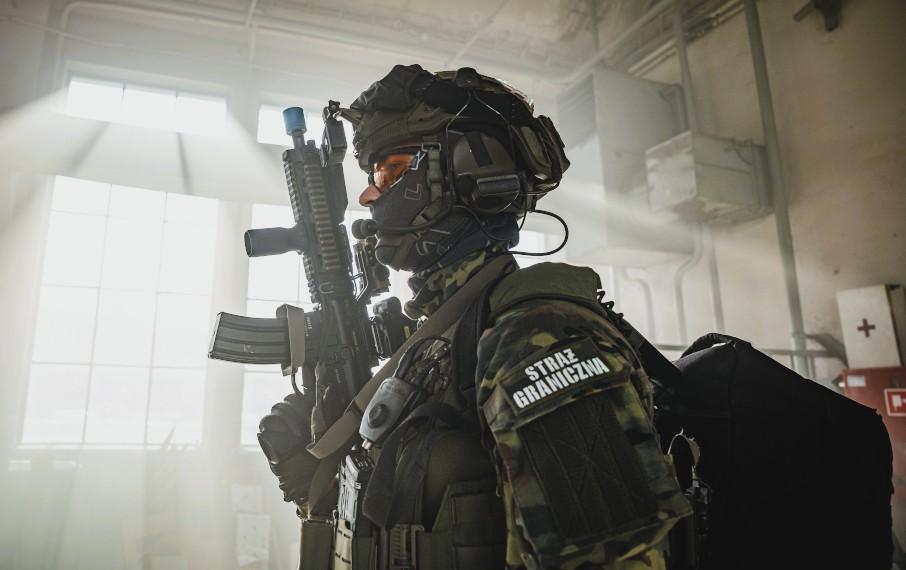
fot. ZP MOSG
The training, organised by the Operational Support Department of the unit, took place between 23 February and 6 March and brought together officers from various Border Guard regional units across Poland as well as representatives of other services responsible for security and emergency response.
As emphasized by 2nd Lt. SG Katarzyna Przybysz, spokesperson for the Maritime Border Guard, the primary objective of the workshops was to improve operational safety and enhance procedures for providing medical assistance in crisis situations.
- The main objective of the workshops was to increase the level of safety of officers and to improve the organisation of providing medical assistance in crisis situations that may occur both during combat operations and during everyday service or specialised training.
Joint training for multiple services
The workshops were attended by Operational Support officers from several Border Guard regional units: Maritime, Nadodrzański, Nadwiślański, Podlaski, Śląski, Karpacki and Warmińsko-Mazurski.
The training also included officers from the Samodzielny Pododdział Kontrterrorystyczny Policji w Gdańsku and personnel from the operational intervention group of the Straż Ochrony Kolei in Gdańsk.
Bringing together different services created an opportunity to exchange operational experience and develop cooperation between formations responsible for public safety.
- This made it possible to exchange experience between formations responsible for security.
During the workshops, participants discussed threats that may occur during tactical operations, underwater tasks and other specialised missions, as well as ways to minimise the risks associated with such activities.
Tactical medicine in practice
The programme included both theoretical sessions and intensive practical training. Officers took part in courses covering life-saving procedures and tactical medicine used in high-risk operational environments.
- The programme of the workshops included both theoretical classes and intensive practical training. Officers took part in training covering BLS (Basic Life Support), as well as TCCC (Tactical Combat Casualty Care) and TECC (Tactical Emergency Casualty Care) procedures used when providing medical assistance in a tactical environment.
Participants also analysed the differences between the TCCC and TECC standards and their application in operations conducted by law enforcement and special units.
Cooperation with medical rescue services
Part of the training was conducted in cooperation with the Lotnicze Pogotowie Ratunkowe (Air Rescue Service) and hospital emergency departments. Officers practiced procedures for preparing and handing over casualties to emergency medical teams.
- An important part of the workshops were classes conducted in cooperation with a hospital emergency department and the Air Rescue Service, during which participants improved procedures for preparing and transferring an injured person to emergency medical teams.
Special attention was given to the MIST protocol, which enables the rapid and structured transfer of key information about the condition of a casualty.
- Particular emphasis was placed on the use of the MIST protocol, which allows key information about the casualty’s condition to be passed on quickly and in an organised manner.
Realistic tactical scenarios
The training concluded with tactical exercises carried out on vessels and at training facilities of the Maritime Border Guard. The scenarios simulated high-stress operational environments similar to real missions.
- The culmination of the training was tactical combat exercises carried out on vessels and at the training facilities of the Operational Support Department of the Maritime Border Guard.
Participants practiced operational planning, decision-making under pressure and providing first aid to casualties in conditions resembling real operations.
Building common standards
The workshops also created an opportunity to discuss the standardisation of individual and team medical equipment used by operational support units and to exchange experience between different services.
- The workshops provided an opportunity to exchange experience between officers of various formations and to discuss issues related to the standardisation of individual and team medical equipment used by Operational Support Departments.
According to the Maritime Border Guard, regular training and joint exercises between services are crucial for improving both operational safety and the effectiveness of rescue operations.
- Regular training and joint exercises of various services not only improve practical skills but also help build efficient cooperation between formations responsible for security and rescue operations.
Such cooperation makes it possible to deliver fast, coordinated and effective assistance to injured persons during crisis situations.
see also
Buy us a coffee, and we’ll invest in great maritime journalism! Support Gazeta Morska and help us sail forward – click here!
Kamil Kusier
redaktor naczelny
comments
Add the first comment
see also
MS Kapitan Poinc to deploy FRB 850 in Baltic SAR upgrade
105th life-saving mission. Naval Aviators conduct double "Heart Action" transport
Another successful medical evacuation over the Baltic Sea. Yet another intervention at offshore wind farms
Fishing trip on Vistula Lagoon cut short due to missing certificates
Drifting tanker near Malta highlights risks linked to the global “shadow fleet”
Cross-border SAR operation on the ice of the Gulf of Bothnia
Body recovered from the waters of Puck Bay near Babie Doły in Gdynia
RAS exercises in the Caribbean. Dutch patrol vessel Zr.Ms. Friesland conducts joint operations with French Navy
Royal Navy invests in uncrewed surface vessels. Project Beehive to accelerate development of the "Hybrid Navy"
French Navy increases operational activity from the Mediterranean to the Arctic
ADVERTISEMENT
ADVERTISEMENT