Port Haller a strategic maritime investment for Poland and the Baltic region
In January 2026, representatives of Poland’s Law and Justice party and affiliated maritime stakeholders officially presented the Port Haller project - a full-scale Ro-Ro terminal in Choczewo, Central Pomerania, adjacent to the planned Lubiatowo‑Kopalino nuclear power plant. The initiative immediately drew attention from both the maritime industry and strategic circles. The project is seen as a practical response to Poland’s growing logistical needs, security challenges, and long-term energy and military plans, although, as with the Vistula Spit canal, some observers note its political dimension.
business maritime economy investments politics pomerania ports maritime rescue border guard news26 march 2026 | 11:23 | Source: Gazeta Morska | Prepared by: Kamil Kusier | Print
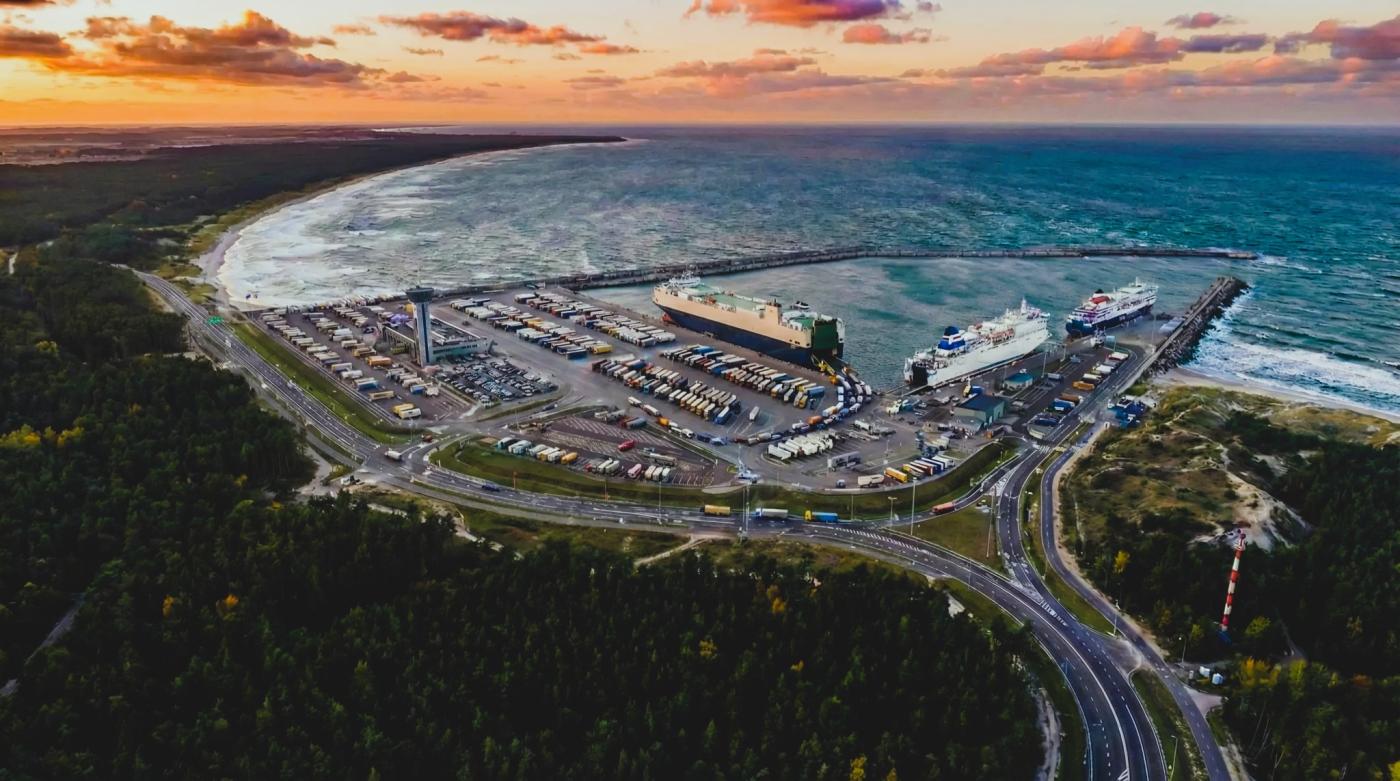
fot. Port Haller
Relieving existing ports and enhancing maritime logistics
Port Haller is intended to complement Poland’s existing seaports – Gdynia, Gdańsk, Szczecin, and Świnoujście – by relieving congestion in the transport of trucks, trailers, and military equipment (Ro‑Ro).
Recent fluctuations in port traffic, ongoing geopolitical uncertainty in the Baltic region, rising competition from Lithuanian and German ports, and offshore development projects near Ustka and Łeba, underline the need for a new port that is both economically and strategically viable.
The terminal will provide modern, high-capacity handling facilities, integrating maritime transport with road and rail networks, supported by energy from the adjacent nuclear power plant.
Strategic location and security
According to MP Kacper Płażyński, the Choczewo site was chosen with security in mind. The port is located at a safe distance from potential military threats, while offering direct access to the open Baltic Sea, allowing rapid deployment in crisis situations. Coupled with NATO plans in the Ustka region, the port can serve as a logistical hub for allied forces, facilitating the swift transport of equipment and personnel.
A base for MOSG and SAR. Poland’s first open-sea facility
Currently, the Maritime Branch of the Polish Border Guard (MOSG) lacks a base with direct access to open waters, limiting its operational and patrol capabilities.
Port Haller could address this gap, creating a modern MOSG base capable of rapid deployment into the open sea. The terminal’s expansion will support the handling of vehicles, equipment, and vessels, including operations for Search and Rescue (SAR). While SAR operations are not yet officially part of the project, the facility would significantly enhance the Polish Maritime Search and Rescue Service (MORSAR)’s ability to respond quickly within territorial waters, strengthening maritime border security.
Synergy with energy and defense plans
Proximity to the planned nuclear power plant will provide stable, low-cost energy, crucial for both commercial logistics and military operations. The project complements the planned expansion of the Elbląg port, forming a regional port system capable of handling growing maritime and offshore transport volumes.
Combined with the existing ports of Gdynia, Gdańsk, and Szczecin‑Świnoujście and NATO operational plans, Port Haller offers a comprehensive response to Poland’s future maritime challenges – both economic and security-related.
Modern logistics and trade prospects
Port Haller has the potential to attract new cargo, including Polish exporters who have increasingly relied on foreign ports such as Klaipėda.
The Ro‑Ro terminal will facilitate truck and trailer handling, particularly important for the automotive sector and military transport. Integration with rail and road networks enables efficient cargo distribution across Poland and the Baltic region.
Strategic importance for Poland and the region
Port Haller is a multifunctional, strategic investment, addressing:
- maritime trade and relief for existing ports,
- maritime security and NATO operations,
- regional development in Central Pomerania,
- SAR operations and Baltic Sea monitoring,
- support for offshore investments and nuclear energy.
It is the first Polish port combining commercial, military, and rescue capabilities, aligning with EU strategies on multifunctional ports and enhancing infrastructure resilience. Port Haller is more than a cargo terminal – it is a key element of Poland’s national maritime strategy, meeting the challenges of the future for the country and the Baltic region.
Port Haller in the context of the EU Ports Strategy 2026
On March 4, 2026, the European Union published the EU Ports Strategy 2026, one of the most important documents in EU maritime policy history. Analysis by the Independent Transport Team highlighted that the European Commission identifies the Baltic region as particularly vulnerable to hostile actions and emphasizes that ports should serve both civil and defense functions. EU funding mechanisms amounting to tens of billions of euros are also available to support infrastructure development.
Meanwhile, Poland is losing cargo – in 2024, port traffic fell by almost 9%, while Klaipėda grew by over 6%, serving Polish exporters seeking closer alternatives. Passenger transport is also affected, with limited space on routes such as Gdynia–Karlskrona.
Port Haller, in Choczewo, is a direct response to these challenges. The Ro‑Ro terminal, built to EU standards, in a location free from environmental conflicts and adjacent to the planned nuclear power plant, ensures both civil and defense capacities. The project aligns with EU guidelines and could help Poland regain lost cargo, while enhancing the strategic resilience of the region.
Looking forward - Poland’s maritime future
Port Haller, as a real and well-conceived plan, addresses long-standing needs of Poland’s maritime economy and security. Combined with the expansion of Elbląg, modernization of Gdynia, Gdańsk, and Szczecin‑Świnoujście, offshore development near Ustka and Łeba, and NATO strategies, Port Haller emerges as a forward-looking strategic investment, enhancing logistics, security, and maritime search and rescue capabilities in Poland.
This project transforms Poland’s coastline into a modern, safe, and efficient maritime hub, responding to 21st-century challenges and shaping the future of Polish shipping and Baltic security.
see also
Buy us a coffee, and we’ll invest in great maritime journalism! Support Gazeta Morska and help us sail forward – click here!
Kamil Kusier
redaktor naczelny
comments
Add the first comment
see also
Polish tactical communications breakthrough: COMP@N-Z enters NATO catalogue
Baltica 2 HDD landfall completed. Offshore wind farm cable route ready for grid connection
CRIST Offshore launches production of BC-Wind offshore power station
Poland advances satellite radar capabilities with new Eycore-MoD initiative in Kashubia
PGZ Naval Shipyard and OSI Maritime Systems: towards a new model of naval industry cooperation
Naftoport expansion in Gdańsk enters execution phase. Strategic boost to Poland’s energy security
Remontowa Shipbuilding delivers hybrid ferry Bjarkøy to Norwegian operator
Baltic Towers and Siemens Gamesa launch strategic cooperation for Baltica 2 offshore wind project
Polish universities and industry join forces to develop dual-use autonomous underwater drone swarms
PERN expands fuel logistics backbone as maritime capacity grows
ADVERTISEMENT
ADVERTISEMENT