Ukraine maintains a safe maritime corridor amid ongoing war
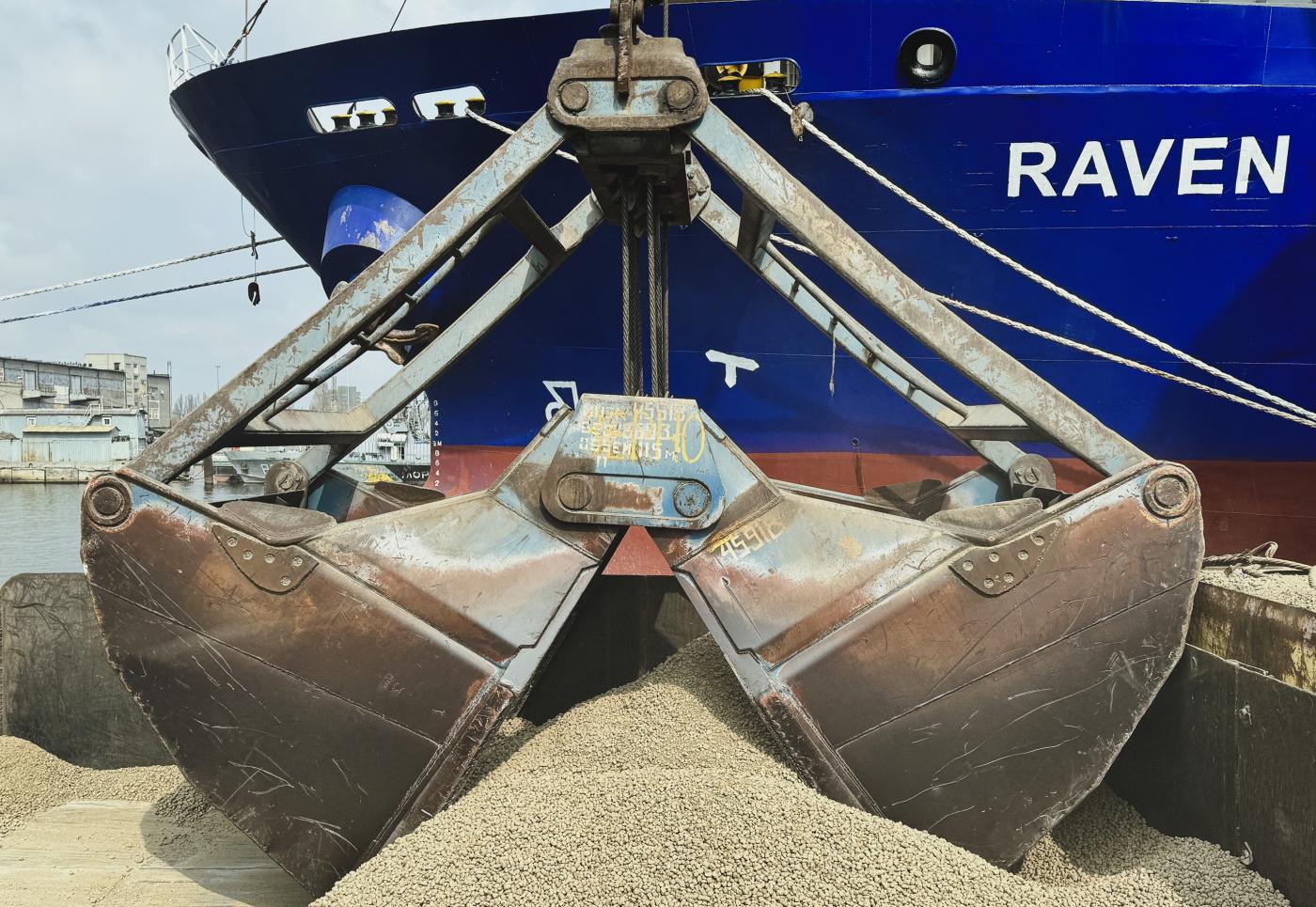
Despite ongoing hostilities and security risks in the Black Sea, Ukraine continues to ensure the uninterrupted maritime export of agricultural commodities, reinforcing its role as a key pillar of global food security. The Ukrainian maritime corridor has emerged as a vital shipping route for grain exports.
business maritime economy logistics worldwide ports transport and forwarding news06 february 2026 | 14:46 | Source: Gazeta Morska | Prepared by: Oskar Wojciechowski | Print
fot. Zarząd Portu Morskiego w Odessie
Ukraine’s strategic role in global food supply
Historically known as the “breadbasket of Europe,” Ukraine has become one of the world’s leading grain exporters. In 2021, prior to Russia’s full-scale invasion, Ukrainian agricultural production was sufficient to feed approximately 400 million people worldwide, excluding its domestic consumption.
In a peacetime scenario, Ukraine could have supplied food for up to one billion people by 2030, positioning itself as a cornerstone of global food security.
Port blockade and maritime security risks
Following Russia’s invasion on 24 February 2022, Ukrainian seaports were effectively blocked. Dozens of foreign merchant vessels and hundreds of crew members were stranded, while commercial navigation in the Black Sea faced unprecedented military risks.
With over 90% of Ukraine’s agricultural exports traditionally transported by sea, the blockade severely disrupted global grain supply chains.
The Black Sea Grain Initiative
On 22 July 2022, Ukraine, the United Nations, and Türkiye signed the Black Sea Grain Initiative in Istanbul.
Between August 2022 and July 2023, 1,004 vessels exported 32.8 million tonnes of agricultural products from the ports of Odesa, Chornomorsk, and Pivdennyi to 45 countries, helping stabilize global food prices.
Ukrainian maritime corridor – a national solution
After Russia’s unilateral withdrawal from the agreement in July 2023, Ukraine established its own Ukrainian maritime corridor, enabling civilian vessels to safely access the ports of Greater Odesa.
Since its launch in August 2023, more than 100 million tonnes of grain have been exported via this corridor.
Implications for the maritime industry
Despite continued attacks on port infrastructure, Ukraine has demonstrated remarkable operational resilience. For shipowners, charterers, and port operators, the Ukrainian maritime corridor represents a stable bulk cargo flow in the Black Sea region and continued access to key export markets in Africa and Asia.
Buy us a coffee, and we’ll invest in great maritime journalism! Support Gazeta Morska and help us sail forward – click here!
Oskar Wojciechowski
użytkownik
comments
Add the first comment
see also
Orlen Neptun deploys V-LiDAR buoys at Baltic West ahead of Poland's 2027 offshore wind auction
Equinor takes over Bałtyk 2 and 3 O&M base in Łeba. Port to serve 1.44 GW of offshore wind for 30 years
Port Gdański Eksploatacja secures NATO NCAGE code. Gdańsk port company lines up for defence tenders
Ex-Enterprise towed to Mobile under $418.5m contract. Test case for Nimitz-class disposal begins
Energa renames Gdańsk gas plant company as foundations for 6,000-tonne turbine and boiler are laid
WB Group takes Polish drones from Tokyo to SOFEX in Jordan in a single week
PGE books Gdańsk’s T5 terminal for the long haul: Baltica 2 first, then more offshore wind farms
Polish SAR’s new rescue vessel Mistral launched at Kewatec in Finland
Port of Gdańsk opens T5 offshore installation terminal, bringing Baltica 2 logistics home from Bornholm
Łeba beaches to become more accessible with new mats funded by Poland’s nuclear investor
ADVERTISEMENT
ADVERTISEMENT