The Polish Navy Rebuilds Its Logistics Backbone Supply Program Back on Track. Will Poland Build a New Fleet Tanker?
After years of delay, the Polish Navy may finally acquire a modern replenishment vessel. On July 3rd, the Armament Agency of Poland announced the launch of market consultations for the long-awaited Supply program—a strategic project to construct a new fleet tanker designed to support naval operations at sea. Several major Polish shipyards are in contention, and the program could provide not only an operational breakthrough for the Navy, but also a major boost to the national shipbuilding sector.
logistics navy shipbuilding industry defense industry tricity news09 july 2025 | 07:17 | Source: Gazeta Morska | Prepared by: Kamil Kusier | Print
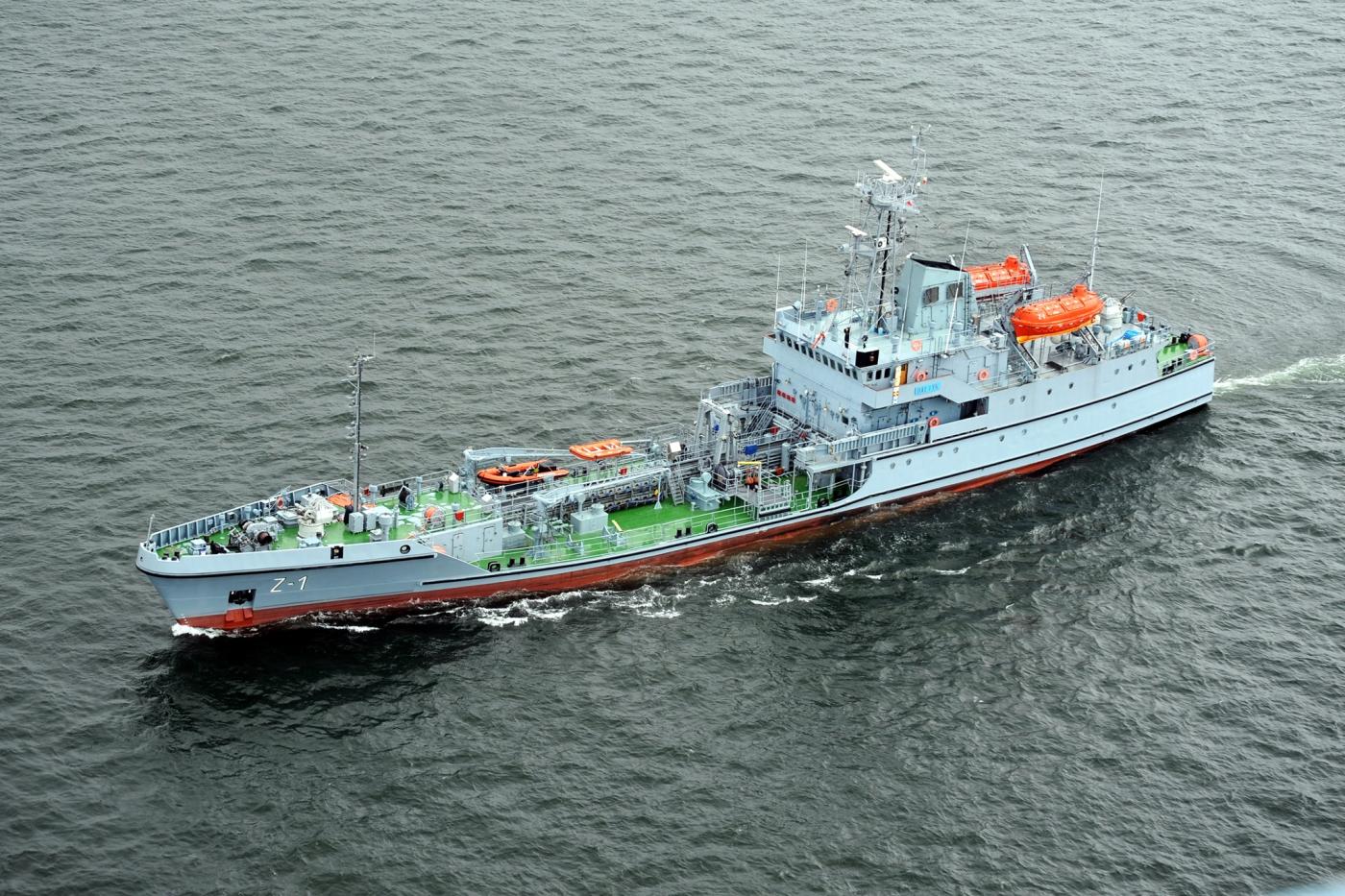
ORP Bałtyk Z-1 | fot. Marynarka Wojenna RP
Logistics – A Forgotten Pillar of Naval Power
While Poland’s naval modernization in recent years has focused heavily on combat platforms—such as the Miecznik frigates, Kormoran II minehunters, and future submarines—its logistical support capacity has remained underdeveloped. Yet, no fleet can operate effectively without the ability to refuel, resupply, and sustain prolonged deployments at sea.
Currently, the Polish Navy relies on ORP Bałtyk, a support tanker built in 1991. Although still in service, the ship is outdated, lacks NATO-standard replenishment capabilities, and cannot meet the demands of modern operations. The absence of a capable fleet oiler limits both national autonomy and the ability to contribute meaningfully to allied maritime missions.
‘Supply’ Program Relaunched – This Time for Real
On July 3rd, 2025, the Armament Agency officially launched preliminary market consultations for the Supply program. The goal is to procure a new fleet tanker capable of transporting fuel, fresh water, provisions, and containerized supplies. The vessel must feature underway replenishment capabilities (RAS), NATO-compliant systems, and support for extended missions.
This is not the first time Poland has considered such a vessel. The Supply concept was previously discussed between 2017 and 2019, but no contract materialized. Now, the initiative has returned with stronger institutional backing and clearer strategic urgency. The intent is no longer exploratory—it is operational.
Domestic Industry Positioned to Deliver
Poland’s shipbuilding industry is now significantly better prepared to deliver a project of this scale. Several domestic yards have the facilities, expertise, and production capacity to build a modern auxiliary vessel to NATO standards.
At the forefront is PGZ Naval Shipyard (PGZ SW) in Gdynia—the flagship shipbuilding entity of the Polish Armaments Group (PGZ) and main contractor for the Miecznik frigates. PGZ SW has both technical capabilities and proven integration experience in military ship construction.
Also in contention is Nauta Shiprepair Yard, a PGZ subsidiary, which brings its own competencies in auxiliary and logistics shipbuilding. Another key player is Remontowa Shipbuilding SA in Gdańsk—Poland’s largest commercial and military shipbuilder—currently constructing a series of Kormoran II class mine countermeasure vessels.
Each yard brings distinct advantages—but all share one key qualification: the ability to deliver a complex naval vessel within national industry frameworks and NATO standards.
see also
International Context: What Other Navies Are Doing
Modern replenishment oilers are an essential part of NATO navies. The U.S. Navy operates the large Lewis and Clark-class T-AKE vessels, which provide global support to carrier strike groups. The UK Royal Fleet Auxiliary uses the Tide-class, built to supply its Queen Elizabeth-class aircraft carriers.
Germany operates the versatile Berlin-class, capable of supporting both military and humanitarian missions. Norway commissioned KNM Maud, a multirole support ship with medical and logistics capabilities. Canada is building the Protecteur-class Joint Support Ships, while Spain and Italy field their own large replenishment ships—Cantabria and Etna, respectively.
These vessels extend operational range, reduce dependence on ports, and support multinational missions—core requirements for any modern blue-water or expeditionary-capable navy. For Poland, aligning with such capability is essential to meet alliance expectations.
Domestic Advantage – But All Shipyards Matter
While PGZ SW benefits from its central role in Polish naval programs and strong ties with the Ministry of Defence, all three main shipyards—PGZ SW, Nauta, and Remontowa—offer credible pathways to deliver. PGZ SW may serve as integrator and project lead, while Nauta provides valuable auxiliary ship experience. Remontowa, with its deep bench of engineers and strong industrial output, remains a key partner and potential subcontractor—or even prime, depending on the structure.
This competition among experienced yards reflects a healthy industrial base and provides the Ministry with options for balancing strategic goals, industrial policy, and delivery certainty.
Unassuming Yet Strategic
Fleet oilers do not capture public imagination like frigates or submarines. But from an operational standpoint, they are just as vital. A replenishment tanker allows extended missions, enables allied cooperation at sea, and provides medical and humanitarian support far from home waters.
Given the shifting security environment in the Baltic Sea, NATO’s increased presence in the region, and Poland’s evolving naval doctrine, a modern support vessel is not an optional asset—it is a strategic necessity.
Next Steps Toward Contracting
The market consultation phase is open until July 18, 2025. This period will allow the Ministry of Defence and Armament Agency to finalize the tactical and technical assumptions and decide on the procurement model—most likely a restricted tender or negotiated contract.
Should the timeline hold, a contractor could be selected in 2026, with delivery scheduled for 2028. This would mark Poland’s first purpose-built replenishment vessel in over three decades, designed from the keel up to meet 21st-century NATO standards.
For the Navy, it’s a vital capability gap finally addressed. For shipbuilders, it’s a critical industrial challenge. For the state, it’s a move toward real operational autonomy at sea. The tanker may not fight—but it enables the fleet to fight. And that’s why its return is so important.
see also
Buy us a coffee, and we’ll invest in great maritime journalism! Support Gazeta Morska and help us sail forward – click here!
Kamil Kusier
redaktor naczelny
comments
Add the first comment
see also
Swedish ports record lowest ship calls in 18 years. Implications for the maritime sector
First month of Jantar Unity operations. Polsca ferry paves the way for Batory program units
Hapag-Lloyd to acquire ZIM for $4.2bn: strategic consolidation in the container shipping market
Baltic Sea water levels at a record low: a meteorological-oceanographic anomaly with major implications
Poland as Europe’s food hub. Minister Stefan Krajewski on export, security, and global competition
Gdańsk - Karlshamn ferry route strengthens Baltic shipping network
Ukraine maintains a safe maritime corridor amid ongoing war
Connecting Poland with Sweden for 50 years: Polferries on the Baltic, past, present, and future of shipping
Port of Gdynia surpasses 1 million TEU for the first time in history
ORP Czernicki strengthens logistical capabilities of NATO’s SNMCMG1 at sea
ADVERTISEMENT
ADVERTISEMENT