A new formation of the Polish Armed Forces. Medical forces as a new pillar of Poland’s security
On Monday, September 15, Minister of National Defence Władysław Kosiniak-Kamysz announced the establishment of a new branch of the Polish Armed Forces – the medical forces. The decision is a direct response to the lessons learned from the war in Ukraine and the growing need to strengthen medical security both on the battlefield and in crisis situations.
security politics news15 september 2025 | 13:30 | Source: Gazeta Morska | Prepared by: Kamil Kusier | Print
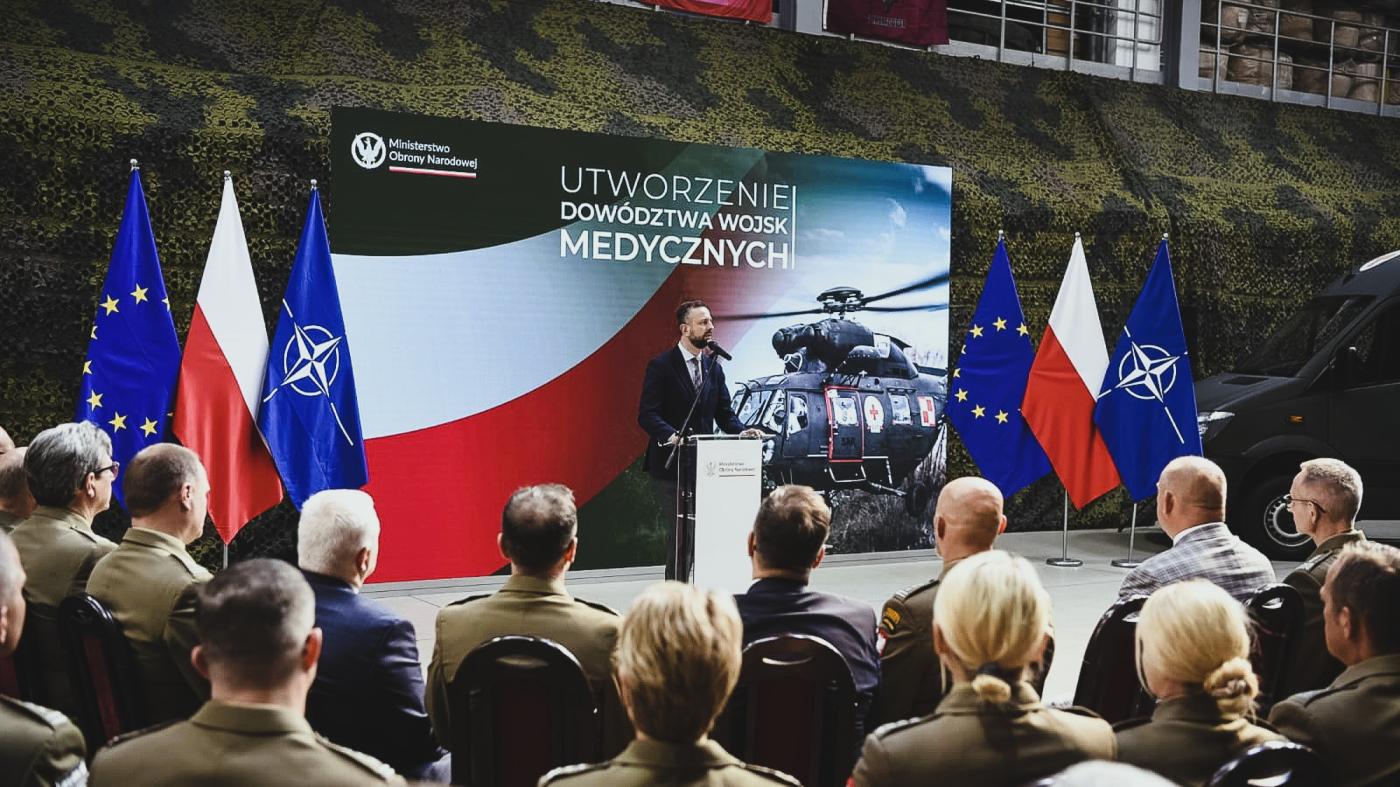
fot. Ministerstwo Obrony Narodowej
A standalone structure within the armed forces
Until now, Poland’s military health service has been dispersed across various institutions within the Ministry of Defence and the General Command. The new medical forces will consolidate these resources into a unified structure, ensuring faster and more effective response capabilities.
- We want a safe home for Poland. (…) That is why the implementation of lessons learned from Ukraine will be one of the key tasks for the Medical Forces Command. We are establishing this command to enable growth – both for soldiers and the civilian environment. We want to engage everyone who works in hospitals today. We must be well-prepared and ready to cooperate with the military health service, said Minister Kosiniak-Kamysz.
Operational from September 2025
The medical forces are expected to become operational in September 2025. A commander has already been appointed.
- The most important task is proper preparation for a time of crisis, for a time of war. Today we are establishing the Medical Forces Command (…) Colonel Dr. Mariusz Kiszka – currently deputy commander for medical affairs at the 4th Military Clinical Hospital with Polyclinic – has been appointed as the commander of the Medical Forces, announced the minister.
MedLegion – modeled after the CyberLegion
Alongside the medical forces, the ministry will launch the MedLegion, designed to integrate civilian doctors, nurses, and paramedics into the military system for training and crisis support.
- The strong medical base linked with Kraków and the region is a good opportunity and guarantee of strong cooperation with the new command. (…) Today, we want as many doctors and medical staff as possible to join the so-called MedLegion, which will group and train specialists according to their skills. This is our next initiative, modeled after the functioning of the CyberLegion, explained Kosiniak-Kamysz.
Lessons from Ukraine and the role of volunteers
The creation of the medical forces is closely tied to the experience of the ongoing war across Poland’s eastern border.
- In this room are those who have been to Ukraine, who know what it means to bring aid and save lives, who have taken part in many medical rescue operations. I want to thank all the volunteers who save lives in this way and raise their qualifications. Since the beginning of the war, an important role has been played by reserve lieutenant Damian Duda, who created an extraordinary foundation and system of medical support and evacuation for those in need, stressed the minister.
A strategic project for national security
Deputy Minister of Defence Cezary Tomczyk emphasized that the medical forces have been one of the top strategic projects in recent months.
- One of the first tasks assigned to us by the Minister – both to myself and to the General Staff – was the creation of the medical forces. I am glad that today we are completing one stage and beginning another – so that the medical forces can start functioning, and together with the Minister of Health, provincial governors, and the Armed Forces, we can prepare Poland for every possible scenario, said Tomczyk.
Maritime significance
The new formation will also play a role in coastal and port regions, where naval units and critical infrastructure are concentrated. Enhanced medical capabilities will strengthen the security of Navy personnel and maritime industry workers in times of crisis.
see also
Buy us a coffee, and we’ll invest in great maritime journalism! Support Gazeta Morska and help us sail forward – click here!
Kamil Kusier
redaktor naczelny
comments
Add the first comment
see also
Defence.Hub strengthens capabilities in technologies supporting maritime infrastructure security
Damen to build 13 SAR units for Turkey. Strengthening search and rescue in the Aegean Sea
Sebastian Kluska, director of MSPiR SAR: No room for improvisation at sea. Skills and judgment matter
MS Kapitan Poinc to deploy FRB 850 in Baltic SAR upgrade
105th life-saving mission. Naval Aviators conduct double "Heart Action" transport
Another successful medical evacuation over the Baltic Sea. Yet another intervention at offshore wind farms
Fishing trip on Vistula Lagoon cut short due to missing certificates
Drifting tanker near Malta highlights risks linked to the global “shadow fleet”
Cross-border SAR operation on the ice of the Gulf of Bothnia
Body recovered from the waters of Puck Bay near Babie Doły in Gdynia
ADVERTISEMENT
ADVERTISEMENT