Winter on Puck Bay: ice conditions, natural values, and responsible use
Puck Bay is a unique coastal area along the Polish Baltic Sea where, under favorable winter conditions, a solid ice cover can form. Its geographical location, partial enclosure by the Hel Peninsula, and shallow bathymetry allow the bay to freeze faster and more consistently than the open sea, creating rare opportunities for winter recreation and observation of natural processes.
security other marine lifestyle pomerania marine tourism and recreation08 january 2026 | 20:57 | Source: Gazeta Morska | Prepared by: Kamil Kusier | Print
fot. Chałupy
This phenomenon is not only a visual and environmental attraction but has also held practical significance for centuries, shaping the way local communities historically used the frozen bay.
How the bay freezes
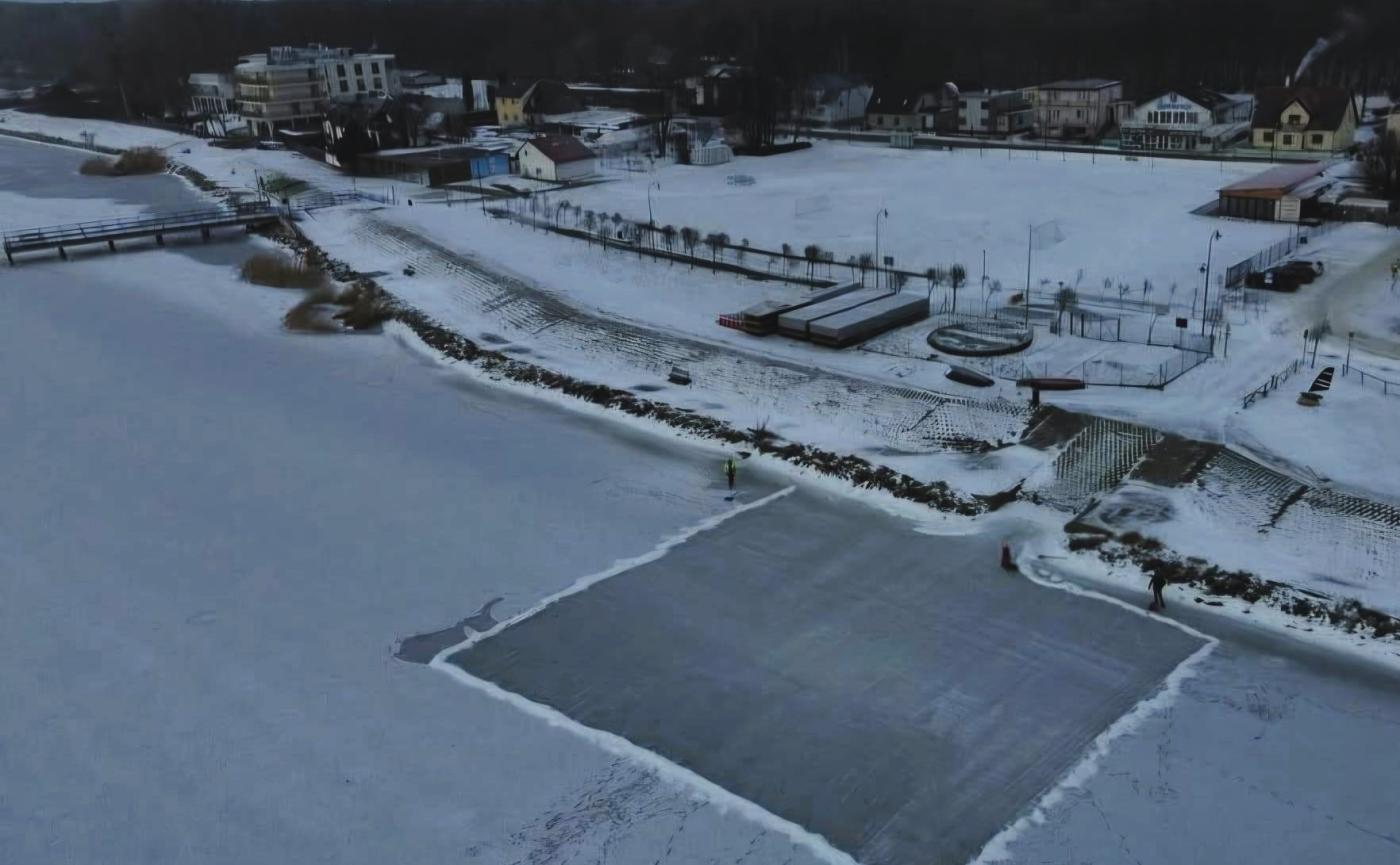
The ice formation process in Puck Bay is gradual and spatially uneven. Ice first appears along the shallow, sheltered coastal areas, where water volume is minimal and heat loss to the atmosphere is fastest. In the Chałupy area, water depth rarely exceeds half a meter, which allows ice to form quickly and even create natural skating surfaces.
However, shallow water does not automatically equal safety. Ice thickness and stability can vary dramatically over short distances due to wind exposure, water salinity, and local currents. Even visually uniform ice can have weak spots, especially near reed beds, historical water channels, or small underwater depressions.
Historical context
Historical records indicate that Puck Bay frequently froze during harsh winters. Frozen waters served as temporary transport routes between coastal settlements, facilitated under-ice fishing, and functioned as natural extensions of the shoreline. Although modern winters tend to be shorter and more variable, periods of extensive bay ice still occur and continue to attract both residents and visitors.
Shallow water, but caution required
The Chałupy ice rink area is exceptionally shallow, with water depths around 0.5 meters in many places. This enables rapid ice formation but should not lead to complacency. Ice over shallow water remains dynamic and can be weakened by temperature changes, wind, or local water flows. Even in small areas, thickness may vary significantly, creating potential hazards for those on the ice.
Responsible ice use
Every activity on the frozen bay should be preceded by an assessment of current conditions. Ice thickness should be measured in multiple locations, not just at the entry point. Weather forecasts and recent temperature trends must also be considered, as temporary thaws, strong winds, or snowfall can compromise ice stability.
Current ice thickness in the Chałupy area is approximately 15 centimeters, with forecasts indicating further thickening in the coming days. While this increases load-bearing capacity, caution remains essential. Visitors should avoid gathering in large groups, carry basic safety equipment such as ice picks and a rope, and steer clear of areas with known currents, inlets, or ports.
Safe engagement with the winter bay
Winter on Puck Bay offers a unique natural and recreational experience along the Baltic coast. It provides rare opportunities to enjoy skating, walking, and observing the winter landscape. Safe use of these natural assets requires awareness, knowledge of the bay’s dynamics, and continuous monitoring of ice and weather conditions. Even as ice thickens day by day, responsible behavior remains the foundation of safe enjoyment.
Buy us a coffee, and we’ll invest in great maritime journalism! Support Gazeta Morska and help us sail forward – click here!
Kamil Kusier
redaktor naczelny
comments
Add the first comment
see also
Defence.Hub strengthens capabilities in technologies supporting maritime infrastructure security
Damen to build 13 SAR units for Turkey. Strengthening search and rescue in the Aegean Sea
Sebastian Kluska, director of MSPiR SAR: No room for improvisation at sea. Skills and judgment matter
MS Kapitan Poinc to deploy FRB 850 in Baltic SAR upgrade
105th life-saving mission. Naval Aviators conduct double "Heart Action" transport
Another successful medical evacuation over the Baltic Sea. Yet another intervention at offshore wind farms
Fishing trip on Vistula Lagoon cut short due to missing certificates
Drifting tanker near Malta highlights risks linked to the global “shadow fleet”
Cross-border SAR operation on the ice of the Gulf of Bothnia
Body recovered from the waters of Puck Bay near Babie Doły in Gdynia
ADVERTISEMENT
ADVERTISEMENT