The sea as an instrument of power: the maritime dimension of the U.S. National Security Strategy of 2025
The new National Security Strategy of the United States, signed in November 2025, constitutes Washington’s principal strategic communication outlining its vision of both domestic and external security. The document has triggered strong reactions and considerable controversy, particularly in Europe.
security worldwide opinions and comments politics commentary news03 january 2026 | 11:33 | Source: Gazeta Morska | Prepared by: dr Łukasz Wyszyński, dr Paweł Kusiak | Print
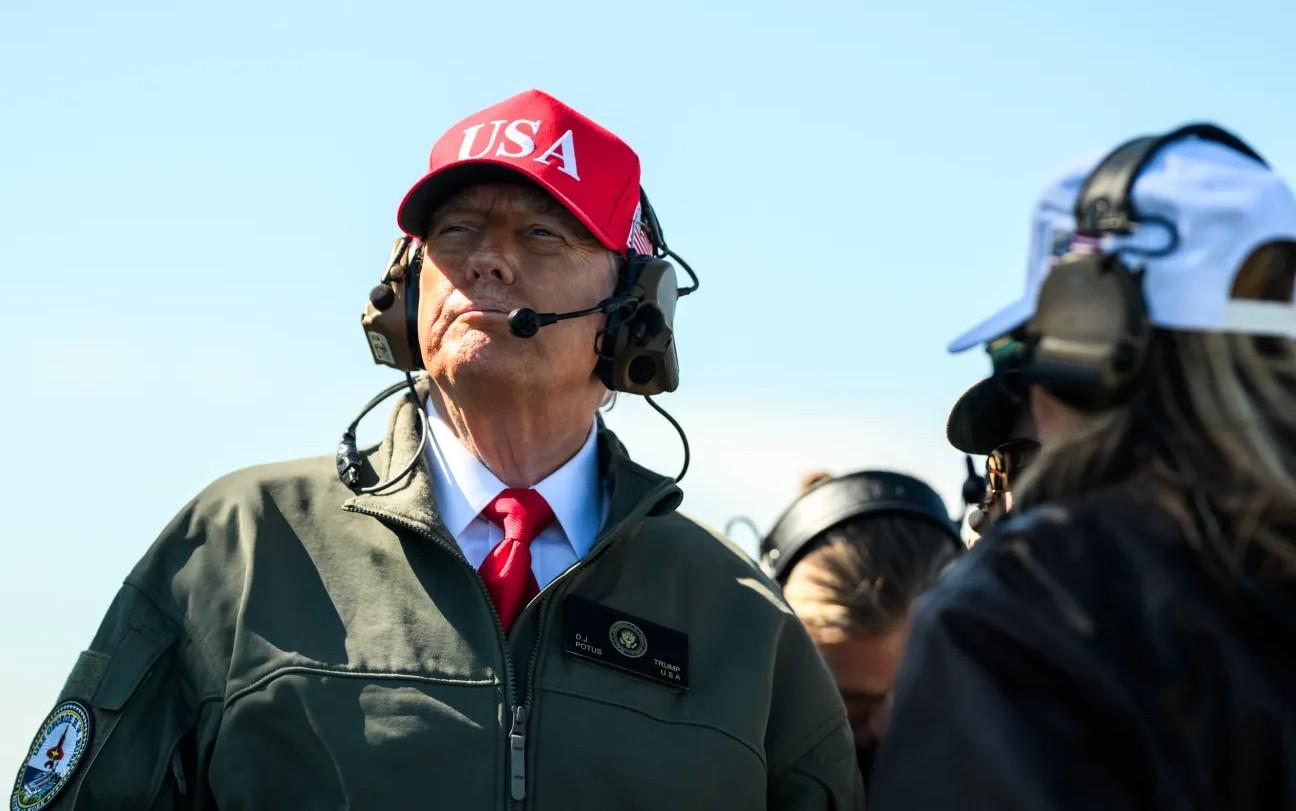
fot. White House
Despite numerous commentaries suggesting a fundamental reversal in U.S. foreign policy, the Strategy partly aligns with trends observable in American policy for more than a decade. Nevertheless, it articulates several issues far more explicitly and radically than expected. Most notable in this regard are isolationist undertones implying a reduction of U.S. strategic engagement primarily to the Western Hemisphere, as well as explicit criticism of Europe, including normatively charged reproaches linked to the broader contestation of globalization and liberal institutionalism—a system whose emergence and development should, paradoxically, be attributed largely to the United States itself.
Another focal point for analysts, alongside the blunt articulation of American interests, is the hierarchy of challenges and threats identified by the Strategy. China is designated as Washington’s principal global challenger, while Russia is described as a significant factor in the global balance of power—a formulation that has generated particular concern among European NATO members and Ukraine.
The hegemon has lost its position
The Strategy marks a clear return to classical geopolitical thinking about state power. Signed by President Donald Trump, it frames the international environment as an arena of intensifying multipolar competition in which the United States is no longer an uncontested hegemon, but remains one of the key poles of the global balance of power.
Consequently, the document signals a departure from multilateralism and from efforts to sustain or defend U.S. leadership through international organizations and multilateral agreements. These are replaced by an explicit “America First” approach, whereby U.S. engagement is guided primarily by the pursuit of Washington’s political, economic, and strategic objectives. This represents a sharp break from the 2022 National Security Strategy adopted under President Joe Biden, which emphasized shared values and collective interests within alliance frameworks.
Against this backdrop, a key question emerges: what role does the sea—and maritime spaces more broadly—play in the current U.S. National Security Strategy? Given the geographical position of the United States and the historical evolution of its instruments of power since the early twentieth century, maritime domains have always been fundamental to Washington’s position in the international system. The question, therefore, is whether the new Strategy alters this long-standing perception.
You cannot be everywhere
The new Strategy assumes that U.S. national security can no longer rest on permanent global presence and unrestricted power projection across all continents—an approach historically realized through an extensive network of land, air, and naval bases worldwide.
Instead, the document advocates a more selective but simultaneously harder prioritization of interests, which inevitably reshapes U.S. presence and power-projection capabilities across regions. Within this framework, the sea functions as a critical force multiplier, enabling flexible military projection, rapid crisis response, and deterrence without the political and economic costs associated with large-scale land deployments and protracted expeditionary wars.
At this point, it becomes evident that the Strategy does not abandon the logic of global presence or maritime power as articulated by Alfred Thayer Mahan. Rather, it increasingly reflects Julian Stafford Corbett’s emphasis on the sea as a medium for maintaining presence in key regions and for selective power projection—troop movements, maritime strikes, and access operations. What remains constant in both traditions, and in the current Strategy, is the underlying rationale for U.S. maritime presence: the centrality of maritime spaces to economic security, freedom of navigation, and influence over other maritime security stakeholders.
Accordingly, freedom of navigation emerges as a core pillar of the Strategy. It is explicitly linked to global supply-chain stability, energy security, and the resilience of the U.S. economy. Any attempt to monopolize maritime spaces, impose control over sea lanes, or condition their accessibility is framed as a strategic threat to U.S. interests—an enduring feature of American maritime thinking.
However, in the context of growing unilateralism and a realist interpretation of the international system, control of the seas is increasingly conceived as an instrument of economic and political coercion capable of paralyzing entire regions or even the global economy. Maritime domains thus become one of the principal arenas of great-power competition—de facto between the United States and China. Assuming the end of Pax Americana, control over selected maritime areas is viewed not only as a tool of power projection but also as a potential vulnerability. As a result, U.S. interpretations of freedom of navigation as a universal good rooted in international law may become increasingly unilateral.
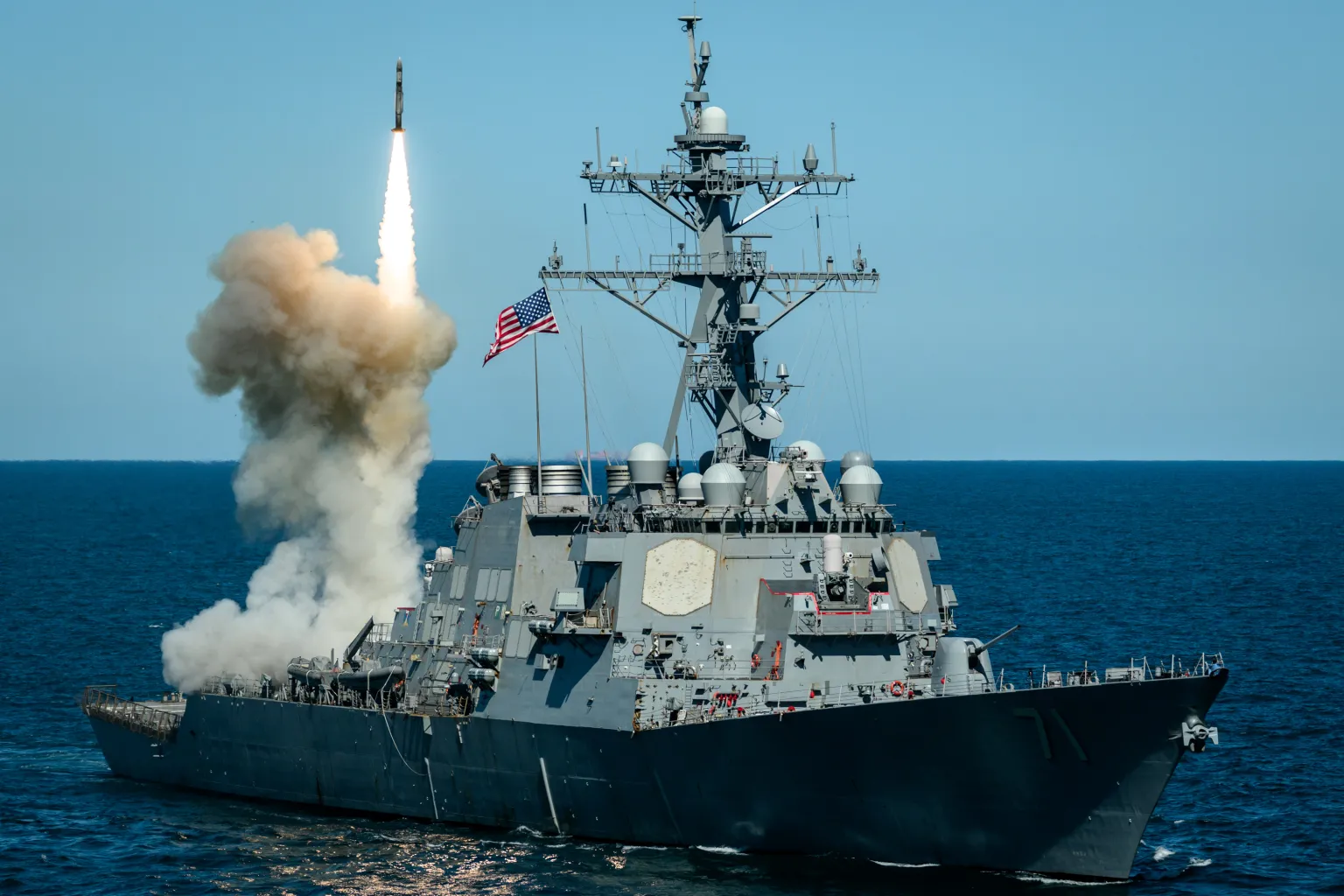
Preventing a conflict over Taiwan
The intersection of maritime economics and systemic power shifts is most clearly visible in the Strategy’s regional prioritization. The Indo-Pacific is designated as the central theater. The document states that the region already accounts for nearly half of global GDP measured in purchasing power parity terms and will remain the primary arena of geopolitical competition in the twenty-first century.
Indo-Pacific sea lanes constitute the backbone of global trade and a space in which China’s growing ambitions collide with U.S. interests and those of its allies. Taiwan and the South China Sea occupy a particularly prominent role. Taiwan’s importance is not limited to its position in the global semiconductor supply chain; it holds fundamental geostrategic value by shaping access to the Second Island Chain and separating Northeast and Southeast Asian theaters.
Accordingly, the Strategy identifies preventing a conflict over Taiwan—preferably through sustained military superiority—as a top U.S. national security priority. This objective is driven not only by economic considerations but also by the imperative to constrain Beijing’s regional power-projection capabilities, for which control over Taiwan would be a critical enabler.
With respect to the South China Sea, the Strategy warns that domination of this maritime space by a single power could enable a quasi-blockade of the world’s most vital trade route, with severe consequences not only for the U.S. economy but also for allies across Asia and Europe. Such a scenario would also represent a strategic defeat in terms of supporting regional partners resisting Chinese pressure, including the Philippines and Vietnam.
The U.S. response is envisaged as a combination of expanding its own naval capabilities and deepening cooperation with states equally dependent on freedom of navigation. The Strategy calls for a deterrence network based on access to allied ports, bases, and infrastructure, as well as increased defense spending among regional partners such as Japan, Taiwan, the Philippines, Australia, and South Korea. This approach reflects both Mahanian concepts of limited sea control and the logic of offensive realism, whereby preventing a rival from dominating a key region is essential to national security.
The Trump Corollary
Simultaneously, the Strategy shifts attention toward the Western Hemisphere, explicitly reaffirming and expanding the Monroe Doctrine through what is termed the “Trump Corollary.” In practice, this frames control of maritime access to the Americas as an existential U.S. interest. The Strategy rules out the presence of extra-hemispheric military forces or capabilities that could threaten U.S. security, including control over ports, critical infrastructure, or key maritime routes.
This perspective echoes Friedrich Ratzel’s concept of a pan-region, positioning the Western Hemisphere as America’s natural sphere of expansion and strategic responsibility. Concrete manifestations of this logic can be observed in efforts to acquire or influence port infrastructure worldwide—including the Panama Canal and parts of the container terminal in the Port of Gdynia—through entities such as BlackRock and CK Hutchison. The involvement of both Washington and Beijing underscores how maritime infrastructure has become a focal point of global competition, as clearly recognized in the new Strategy.
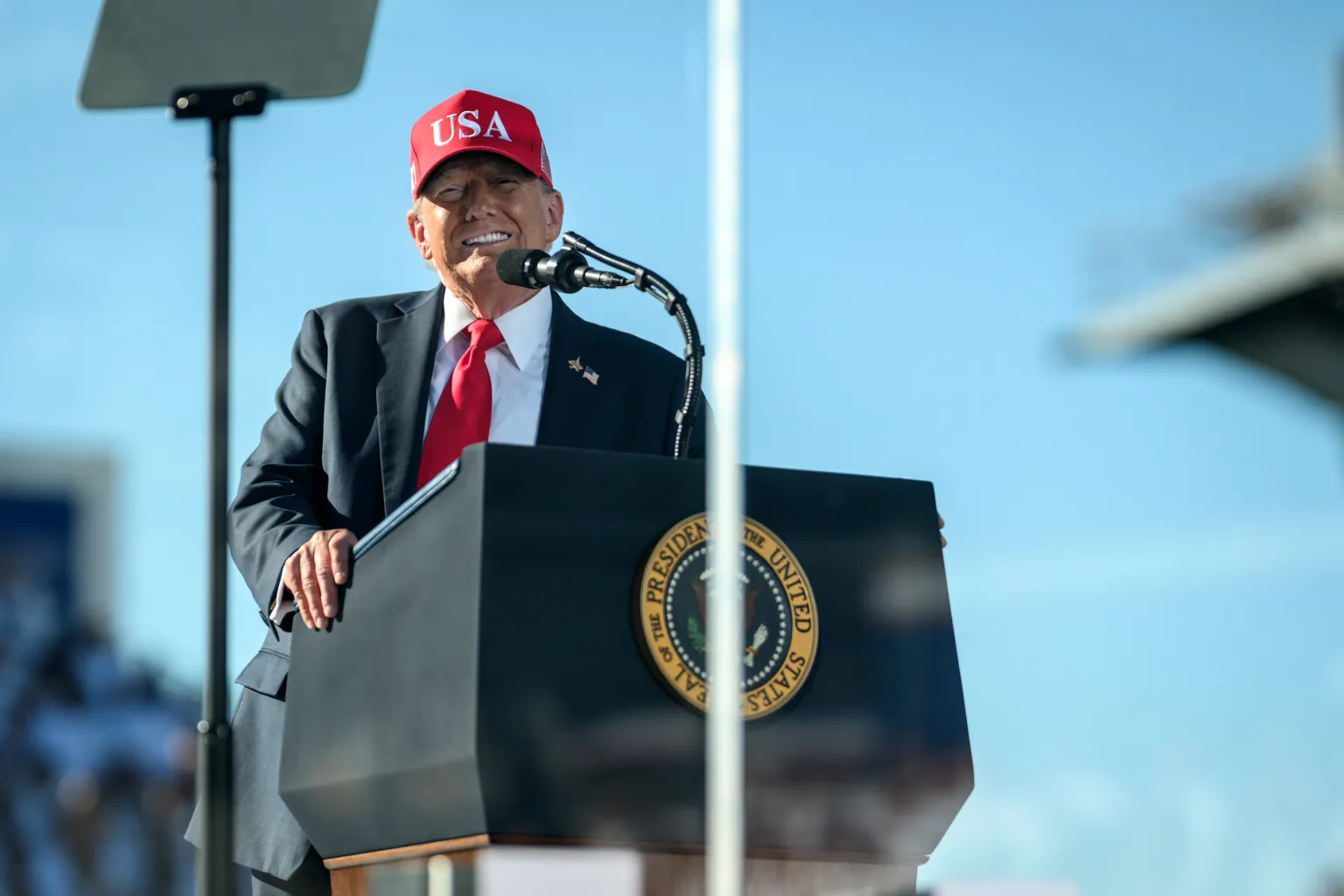
The United States and strategic retrenchment in Europe
The Strategy is firmly embedded in balance-of-power logic and structural realism. It explicitly states that the United States must prevent any state from achieving a dominant position capable of threatening American interests. Within this framework, maritime power enables selective, rapid, and long-range action without permanent land-force commitments.
Control of sea lines of communication, chokepoints, and distributed access architectures thus becomes central to preventing rival hegemony. In Europe, this translates into calls for greater strategic autonomy alongside a reduced U.S. land presence in the Rimland adjacent to Eurasia’s Heartland—an area Washington recognizes it cannot dominate outright. While a complete withdrawal is unlikely, reductions in ground forces appear probable, with naval and air bases retained and reconfigured.
Future conflicts, should they occur, are envisaged as short, high-intensity engagements resolved primarily through maritime and air superiority. The Strategy clearly rejects prolonged land wars, favoring deterrence based on mobility, technological advantage, and power projection from the sea.
The United States will not relinquish control of the oceans
In conclusion, the 2025 National Security Strategy reaffirms the centrality of maritime spaces to U.S. security and economic prosperity. Oceans are no longer viewed solely as global commons ensuring freedom of navigation, but as critical arenas of economic interdependence and great-power rivalry.
The United States acknowledges that classical Mahanian sea dominance in its pure form is no longer feasible and therefore concentrates on selected regions—the Indo-Pacific as the primary theater of competition and the Western Hemisphere as an exclusive sphere of responsibility. Other regions are to be prevented from falling under hostile domination.
To achieve this, the Strategy emphasizes the need for the world’s most advanced and powerful military, including the only branch constitutionally mandated to be maintained: the U.S. Navy. In this sense, the document represents a conscious return to classical maritime geopolitics, adapted to twenty-first-century realities. The United States thus signals that even in a multipolar world it does not intend to relinquish control of the oceans, which—echoing Themistocles’ ancient insight—remain the ultimate source of power.
see also
Buy us a coffee, and we’ll invest in great maritime journalism! Support Gazeta Morska and help us sail forward – click here!
Redakcja Gazeta Morska
użytkownik
comments
Add the first comment
see also
Defence.Hub strengthens capabilities in technologies supporting maritime infrastructure security
Damen to build 13 SAR units for Turkey. Strengthening search and rescue in the Aegean Sea
Sebastian Kluska, director of MSPiR SAR: No room for improvisation at sea. Skills and judgment matter
MS Kapitan Poinc to deploy FRB 850 in Baltic SAR upgrade
105th life-saving mission. Naval Aviators conduct double "Heart Action" transport
Another successful medical evacuation over the Baltic Sea. Yet another intervention at offshore wind farms
Fishing trip on Vistula Lagoon cut short due to missing certificates
Drifting tanker near Malta highlights risks linked to the global “shadow fleet”
Cross-border SAR operation on the ice of the Gulf of Bothnia
Body recovered from the waters of Puck Bay near Babie Doły in Gdynia
ADVERTISEMENT
ADVERTISEMENT