Poland advances satellite radar capabilities with new Eycore-MoD initiative in Kashubia
Poland is taking another step toward strengthening its space and defense technology base. Eycore has signed a cooperation declaration with the Ministry of National Defence under the framework of the Green Industrial District “Kashubia”. The agreement outlines a planned investment of approximately PLN 50 million aimed at expanding national capabilities in satellite radar technologies.
business investments politics pomerania equipment and technology space technologies news23 march 2026 | 10:13 | Source: Gazeta Morska | Prepared by: Kamil Kusier | Print
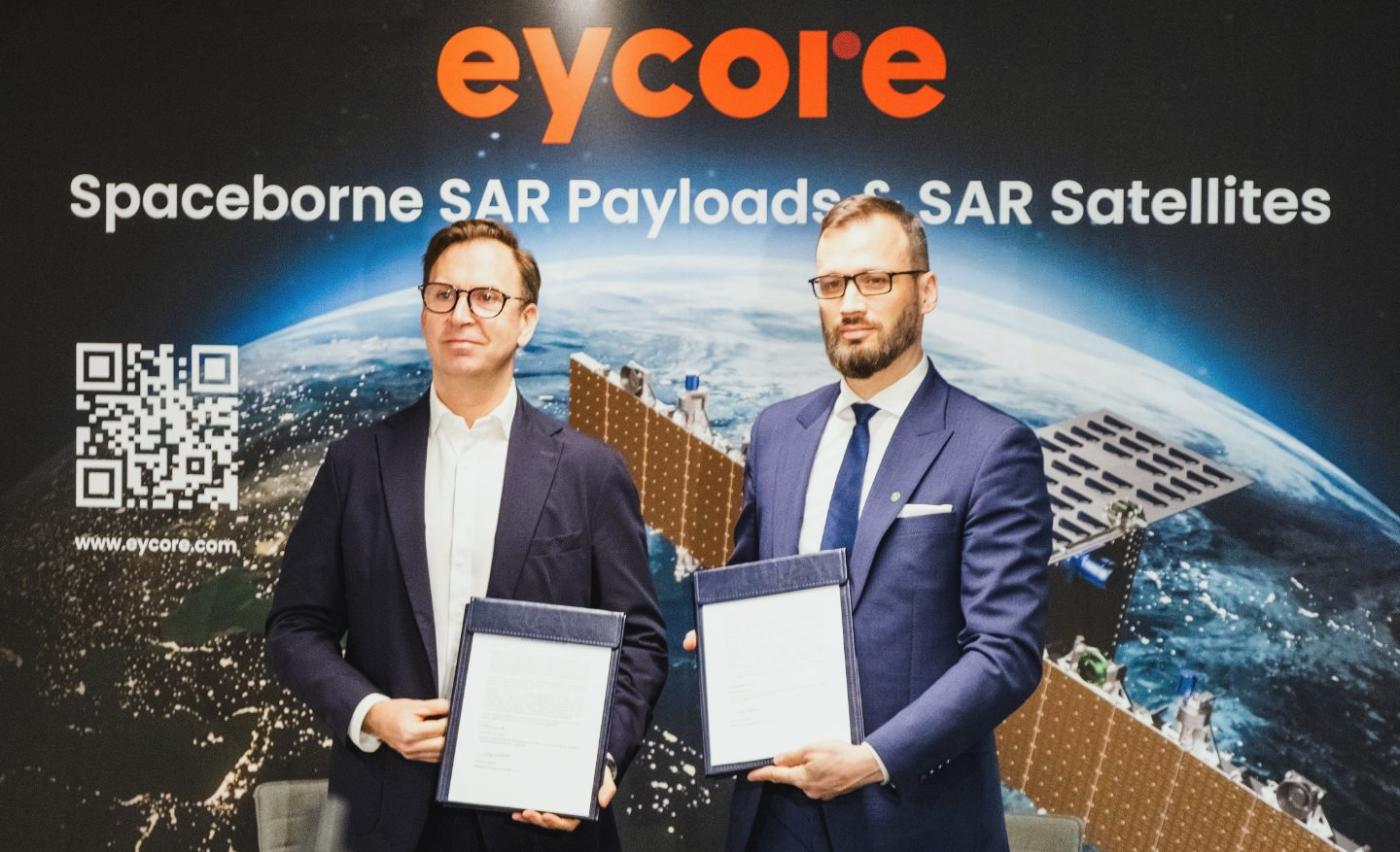
fot. Eycore
New high-tech hub in northern Poland
The project includes the construction of a new headquarters in the Kashubia region, along with a production facility and specialized clean room environments required for advanced electronics and space-grade systems. The planned center will integrate design and manufacturing functions, positioning it as a key node in Poland’s emerging space technology ecosystem.
The facility will focus on the development of next-generation satellite radar systems, particularly for Earth observation and security-related applications.
Strategic role of radar satellites
Satellite-based radar systems—especially Synthetic Aperture Radar (SAR)—have become essential tools for both civilian and defense use. Unlike optical systems, SAR can operate independently of weather conditions and daylight, enabling continuous monitoring capabilities.
These systems support a wide range of applications, including:
- border surveillance,
- maritime domain awareness,
- crisis and disaster management,
- environmental monitoring,
- operational intelligence and infrastructure protection.
For maritime stakeholders, SAR technologies are particularly relevant in areas such as vessel tracking, illegal activity detection, and monitoring of offshore infrastructure, including ports, pipelines, and wind farms.
Industry perspective
The importance of space-based technologies for national resilience was highlighted by Tomasz Kusowski, Co-founder and Vice President of Eycore:
- Space technologies, and satellite-based Earth observation in particular, are now critical to national security. They enable border monitoring, crisis management, operational awareness, and protection of critical infrastructure. This direction is no longer merely about prestige or science—it is a foundation for building technological sovereignty.
Boost for regional and industrial development
The initiative, implemented as part of the Green Industrial District “Kashubia,” reflects a broader effort to align public administration, industry, and the space sector. The goal is to create a modern industrial cluster capable of delivering high-value technologies.
For the region, the investment is expected to:
- generate high-skilled employment,
- foster advanced engineering competencies,
- attract further R&D and industrial projects.
Strengthening Poland’s position in Europe
The Eycore investment aligns with wider European trends focused on enhancing strategic autonomy in space and defense. As EU member states increase spending and prioritize dual-use technologies, Poland is positioning itself as an emerging contributor to the European space and security value chain.
Developing domestic radar capabilities may also reduce reliance on external data providers and improve access to critical geospatial intelligence.
While detailed timelines and the full scope of future systems have not yet been disclosed, the direction is clear: Poland is investing in sovereign capabilities in satellite-based observation.
For the maritime and offshore sectors, this development signals improved access to high-resolution, all-weather monitoring tools—an increasingly important factor in ensuring safety, security, and operational efficiency across the Baltic Sea region and beyond.
Buy us a coffee, and we’ll invest in great maritime journalism! Support Gazeta Morska and help us sail forward – click here!
Kamil Kusier
redaktor naczelny
comments
Add the first comment
see also
Port Haller a strategic maritime investment for Poland and the Baltic region
Polish tactical communications breakthrough: COMP@N-Z enters NATO catalogue
Baltica 2 HDD landfall completed. Offshore wind farm cable route ready for grid connection
CRIST Offshore launches production of BC-Wind offshore power station
PGZ Naval Shipyard and OSI Maritime Systems: towards a new model of naval industry cooperation
Naftoport expansion in Gdańsk enters execution phase. Strategic boost to Poland’s energy security
Remontowa Shipbuilding delivers hybrid ferry Bjarkøy to Norwegian operator
Baltic Towers and Siemens Gamesa launch strategic cooperation for Baltica 2 offshore wind project
Polish universities and industry join forces to develop dual-use autonomous underwater drone swarms
PERN expands fuel logistics backbone as maritime capacity grows
ADVERTISEMENT
ADVERTISEMENT