Poland must arm itself wisely. Between the presidential initiative and the SAFE government program
In recent days, the Polish political and defense scene has been dominated by discussions around the European SAFE mechanism and its impact on the development of Poland’s defense industry. On one hand, the President of Poland emphasized that the country cannot compromise its sovereignty or engage in long-term foreign debt. On the other hand, Prime Minister Donald Tusk assured that the program would continue and that funds from SAFE would reach Polish defense factories through a government resolution, despite the presidential veto.
security business investments politics defense industry news14 march 2026 | 07:07 | Source: Gazeta Morska | Prepared by: Kamil Kusier | Print
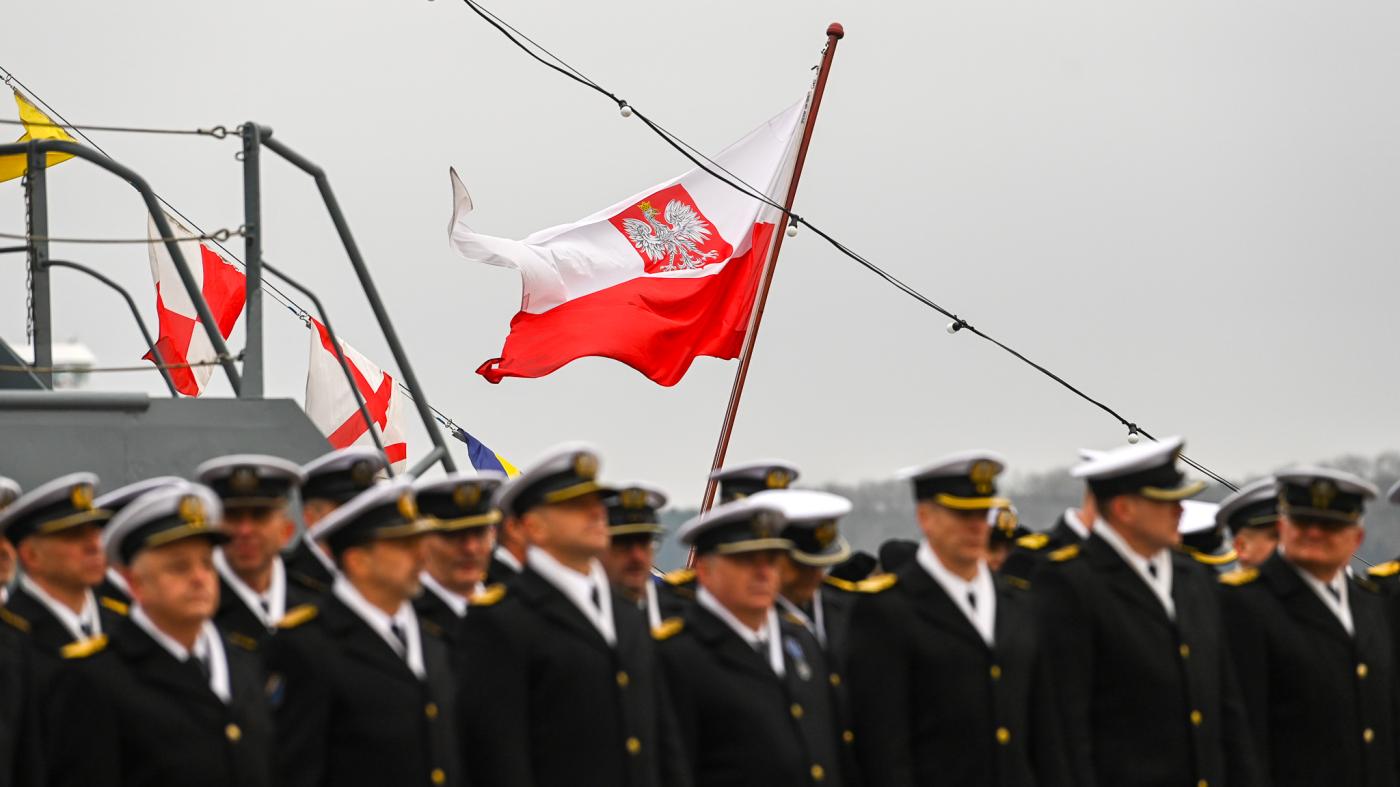
fot. plut. Wojciech Król / MON
The debate around SAFE is not merely a political discussion but a strategic one. It concerns national security, military investment, and the growth of Poland’s defense industry. The question remains: at what cost and under what conditions?
The president’s address: security and sovereignty above all
In his address, the President reminded Poles that decisions regarding national security must be made with the long-term interests of the Republic of Poland in mind. He highlighted that the SAFE mechanism represents a massive foreign loan, taken out over 45 years in a foreign currency, with interest costs potentially reaching 180 billion PLN.
- Poles will have to repay twice the value of the loan, while Western banks and financial institutions will profit from it, the President stated.
According to the head of state, such a loan would burden future generations of young Poles:
- Today’s eighteen-year-old will be paying off this obligation throughout their entire working life, emphasized President Karol Nawrocki.
The President also stressed that Poland’s security cannot depend on the decisions of foreign institutions. SAFE includes a so-called conditionality principle, which could allow Brussels to suspend funding, while the debt would still have to be repaid.
- Security under conditions is not security, the President said, questioning the mechanism’s compliance with the constitution and the limits of sovereignty regarding the armed forces.
Polish SAFE 0%: the presidential alternative
In his address, the President presented an alternative to the European SAFE loan: the Polish Defense Investment Fund (“Polish SAFE 0%”), designed to finance military modernization without foreign debt. The fund would rely on capital generated by the National Bank of Poland, including increased gold reserves and strategic investment decisions, and operate under full state and parliamentary control.
The President emphasized that this mechanism would allow Poland to independently decide on equipment purchases, suppliers, and the direction of defense industry development, ensuring transparency and cross-political cooperation.
- This solution gives us full freedom of decision. Poland will choose what equipment to buy, from whom, and how to develop its defense industry, the President said.
The concept aims to strengthen sovereignty, eliminate interest costs from foreign loans, and leave decisions regarding army development entirely in Polish hands.
Prime Minister Donald Tusk: “Polska Zbrojna” will proceed despite the SAFE veto
Following the President’s veto of the SAFE act, Prime Minister Donald Tusk convened a government meeting, assuring that the “Polska Zbrojna” program and the use of SAFE funds would continue.
- It will be harder, sometimes slower, and will require much more effort to convince everyone involved in this process—but we will do it, and this resolution will allow us to launch the ‘Polska Zbrojna’ program, said the Prime Minister.
In response to the presidential veto, the government passed a resolution authorizing the Ministers of National Defense, Finance, and Economy to sign an agreement related to the EU SAFE program—a so-called Plan B that allows the process to continue despite formal obstacles.
The Prime Minister stressed that SAFE funds would reach Poland regardless of procedural hurdles:
- The President’s veto will not stop us. We will adopt a resolution, and the money will reach you one way or another.
SAFE beneficiaries and the role of Polish industry
Donald Tusk named numerous factories across the country slated to begin production with EU funds, including:
- Military Armaments Works in Grudziądz
- Nitro-Chem and Military Aviation Works in Bydgoszcz
- Mechanical Works in Tarnów, Huta Stalowa Wola, Fabryka Broni Łucznik in Radom, Mesko in Skarżysko-Kamienna
- Gamrat in Jasło, and plants in Nowa Dęba, Kalisz, and Siemianowice Śląskie
- R&D centers and shipyards, including the Maritime Technology Center in Gdynia, Nauta Ship Repair Yard, and PGZ Stocznia Wojenna
The Prime Minister emphasized that recent conflicts, including the war in Ukraine, demonstrate the strategic importance of domestic production capabilities for weapons, ammunition, and equipment.
- If we do not have domestic capabilities in Polish factories, we will be at a strategic disadvantage. And we will certainly not allow that, Donald Tusk stated.
Sovereignty, security, and the Polish defense industry
The debate on SAFE and the “Polska Zbrojna” program shows that Poland faces a choice between using EU funds and independently financing army modernization. The President proposes Polish SAFE 0%, which protects the state’s financial sovereignty and allows full control over expenditures and the development of the defense industry. In this model, investment funds would come from domestic capital, including state funds and potential profits from the National Bank of Poland, reducing the need for long-term foreign debt.
Conversely, the government argues that the European SAFE mechanism enables rapid deployment of substantial funds for military modernization. The program is based on joint EU debt issuance coordinated by the European Commission, allowing member states to access preferential loans for developing defense and industrial capabilities.
Both initiatives share the same strategic goal: building a strong, modern, and independent Polish army. The successes of companies such as Polska Grupa Zbrojeniowa, WB Group, and numerous other domestic defense enterprises demonstrate that army modernization can be carried out quickly, efficiently, and with significant participation from Polish companies, simultaneously strengthening the economy and domestic technological expertise.
The Polish army, Polish industry, Polish future
The last decade has shown that Poland can execute ambitious modernization projects with the involvement of domestic companies, enhancing technological competencies and creating jobs in strategic sectors. Programs involving the production of modern artillery systems, tanks, ships, and drones illustrate that national security can go hand in hand with economic growth.
- Only a nation that can take care of its own security remains truly free, the President emphasized.
At the same time, Prime Minister Donald Tusk ensures that the “Polska Zbrojna” program will continue, and SAFE funds will reach Polish factories even when formal procedures experience delays. This demonstrates that in Poland, national security and the development of the domestic defense industry are treated as priorities, though the pace of implementation still depends on political disputes and procedural challenges.
Long-term security or short-term financing?
The SAFE debate exemplifies how national security, defense industry investment, and national sovereignty must go hand in hand. The President’s Polish SAFE 0% proposal and the government’s SAFE program represent different paths toward the same objective: modernizing the army, supporting Polish defense industry, and strengthening Poland’s position in Europe and NATO.
Poland must arm itself wisely, investing in people, domestic factories, technologies, and competencies that ensure security for generations. This involves building a strong industrial base, supporting national companies, and developing domestic production and research capabilities. A strong army is not only about purchasing foreign equipment but also about the ability to design, manufacture, and maintain it domestically.
Investing in Polish engineers, technicians, and specialists is therefore crucial. Developing modern technologies and strengthening the defense industry’s potential ensures that funds spent on defense remain in the country, create jobs, and lay lasting foundations for national security.
In this context, the question arises: is an EU loan the answer to Poland’s long-term security needs? While it may provide short-term support, it cannot replace a carefully considered strategy for developing domestic industrial and technological capacities.
True security is built over years through consistent investment in people, industry, and innovation. Every external source of financing, regardless of its origin, must strengthen Poland’s own capabilities rather than simply increasing debt or dependency on foreign suppliers.
see also
Buy us a coffee, and we’ll invest in great maritime journalism! Support Gazeta Morska and help us sail forward – click here!
Kamil Kusier
redaktor naczelny
comments
Add the first comment
see also
Defence.Hub strengthens capabilities in technologies supporting maritime infrastructure security
Damen to build 13 SAR units for Turkey. Strengthening search and rescue in the Aegean Sea
Sebastian Kluska, director of MSPiR SAR: No room for improvisation at sea. Skills and judgment matter
MS Kapitan Poinc to deploy FRB 850 in Baltic SAR upgrade
105th life-saving mission. Naval Aviators conduct double "Heart Action" transport
Another successful medical evacuation over the Baltic Sea. Yet another intervention at offshore wind farms
Fishing trip on Vistula Lagoon cut short due to missing certificates
Drifting tanker near Malta highlights risks linked to the global “shadow fleet”
Cross-border SAR operation on the ice of the Gulf of Bothnia
Body recovered from the waters of Puck Bay near Babie Doły in Gdynia
ADVERTISEMENT
ADVERTISEMENT