Sebastian Kluska, director of MSPiR SAR: No room for improvisation at sea. Skills and judgment matter
The Baltic Sea does not forgive mistakes - therefore maritime rescue services cannot afford improvisation. A growing number of interventions, new challenges related to offshore development, and the need to modernize equipment and operational systems - this is the everyday reality of the Maritime Search and Rescue Service. About how the SAR service is evolving, what threats it faces, and why 2025 proved to be a breakthrough year “more behind the scenes than at sea”, says its Director, Sebastian Kluska.
only here security opinions and comments pomerania west pomerania maritime rescue tricity news05 april 2026 | 08:00 | Source: Gazeta Morska | Prepared by: Kamil Kusier | Print
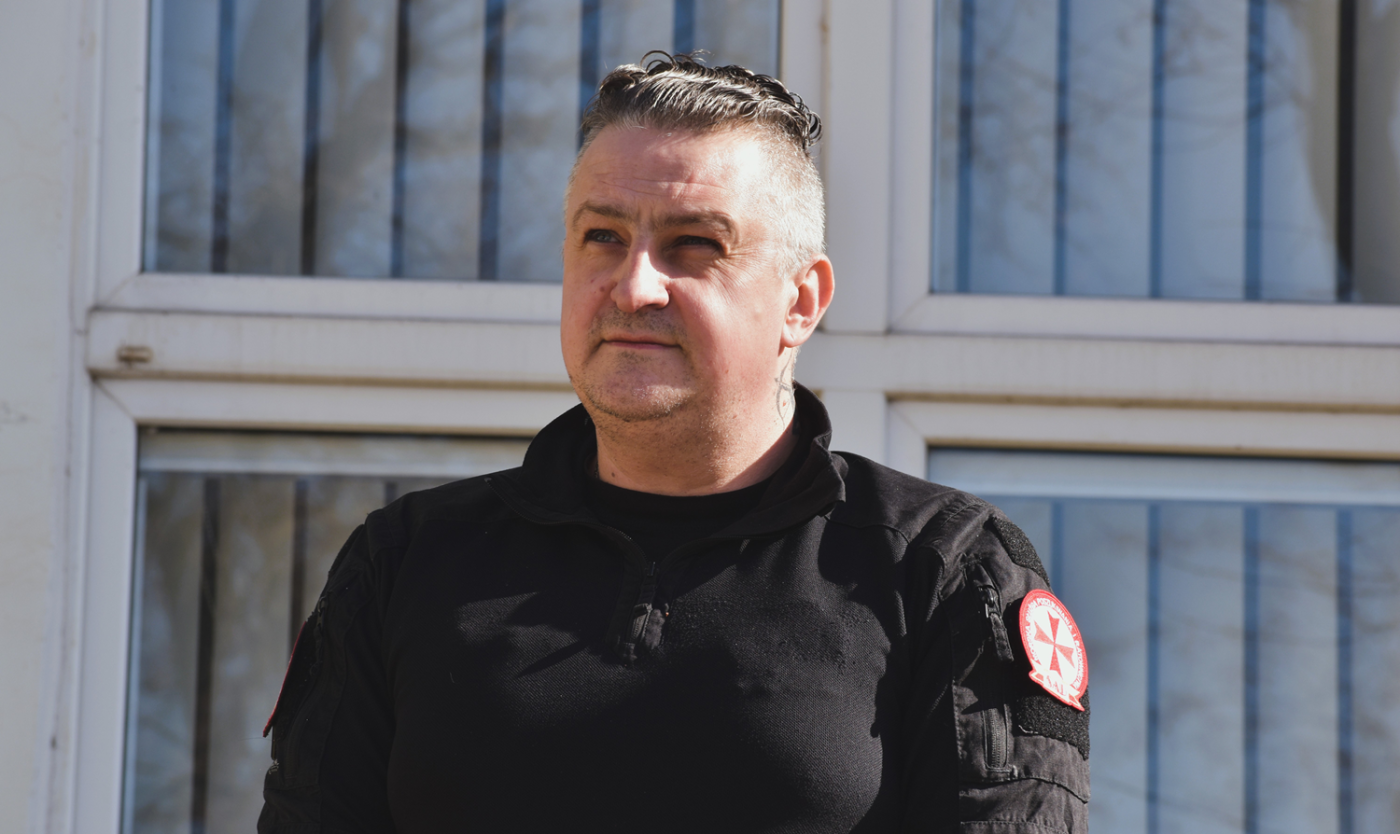
fot. Kamil Kusier / Gazeta Morska
Year by year, the number of interventions carried out by the Maritime Search and Rescue Service (SAR) is increasing. What kind of year was 2025 for maritime rescue? Stable? More demanding?
Sebastian Kluska, Director of the Maritime Search and Rescue Service (SAR): Every year in maritime rescue is different and brings its own challenges. In 2024, we recorded 397 interventions. The previous year closed with 425 operations, which represents a slight but noticeable increase from our perspective.
The year 2025 was exceptional בעיקר due to the development of offshore wind farm activities. This represents an entirely new operational environment, requiring us to rethink procedures and prepare for a new type of operations. There were numerous exercises, extensive consultations with operators, and above all, intensive work on adapting our rescue system to this new area. Although in 2025 we had only two offshore-type interventions, the preparatory work and “paper-based” efforts were substantial and required significant engagement from the entire service.
Were there any specific operations or situations in 2025 that particularly illustrate the challenges SAR rescuers currently face in the Baltic Sea?
– The year 2025 made this very clear. Especially considering that out of two helicopter-based aerial rescue bases, only one remains in Darłowo, equipped with two helicopters - the PZL W-3RM Anakonda and the Mi-14PS, operating alternately. This significantly limits our resources and creates organizational challenges that we will need to address in the coming years. Building and rebuilding appropriate structures is absolutely essential to ensure safety in the Baltic Sea, although it is not the only priority.
However, the past year was spent largely not at sea, but in office work. I mean tenders, planning, and preparations. We launched the construction of two shallow-draft units that will operate in the Vistula Lagoon and the Szczecin area. Work is already underway on their outfitting and installation of onboard navigation systems. If everything goes according to plan, the first unit will be ready for service by October 2026. However, before entering full operational use, it will undergo christening, flag-raising, and crew training.
In 2025, we also continued our fleet renewal programme. Under the Fenix programme, we acquired six SAR2000 units from Finland, aimed at modernizing and replacing the older SAR-1500 vessels, which are our primary rescue ships. One hull is already completed and undergoing technical acceptance, and if everything proceeds as planned, two units will be delivered to Poland by October 2026.
In addition, we invested in equipment for our rescuers – individual suits for crews, personal locator beacons (PLBs), and supplementary equipment such as trailers for oil spill containment booms, designed to protect the Polish coastline from hydrocarbon spills.
The year 2025 was also a period of modernization for our vessels. We completed work on the MS “Czesław 2” in Świnoujście, initiated a tender and modernization of our flagship tug MS “Kapitan Poinc”, and announced a tender for a new rescue vessel that will strengthen MSPiR’s operational capabilities in the coming years.
In summary, can it be said that 2025 was a year of modernization for MSPiR, but mainly “on paper”?
– Exactly. It was indeed a period of modernization, but I want to stress that it was not limited to documentation. We physically completed the modernization of the MS “Czesław 2”, where we replaced the oil spill recovery system, installed a new crane and generators. This ageing multi-purpose rescue vessel has effectively received a new “heart” along with upgraded equipment. It is an excellent unit for spill response and will remain in service for several more years.
This year, to borrow a term from agriculture, we will begin to reap the harvest of what was sown in 2024–2025. The first three SAR2000 units will be deployed to bases supporting the growing offshore sector. Where will they be stationed? Most likely in Łeba, Władysławowo and Górki Zachodnie.
In March, the modernization of our flagship MS “Kapitan Poinc” will be completed. The vessel will receive a new pollution recovery system, a new crane, an upgraded control system, and an additional rescue boat. The modern equipment will include automated systems designed to support rescuers in the most challenging conditions.
In October, one of the two shallow-draft lagoon vessels—whose construction began last year—will be delivered to Trzebież. The first unit is already at the outfitting stage. Additionally, we are taking delivery of three LAMOR boats for pollution response. These outboard-powered units are capable of recovering up to 1,000 litres of oil-based substances from shallow waters. The draft of “Czesław 2” is 3 metres, and “Kapitan Poinc” 4.5 metres, allowing them to operate close to shore. The new boats, with a draft of just 0.9 metres, can operate almost at the shoreline itself. In practice, they may be used infrequently, but in the event of a spill from a commercial tanker, they will enable maximum recovery of pollutants and help protect beaches from contamination.
Since we’ve moved closer to shore…
– We have not forgotten about land-based investments. I have already mentioned some procurements, including suits, but it is also worth noting the automotive tender for the delivery of seven trucks for the BSR, equipped with modular systems that will allow faster access to patients in hard-to-reach locations—areas where ambulances cannot reach.
So the quality of work for maritime rescuers will change significantly?
– Absolutely. We are not only talking about new equipment, but entirely new standards of work and ergonomics. The equipment we have used so far, while still operational, has become outdated. Some of our vessels are even 30 years old. They were functional, but compared to modern solutions used in the Netherlands or Scandinavia, they fall short in terms of comfort and efficiency.
New units such as the SAR2000 represent a completely different level. It can be compared to switching from a Polonez to a Mercedes. For rescuers, this means significantly improved working conditions, but we must also consider the impact on those being rescued. These vessels will be equipped with ambulance modules and shock-absorbing stretchers, enabling patients with spinal injuries to be transported safely in a stable horizontal position—even in rough seas.
In addition, there are advanced search systems for locating missing persons and survivors. The SAR2000 is equipped with a unique camera system—thermal imaging and daylight—supported by artificial intelligence. AI can analyse millions of objects in the water without limitation, based on sector-based search patterns. When something is detected, the system automatically cross-checks it against databases and suggests what it might be.
This will significantly improve the detection of missing persons and may even assist in resolving past cases. Artificial intelligence will support rescuers, but it does not relieve them of the responsibility to verify situations personally. The final decision and confirmation will always remain with the human operator.
A 30-year-old vessel is quite different from a 30-year-old car. What will happen to the older units? Will they continue to be modernised or gradually phased out?
– From our fleet of older SAR-1500 vessels, seven will remain within the Maritime Search and Rescue Service. Two will stay fully operational, one will be dedicated to training, and another will serve as a reserve unit. This ensures that, if necessary, we can replace new vessels in case of breakdowns. Of course, they may also be used for refurbishment purposes. The remaining five belong to the State Treasury and will most likely be sold.
Maintaining continuity within the rescue system is crucial. We do not want a lack of modern units to limit our operational capabilities. At the same time, older vessels still serve an important role, particularly in training and as backup assets. Thanks to them, in the event of failures affecting new vessels, there will be no gaps in the maritime safety system.
Investment in equipment is essential, but what about changes in command systems, operational coordination, and inter-agency cooperation? Are these also necessary?
– The development of our service is not only about modern equipment, but also about improving command and coordination systems. Our coordination exercises are primarily focused on maritime operations, as MSPiR is the lead authority in standard maritime rescue.
On land, we leave operational coordination to the State Fire Service, with which we maintain close and effective cooperation. We also work with the Polish Navy, mainly through its rescue units such as ORP “Lech” and ORP “Piast”, as well as within the broader naval structure. In addition, we maintain ongoing cooperation with the Border Guard and, to varying degrees, with other entities involved in water rescue.
This allows us to operate efficiently and effectively, as coordination between all parties involved is crucial in maritime rescue. Equipment is important, but a well-functioning cooperation system enhances efficiency and shortens response times.
And internationally?
– International cooperation is very strong. It is coordinated by HELCOM, and all Baltic states—except Russia—participate in joint exercises and operations. Every year we organise joint drills, including oil spill response scenarios. This allows us to continuously improve procedures, cooperation, and command systems at sea.
We maintain particularly close and regular cooperation with Sweden and Germany. Our operational areas are adjacent, which means we frequently conduct joint rescue operations. This enables faster and more efficient responses, making use of both equipment and the experience of our partners.
Maritime rescue is carried out under immense pressure and in extremely demanding conditions. Is SAR facing staffing challenges? Are you recruiting new rescuers?
– We currently employ 305 personnel, including 230 rescuers and 20 maritime inspectors working in coordination centres in Świnoujście and Gdynia. Within the maritime and water rescue division alone, there are 252 staff members, so from a staffing perspective we are in a good position and do not experience shortages.
Although we cannot speak of significant salary increases, we do not face a lack of candidates. All positions are filled, and the number of applicants continues to grow. I have a full stack of applications on my desk, allowing me to select the best candidates.
Is there a chance for additional positions?
– The need for new positions is very urgent. It must be understood that the scope of responsibilities for rescuers is increasing, among other things due to the emergence of new operational areas at sea. Let’s look at the offshore sector: in 2025 we had two interventions, while in January 2026 alone there were already three, and that with just one operator – Baltic Power. More operators will soon follow, which will mean even more work and potentially the need to relocate vessels.
We are also building a new, large, multi-purpose vessel which, together with “Kapitan Poinc”, will be capable of securing the entire Polish Baltic coastline. At this stage, we do not yet have staffing secured for its crew, as construction has only just begun. There is no cause for alarm, but we already know that MSPiR will need to create around 50 new positions. This is an absolute “must-have” if we want to maintain full operational effectiveness and safety at sea.
In 2025, for the first time, a woman became captain of an SAR vessel. Is this a sign of broader changes within the service?
– It is a difficult but very important question. It was a symbolic moment that showed MSPiR is becoming a more open, professional, and modern service. Until recently, maritime rescue was a predominantly male profession, and there was a persistent myth that “a woman on board brings bad luck.” We have managed to break that stereotype. Women such as Paulina, Monika, and Celina, who serve in maritime roles and operate on vessels, have brought something new to our organisation. They perform their duties excellently, contributing professionalism and determination. Women in SAR are outstanding, and their presence positively influences the culture of the entire service.
Among reported maritime threats, there are also false alarms that trigger rescue operations. To what extent do such alerts burden the system?
– We are prepared for false alarms at MSPiR and are accustomed to them, as MRCK serves as the central alert hub. It is important to understand that all signals from devices such as Garmin, PLB, EPIRB, or SOS buttons are routed to us, so we are obliged to verify them. Most turn out to be false, and while verification takes time, it is a standard procedure and nothing out of the ordinary for us.
The real issue arises with deliberately misleading reports. These are rare, but they carry serious consequences, particularly when they involve children. In such cases, the level of engagement is entirely different: emotions run higher, stress increases, because most of us are parents and understand how dramatic such a situation would be if it concerned our own child. Fortunately, these cases are marginal. In 2025 we had one such incident, and so far this year we have recorded one as well—hopefully no more will follow.
What currently constitutes the greatest challenge for maritime rescue in Poland?
– Without a doubt, ecological threats, especially oil spills. This is a problem with potentially enormous consequences. According to HELCOM, if any Baltic state is affected by a tanker spill or sinking, coastal areas could be excluded from tourism and economic activity for up to six years.
Fortunately, the Tri-City area is somewhat less exposed—the Hel Peninsula and the Puck Bay provide natural protection. However, the rest of the coastline, from Świnoujście to Hel, is at significant risk. The problem is compounded by our limited number of vessels. Consider a scenario where a unit must travel from Gdynia to Łeba—it takes around eight hours, and from Świnoujście even 10–12 hours. If an oil spill were to occur during that time, we would face a very difficult situation.
Seaside tourism is a source of income for the industry—and intense workload for rescuers. Warnings and fines for rule violations seem ineffective. Do you have a solution?
– In the eyes of some people in the tourism sector, I am persona non grata—someone who disrupts tourism and, for three months, is seen as the main adversary. The argument is always the same: in the mountains people do worse things and no one intervenes, while at sea any enforcement is suddenly seen as a problem.
However, I am not responsible for tourism or economics—my responsibility is safety. And the issue is serious: within just one hour, it is possible to obtain a licence to operate a high-powered watercraft—up to 500 HP—with virtually no competence or understanding of basic rules. To put it into perspective, imagine the same situation on the road: after one hour of training, a driver receives a licence and is allowed to drive on a motorway at over 100 km/h. That would be completely unreasonable, wouldn’t it? And yet, at sea…
At sea, the situation is even more complex: society is becoming wealthier, and we see more pontoons, motorboats, jet skis, yachts, windsurfers, kitesurfers… Everyone can potentially collide with everyone else. Traffic is dense and dynamic, so we must be extremely cautious and forward-thinking, because any mistake can end in tragedy.
How, then, can education on water safety be improved?
– There are no shortcuts when it comes to education. State examinations should function as they do in other sectors. It is not about someone “learning to operate” a vessel in a few hours, but about genuinely passing an exam that verifies whether they can navigate in accordance with regulations. Obtaining a licence in an hour is not sufficient—what is needed is solid, reliable knowledge.
We have plans and ideas, but lack the capacity. Educational efforts by the State Fire Service, traffic police units, and other institutions require significant human resources. In the maritime rescue division, I have 252 personnel, of whom around 50 are engaged in administrative work. Some are also assigned to the KSeF system. We do not have a fully dedicated unit or personnel who could focus entirely on safety education.
I would like to change that. I have ideas and the determination to act. Education should be a priority, because at sea it is always better to think twice before making a decision than to act recklessly and risk tragedy. Education is an investment in the safety of everyone who uses the sea.
Buy us a coffee, and we’ll invest in great maritime journalism! Support Gazeta Morska and help us sail forward – click here!
Kamil Kusier
redaktor naczelny
comments
Add the first comment
see also
Defence.Hub strengthens capabilities in technologies supporting maritime infrastructure security
Damen to build 13 SAR units for Turkey. Strengthening search and rescue in the Aegean Sea
MS Kapitan Poinc to deploy FRB 850 in Baltic SAR upgrade
105th life-saving mission. Naval Aviators conduct double "Heart Action" transport
Another successful medical evacuation over the Baltic Sea. Yet another intervention at offshore wind farms
Fishing trip on Vistula Lagoon cut short due to missing certificates
Drifting tanker near Malta highlights risks linked to the global “shadow fleet”
Cross-border SAR operation on the ice of the Gulf of Bothnia
Body recovered from the waters of Puck Bay near Babie Doły in Gdynia
RAS exercises in the Caribbean. Dutch patrol vessel Zr.Ms. Friesland conducts joint operations with French Navy
ADVERTISEMENT
ADVERTISEMENT