Poland as Europe’s food hub. Minister Stefan Krajewski on export, security, and global competition
Poland has in recent years emerged as one of Europe’s leading food producers. Its products reach over 200 countries, and agri-food exports continue to grow, generating billions of euros for the economy. In this interview, Minister of Agriculture and Rural Development Stefan Krajewski discusses how Polish agriculture competes in the EU and global markets, the challenges posed by imports from Ukraine and the EU–Mercosur agreement, and the strategies ensuring Poland’s food security.
only here business logistics opinions and comments politics agriculture transport and forwarding news07 february 2026 | 07:03 | Source: Gazeta Morska | Prepared by: Kamil Kusier | Print
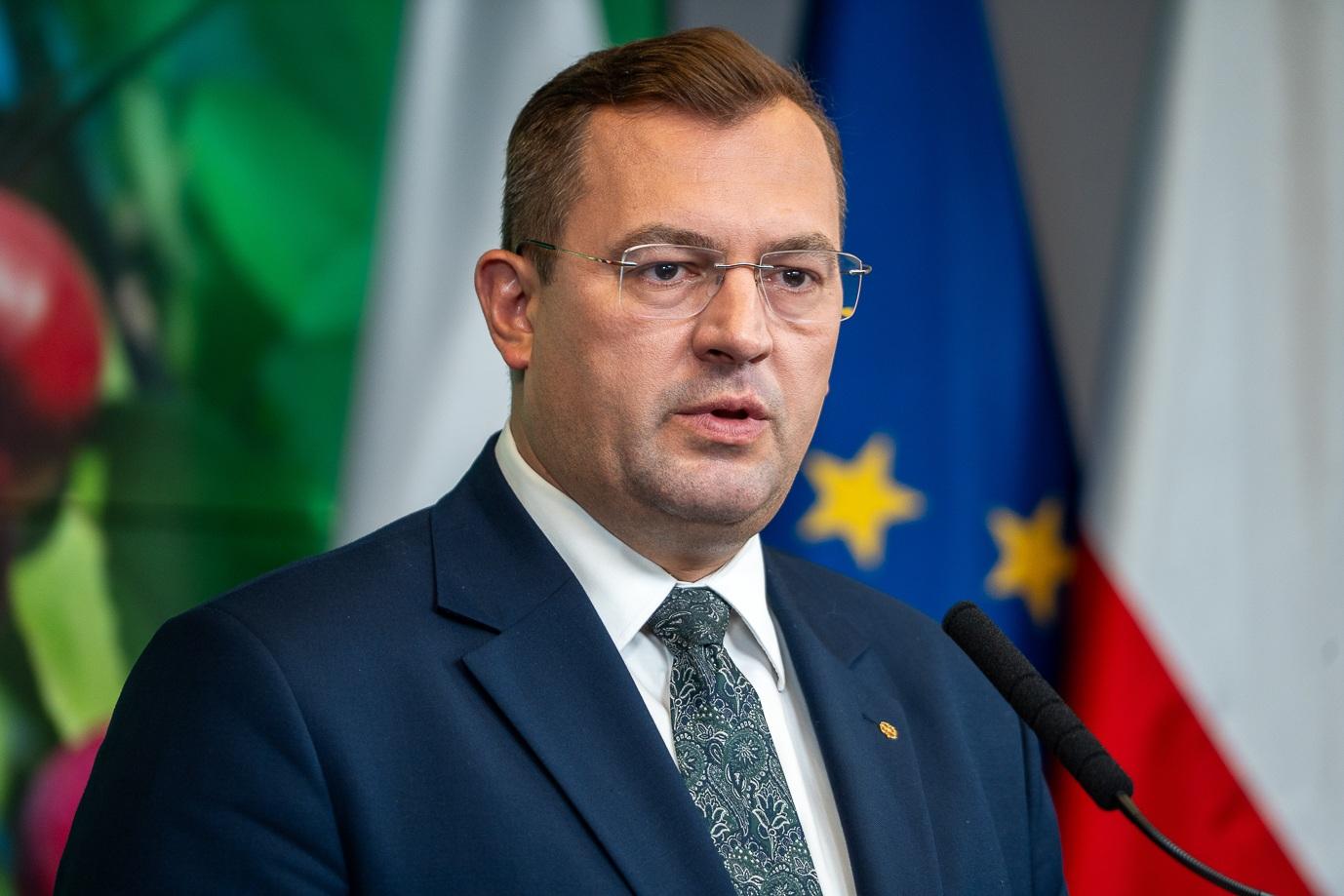
fot. MRiRW
Poland has in recent years become one of the leading food producers in the EU. How would you describe our competitive position in the EU and global markets today?
Stefan Krajewski, Minister of Agriculture and Rural Development: Poland has indeed made an impressive journey since joining the EU, evolving from a country with fragmented agriculture into a European food hub. Today, we are the sixth-largest food producer in the European Union, and our products reach over 200 countries worldwide, making the agri-food sector one of the pillars of our economy. In 2024, the value of agri-food exports amounted to €53.8 billion, with a positive trade balance of €18 billion. From January to October 2025, exports increased by another 8% year-on-year.
Several factors contribute to the competitiveness of Polish producers. On one hand, we operate within the EU single market, which facilitates free trade internally and provides access to a large customer base without tariffs. On the other hand, Polish agriculture and the food industry operate under high standards for food safety, environmental protection, and animal welfare. While these raise production costs, they simultaneously build trust in the quality and safety of Polish products—both within the EU and beyond.
Globally, Poland is increasingly positioning itself in new markets, including countries in Asia, the Middle East, Africa, and the Americas, where Polish companies participate in international trade fairs and actively promote their offerings. This means that our competitiveness is no longer solely based on the EU market but also on proactive foreign expansion. However, in the context of growing competition from large producers in third countries, this expansion must be combined with appropriate safeguards and trade policies that protect Polish agriculture from excessive import pressure.
In terms of foreign competition—both within the EU and beyond—which segments offer Polish producers the greatest opportunities, and where do they face the strongest import pressure?
- The greatest opportunities lie in the export of processed products with high added value, where quality, production standards, and reputation are key. Poland performs very well in the food processing sector, dairy products, and cereal-based products. We are leaders in the export of poultry, soft fruits, and mushrooms.
The highest import pressure, meanwhile, affects sensitive sectors—those where producers from third countries benefit from cost advantages due to economies of scale, lower labor costs, or less stringent environmental, sanitary, phytosanitary, and animal welfare standards. This applies in particular to trade relations with Mercosur countries and Ukraine. These differences are structural and long-term, requiring appropriate protective mechanisms.
Polish farmers are critical of imports from Ukraine and view the EU–Mercosur agreement with concern. Which non-EU markets are strategically most important for Poland today, and where do you see the greatest risks?
- In light of tensions related to the Ukrainian market and the Mercosur agreement, diversifying export markets is one of the ministry’s key priorities. We see significant potential in countries in Asia, the Middle East, Africa, as well as the United Kingdom—a key partner post-Brexit, mainly importing meat, cereal products, and frozen fruits and vegetables. In 2025, we held intensive dialogues with numerous potential partners, and Polish food was promoted at 26 trade events worldwide. In 2026, this number will rise to 28, including for the first time in Nigeria, opening the door to Central Africa.
At the same time, we clearly indicate the risks. Excessive liberalization of agricultural trade without effective safeguards can destabilize markets and undermine the Polish agricultural model based on family farms. This is why, at the last AGRIFISH Council, I proposed the creation of a compensation fund to offset potential losses for producers resulting from trade agreements, such as Mercosur or relations with Ukraine.
What barriers—administrative, sanitary, or logistical—currently limit the development of Polish food exports, and how does the ministry help overcome them?
- Barriers are varied—ranging from administrative and sanitary to logistical, as well as differences in regulations and production standards. That is why our actions are multi-faceted. We actively work to remove access barriers in third-country markets, conduct negotiations on veterinary and phytosanitary certificates, and simultaneously submit proposals to the European Commission to better protect the interests of Polish agriculture.
In countries with significant export potential—such as China, Egypt, India, Ukraine, or the United Arab Emirates—our interests are supported by representatives of the Ministry of Agriculture and Rural Development in Polish embassies. We also plan to appoint agri-food experts from the National Support Centre for Agriculture (KOWR) to directly assist Polish companies’ expansion in selected countries.
Promotion is also of great importance. We want Polish food to become a recognizable brand, hence the ministry’s involvement in national pavilions at major global trade events, as well as the presence of ministry leadership and political support. This translates into tangible benefits for entrepreneurs, as confirmed by trade data.
In light of the war in Ukraine and geopolitical tensions, how is Poland shaping agricultural policy to ensure food security and maintain global competitiveness?
- The government’s priority is to strengthen our country’s food sovereignty, ensure resilience of supply chains, and protect our market from destabilization caused by the influx of goods from Ukraine. Poland treats food security as a pillar of state stability, which was particularly highlighted in the agenda of Poland’s EU Council Presidency in 2025.
Our goal is to reconcile three elements: openness to trade, stability of agricultural markets, and the protection of the competitiveness of Polish farms. That is why we consistently advocate at the EU level for stable funding of agriculture under the upcoming Multiannual Financial Framework 2028–2034. Due in part to Poland’s pressure, the European Commission has proposed early access to part of the so-called flexibility quota, which could mean up to €8.8 billion for supporting agriculture and rural areas after 2028.
At the same time, we raise issues regarding the alignment of production standards between the EU and third countries—concerning pesticide residues, animal welfare, and environmental protection. We believe that until imports fully comply with EU standards, the Union should refrain from further liberalization of agricultural trade. At the national level, work is underway on establishing a ban on placing on the market (including imports from third countries) food containing substances prohibited in the EU. The ministry is cooperating on this matter with the Ministry of Health.
Food security, competitiveness, and the protection of the Polish agricultural model must go hand in hand. The ministry’s task is to shape agricultural and trade policy in a way that strengthens the presence of Polish food on international markets while effectively protecting farmers and producers operating under European standards. Only in this way can we ensure sector stability, consumer safety, and the long-term development of Polish agriculture.
see also
Kamil Kusier
redaktor naczelny
comments
Add the first comment
see also
Port Haller a strategic maritime investment for Poland and the Baltic region
Polish tactical communications breakthrough: COMP@N-Z enters NATO catalogue
Baltica 2 HDD landfall completed. Offshore wind farm cable route ready for grid connection
CRIST Offshore launches production of BC-Wind offshore power station
Poland advances satellite radar capabilities with new Eycore-MoD initiative in Kashubia
PGZ Naval Shipyard and OSI Maritime Systems: towards a new model of naval industry cooperation
Naftoport expansion in Gdańsk enters execution phase. Strategic boost to Poland’s energy security
Remontowa Shipbuilding delivers hybrid ferry Bjarkøy to Norwegian operator
Baltic Towers and Siemens Gamesa launch strategic cooperation for Baltica 2 offshore wind project
Polish universities and industry join forces to develop dual-use autonomous underwater drone swarms
ADVERTISEMENT
ADVERTISEMENT