Defence minister Władysław Kosiniak-Kamysz on a generational shift in the Polish Navy and Baltic deterrence
Poland is entering a decisive phase in the modernisation of its Navy and its approach to Baltic Sea security. In an interview with Daily Mare, Deputy Prime Minister and Minister of National Defence Władysław Kosiniak-Kamysz outlines Warsaw’s response to growing regional threats, including the selection of Sweden as Poland’s strategic partner for new A26-class submarines under the Orka programme. He explains how naval modernisation, NATO interoperability, unmanned systems and the protection of critical maritime infrastructure are shaping a new security architecture for the Baltic Sea.
only here navy nato opinions and comments politics shipbuilding industry news10 december 2025 | 08:21 | Source: Gazeta Morska | Prepared by: Kamil Kusier | Print
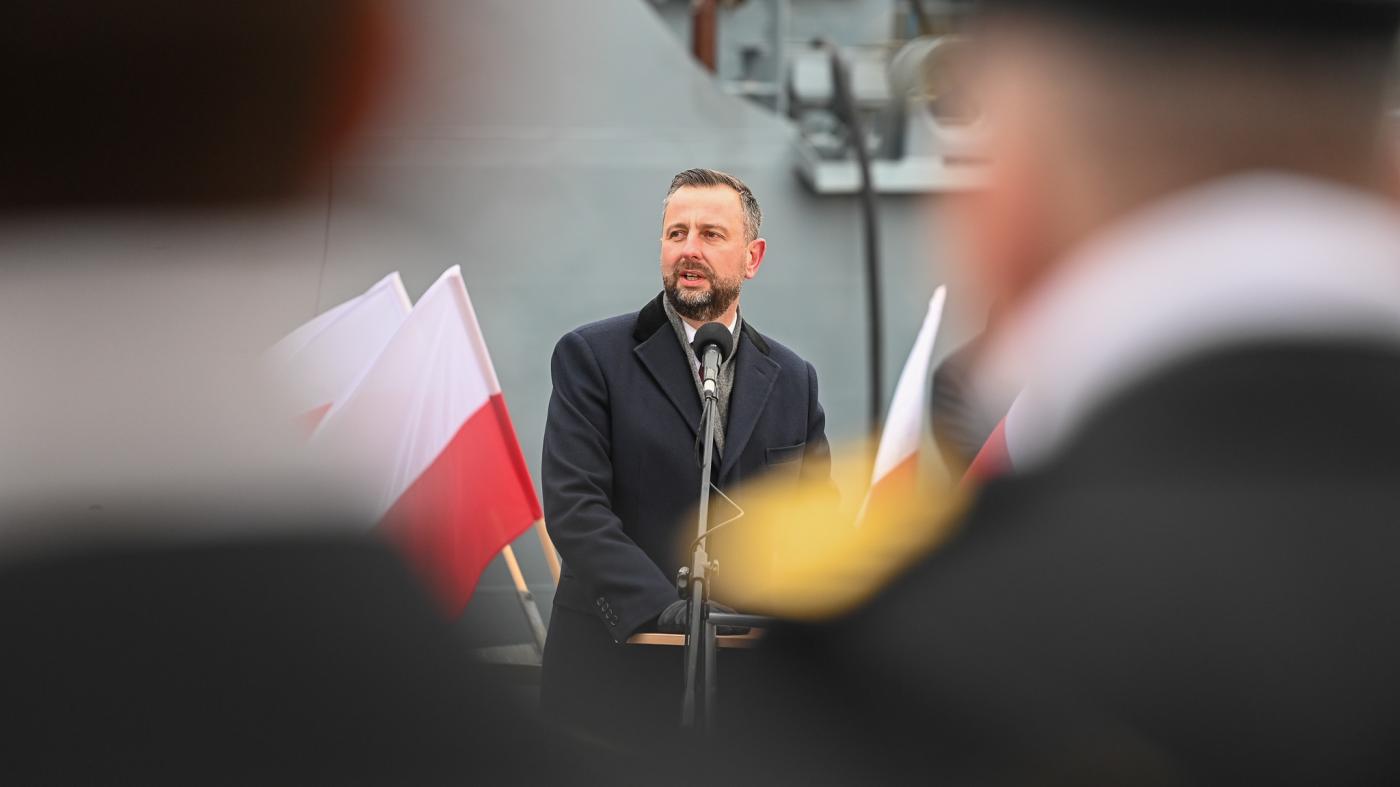
fot. plut. Wojciech Król / MON
How do you assess the current level of readiness of the Polish Navy in the context of threats in the Baltic Sea region?
Władysław Kosiniak-Kamysz: The current level of readiness of the Polish Navy is significantly better than what we saw in the decade preceding 2022, although there are still noticeable gaps. After 2014, and especially following Russia’s aggression against Ukraine in 2022, our operational priorities focused on increasing the defensive readiness of the Baltic Sea area, strengthening interoperability with allied forces, and developing mine countermeasure and anti-ship capabilities.
We have successfully implemented the Kormoran II minehunter program, which has considerably improved our mine countermeasure capabilities. We have also intensified exercises with NATO and regional partners, enabling us to operate more effectively in a complex and demanding environment. At the same time, we are aware of the challenges ahead – we need to increase the number of modern vessels capable of conducting a wide range of missions and ensure an adequate number of submarines suited to the specific conditions of the Baltic Sea. This also necessitates further development of maritime reconnaissance systems. Maintaining the pace of modernization in line with the dynamics of regional threats is crucial. We must sustain the intensity of allied exercises and address equipment and logistics shortages. Only a comprehensive approach will ensure a high level of deterrence and defense capability.
Do the Ministry of National Defence’s modernization plans include new vessels for the Navy, and if so, which types of ships are considered priorities?
- Our modernization plans include several priorities. First and foremost is the Orka program, which involves modern submarines. Second, we have the Miecznik program, covering multi-role frigates. Third, we are focusing on mine countermeasure and logistic vessels, as well as – very importantly – unmanned systems, including drones.
These projects and procurement programs are at various stages of implementation. Each program has its own conditions and level of complexity, but we are maintaining momentum to ensure that new equipment reaches our sailors as quickly as possible.
At what stage is the Orka submarine program currently, and can we expect an acceleration of the process, especially in light of your public declarations?
- The Orka submarine program represents the culmination of many years of efforts and earlier declarations. Restoring a submarine fleet to the Polish Navy is one of our key priorities – and one of the priorities of the government as a whole.
A year ago, we announced Poland’s intention to acquire submarines and set ourselves the task of selecting a contractor and purchasing the vessels. The selection process was preceded by lengthy analytical phases, requirement specifications, and dialogue with potential suppliers. In 2025, we accelerated the procedures. We conducted intensive intergovernmental negotiations and analyzed offers from several competitors, including Italy, Germany, Sweden, and South Korea.
The team I established in September, which I personally chaired, presented recommendations that were subsequently approved by the Council of Ministers. Not many believed it would succeed, but we achieved our goal – we made a decision and selected the state that will supply submarines to Poland. This partner will be Sweden. According to the team’s assessment, Sweden presented the best offer, a conclusion confirmed by the Council of Ministers. This was based on an objective analysis of all criteria, including delivery timelines, price, overall value, and operational capabilities, particularly in the Baltic Sea environment.
As a result, Sweden will become our strategic partner in the construction, introduction, and operation of three new submarines, with a contract value exceeding PLN 10 billion. We assume the delivery horizon for these vessels is around 2030, although we hope the commitments will be fulfilled earlier. I would like the intergovernmental agreement between the Republic of Poland and the Kingdom of Sweden to be signed later this year.
The new A26-class submarines represent a new quality tailored to our requirements. They constitute a generational leap for the Polish Navy. These vessels are well suited to operations in the Baltic Sea, both in terms of size and balance. They offer substantial firepower and full NATO interoperability. All of this ultimately determined our choice.
I would like to emphasize that introducing submarines into service is a long-term process spread over many years. It is not enough to build the vessels; we must also train crews and carry out certification processes. We are not doing this alone. Before the submarines enter service, we want our sailors to already be training on more modern platforms than those currently in use. As part of a gap-filler solution, in 2026 our sailors will undergo training in Sweden, and from 2027 we will have access to an interim submarine bridging the gap between contract signing and delivery of the new units to the Polish Navy. This will allow Polish personnel to train in realistic service conditions, significantly accelerating the overall training process.
I would also like to stress that choosing the Kingdom of Sweden as a strategic partner under the Orka program not only increases the operational potential of the Polish Navy but also brings tangible benefits to the domestic defense industry. Under the contract, Sweden will invest hundreds of millions of zlotys in the Polish shipbuilding industry and procure armaments in Poland. Importantly, Sweden is not merely our economic partner – we are also united by shared responsibility for the Baltic Sea and common commitments within NATO.
This procurement therefore creates an opportunity to develop a strategic partnership in the Baltic Sea area. Through this decision, we are jointly building a new security architecture not only in the Baltic, but also on seas and oceans beyond it, as the Polish Navy’s operational capabilities are not limited exclusively to the Baltic Sea.
What actions is the Polish Navy taking to develop capabilities for countering submarines and mine threats in the Baltic Sea?
- The Polish Navy is continuously developing both anti-ship and mine countermeasure capabilities, as these areas are crucial for Baltic Sea security. We are continuing the implementation of the Kormoran II minehunters, equipped with advanced detection and neutralization systems for a wide range of threats. Importantly, these vessels are adapted to operate against unmanned systems.
Further efforts include modernizing sonar equipment, integrating command-and-control systems, and developing hydrographic reconnaissance capabilities. We also intend to develop platforms for anti-submarine warfare and plan to procure modern unmanned systems. Another priority is the development of logistical and maintenance infrastructure, as well as training specialized diving and mine-countermeasure crews, which are essential for conducting mine neutralization operations.
The General Staff continuously analyzes options for increasing anti-submarine warfare capabilities in connection with the implementation of the Miecznik and Orka programs, as well as shipborne helicopters under the Kondor program and AW101 multi-role helicopters. We also aim to expand participation in allied exercises, especially in the field of anti-submarine warfare, as well as anti-ship and mine countermeasure operations in the Baltic Sea. This enhances interoperability and allows us to benefit from our partners’ experience. Additionally, we must deepen cooperation with industry and research institutions in this area.
Is Poland planning to increase the presence of its naval personnel in NATO missions on seas other than the Baltic?
- The Polish Navy remains very active in numerous NATO operations and exercises outside the Baltic Sea. This is part of building our partnerships and allied credibility. However, we must remember that each such engagement requires personnel and equipment that may be needed along Poland’s coastline. Therefore, we will assess any potential increase in international involvement on a case-by-case basis, taking into account our current and future capabilities.
How does the Ministry of National Defence approach cyber security and the protection of critical infrastructure such as ports and offshore installations?
- Cyber security and the protection of critical infrastructure, including ports and maritime installations, are among the key elements of the national defense system. In the face of growing cyber threats and hybrid activities, we are taking steps to strengthen resilience in these areas. To counter cyberattacks, we are improving our IT systems and encouraging similar measures by, among others, maritime offices.
Critical infrastructure protection is a more complex issue. Responsibility primarily lies with infrastructure owners and the Border Guard, while the Police also play a role during the introduction of alert levels. The armed forces may provide support if necessary, although this is not an area of our direct responsibility.
However, it is important to mention two naval operations: Zatoka and Baltic Sentry. Both enhance security by monitoring Russian naval activity and detecting acts of sabotage at sea. Zatoka is a national operation, while Baltic Sentry is an allied mission conducted together with other NATO countries.
Is the Ministry considering increasing funding for naval personnel training and expanding cooperation with the Polish Naval Academy in Gdynia?
- Increasing investment in personnel training and strengthening cooperation with the Naval Academy are among our key priorities. In light of plans to acquire advanced systems such as submarines and multi-role frigates, it is essential to ensure a professional training base for officers, non-commissioned officers, and technical specialists.
As the primary institution responsible for educating and training naval personnel, the Academy is developing educational programs, simulators, practical facilities, and specialist courses to meet both current and future challenges and equipment requirements. As procurement programs progress, we also plan to increase the number of training slots at the Academy and modernize its infrastructure.
At the same time, initiatives are being developed to strengthen cooperation between industry and academia, improving technology transfer and preparing graduates to work with new systems. It is worth emphasizing that training is not only about the number of instructional hours but also about infrastructure development – including simulators, pools, training areas, and programs for active-duty ship crews.
What lessons for the Polish Navy can be drawn from recent armed conflicts, including the war in Ukraine?
- The war in Ukraine and other modern conflicts have yielded several important lessons. First, the importance of flexible, modular solutions and unmanned systems has increased. Aerial drones, unmanned surface vessels, and underwater systems have proven crucial for reconnaissance and target engagement, reducing the risk of own losses.
Second, gaining control of maritime areas requires the development of long-range precision strike capabilities using anti-ship missiles and long-range artillery. These are essential deterrence tools. Third, the protection of critical infrastructure and communication systems is of growing importance, as hybrid and cyber attacks targeting logistics and telecommunications infrastructure significantly weaken a state and reduce its operational capability.
Fourth, it is necessary to integrate training with allies and further enhance interoperability. We place particular emphasis on rapid data exchange and efficient coordination between surface, subsurface, and air components. Fifth, coastal defense and the development of missile and artillery forces capable of protecting maritime lines of communication and ports remain critical. Conflict experience shows that flexibility and rapid adaptation to new techniques and technologies are just as important as modern equipment.
How does the Ministry of National Defence plan to support the development of the Polish shipbuilding industry through military procurement?
- The Ministry of Defence will support the Polish shipbuilding industry in the way it can and should – through systematic defense and technical procurement. We recognize that strong national shipbuilding capabilities are the foundation of effective maritime forces. Therefore, as in other domains, we will direct as many contracts as possible to Polish shipyards. Their development constitutes a critical backbone for our armed forces and, ultimately, for national security.
How does the Minister define the role of the Polish Navy within the national security system over the coming decades?
- The Baltic Sea is strategically important but geographically limited. Combined with the presence of the Kaliningrad exclave and the Russian Baltic Fleet, this means that in a potential conflict Russia could quickly deploy anti-access and area denial (A2/AD) systems, limiting freedom of movement and maneuver in the region.
Therefore, the role of the Polish Navy is to counter such systems. This is why we are developing, among other capabilities, coastal anti-ship missile units. Another highly effective component of our defense potential will be submarine forces – and I would remind you that we are on the verge of signing a contract under the Orka program.
In addition, multi-role frigates and naval aviation will play an active role, contributing to both defensive and offensive capabilities. We must also take into account the hybrid dimension of hostile activities in the Baltic, particularly sabotage targeting critical infrastructure. As a result, patrol capabilities will gain importance – including maritime aviation, underwater drones, and patrol vessels.
It must also be emphasized that since Sweden and Finland joined NATO, the Baltic Sea has effectively become an internal sea of the Alliance. This not only multiplies our collective forces in the region but also enables closer military cooperation, as exemplified by the Baltic Sentry operation.
see also
Kamil Kusier
redaktor naczelny
comments
Add the first comment
see also
Lithium at the core. TKMS and E3 Lithium align on Canada’s submarine ambitions
The end of a quiet era. Polish Navy harbour tugs in transition
105th life-saving mission. Naval Aviators conduct double "Heart Action" transport
Another successful medical evacuation over the Baltic Sea. Yet another intervention at offshore wind farms
Key leadership changes announced in the Polish Armed Forces
137 years since the Apia cyclone in Samoa: a lesson for modern shipping
RAS exercises in the Caribbean. Dutch patrol vessel Zr.Ms. Friesland conducts joint operations with French Navy
Royal Navy invests in uncrewed surface vessels. Project Beehive to accelerate development of the "Hybrid Navy"
French Navy increases operational activity from the Mediterranean to the Arctic
Polish Navy retires prototype minesweeper ORP Gopło after 44 years of service
ADVERTISEMENT
ADVERTISEMENT