Shipbuilding industry is awesome. Stability. When shifting mass takes control away
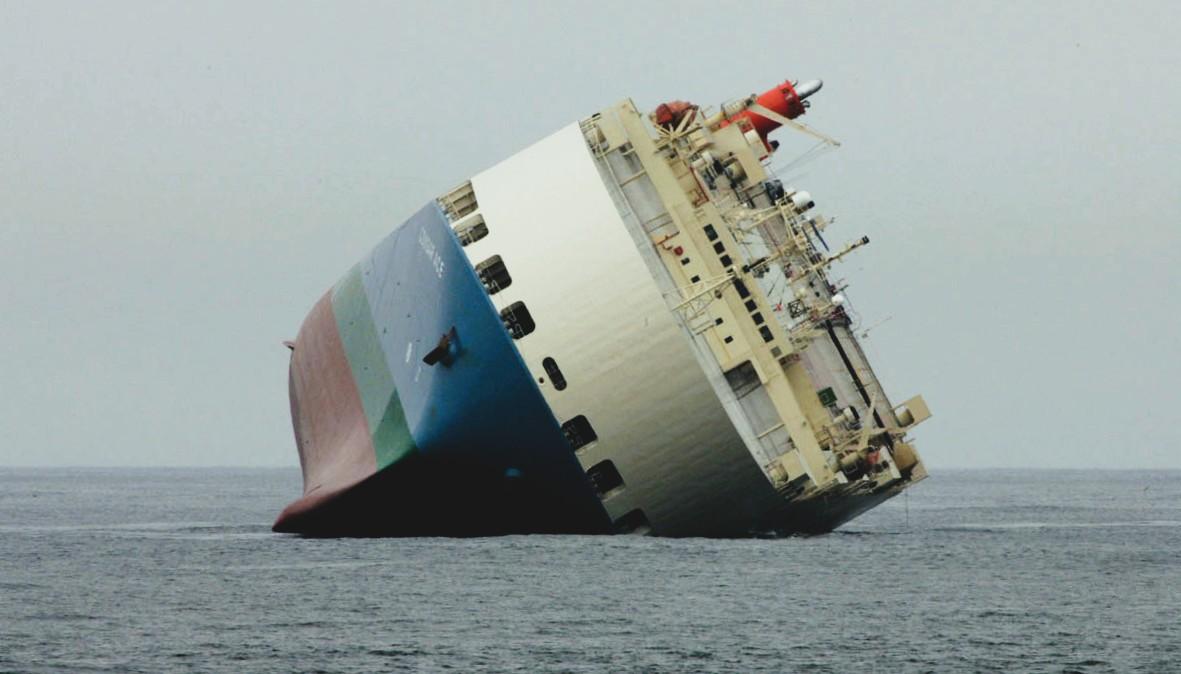
- Stability is not an academic concept. It is a vessel’s real ability to survive at sea, says Marcin Ryngwelski in the latest episode of the Shipbuilding industry is awesome series. - And maritime history shows how unforgiving the consequences can be when stability is lost.
business education maritime economy work at mare shipbuilding industry shipbuilding industry is awesome equipment and technology newsToday | 10:34 | Source: Gazeta Morska | Prepared by: Kamil Kusier | Print
fot. Kevin Bell US Fish Wildlife Service / Wikimedia
Many viewers of the Jan Heweliusz series still vividly remember the scenes depicting the tragedy. Yet this ferry was far from the only vessel lost due to stability failure.
What does stability really mean?
- In simple terms, Marcin Ryngwelski explains, - Stability is the ability of a ship or naval vessel to resist heeling moments and continue performing its basic functions while external forces are acting on it.
These forces include wind, waves, towing operations, as well as operational loads such as fishing gear or cargo handling.
Deck immersion caused by heavy seas is often anticipated during the design phase and, if properly accounted for, does not pose a threat.
Danger arises when dynamic forces become uncontrolled, potentially leading to:
- capsizing,
- flooding through unprotected openings,
- cargo shift, which dramatically alters the vessel’s centre of gravity.
Designed, calculated, verified
Stability is therefore analysed in detail from the earliest design stages by design offices, shipyards, research institutions and classification societies.
- The key point, Ryngwelski notes, - Is that a vessel’s mass is never constant. - Fuel consumption, water usage, cargo operations and modifications all affect the centre of gravity. This is why stability is governed by mathematics and physics – not assumptions.
The Jan Heweliusz turning point
In the Jan Heweliusz case, the critical moment came when water began flooding the vessel, followed by the failure of cargo securing chains due to excessive heel.
- The crew fought bravely, Ryngwelski says, but every ballast system has its limits. When uncontrolled water intake coincides with cargo shift, stability and the centre of gravity change almost instantly. There is no worse situation for a ship at sea.
Inclining tests: theory meets reality
For this reason, classification rules, including those of the Polish Register of Shipping (PRS), require controlled inclining experiments:
- for all newbuilds,
- after major modifications,
- after adding permanent ballast,
- and for ferries – every five years.
- These tests are essential, Ryngwelski concludes. - They confirm whether what was calculated on paper truly works in real conditions.
Did you know? One of the filming locations for the Jan Heweliusz series included the workers’ bar and the quay of the Naval Shipyard, prior to its modernisation.
see also
Buy us a coffee, and we’ll invest in great maritime journalism! Support Gazeta Morska and help us sail forward – click here!
Kamil Kusier
redaktor naczelny
comments
Add the first comment
see also
Port of Gdynia surpasses 1 million TEU for the first time in history
Poland’s nuclear project secures landmark financing as PEJ signs first loan agreement with US EXIM
Ellerman City Liners launches BALTEX service, positioning Port of Gdynia at the heart of the Baltic network
Port of Gdańsk posts strong 2025 performance as liquid fuels dominate and container volumes hit record high
UK sets offshore wind auction record. Offshore beats gas and nuclear on price
Agata Staniewska-Bolesta appointed Country Manager of Ørsted Poland
NHV launches helicopter base in Gdańsk to support Baltic offshore wind sector
POLSCA S.A. officially launched as Polish ferry operators consolidate on the Baltic Sea
Robert Lewandowski becomes Sunreef Yachts ambassador, orders 80-foot power catamaran built in Poland
Poland’s nuclear project creates new opportunities for regional accommodation sector
ADVERTISEMENT
ADVERTISEMENT