









Night of Museums 2025 in Świnoujście: where maritime heritage meets the future with MV Kuna at the northern basin
On the evening of May 17, 2025, the port city of Świnoujście invites maritime enthusiasts, heritage lovers, and curious visitors to a truly special edition of Night of Museums. This year’s focal point will be the northern basin – a former shipyard zone, now transformed into a marina – where the historic meets the contemporary in a compelling, open-air narrative about the region’s port and shipbuilding legacy.
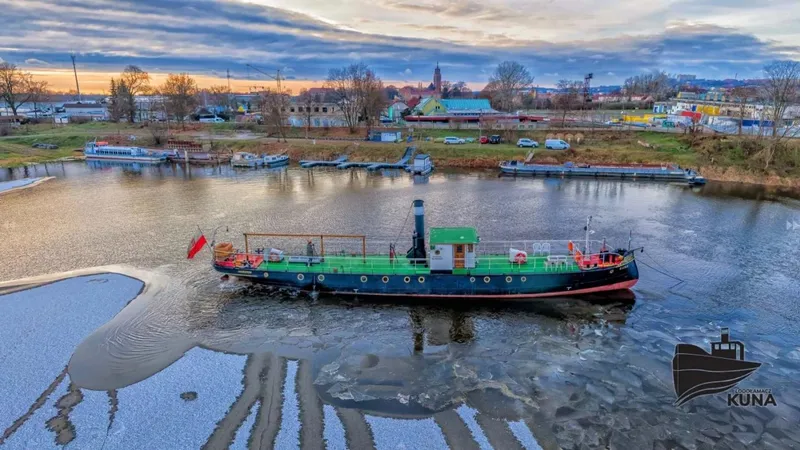
In brief
The tug MV Kuna, built in 1884 and the oldest still operating river icebreaker in the world, will moor at the Basen Północny in Świnoujście during the Night of Museums on 17 May 2025. The vessel was built at the Danziger Schiffswerft shipyard in Gdańsk as the steam icebreaker Ferse, came to Poland in 1947, sank in Gorzów Wielkopolski in 1981, and has been rebuilt since 2000 by the Stowarzyszenie Wodniaków Gorzowskich Kuna association. The programme includes a debate on the future of the Basen Północny at 17:00, a storytelling session by Dr Józef Pluciński at 19:30, walks tracing the old shipyard from 20:00, and a concert by the LOGOS choir at 21:30. Admission to all events is free.
Star of the night: the world’s oldest active river icebreaker
At the heart of the event will be the MV Kuna – the oldest operational river icebreaker in the world. Built in 1884 by the Danziger Schiffswerft & Kesselschmiede Feliks Devrient & Co. in Gdańsk, this legendary vessel has not only survived two world wars but continues to navigate Polish waters as a museum and training ship.
Originally launched as the SS Ferse and serving the Prussian state on the Vistula River, the vessel changed hands numerous times: sailing under the Free City of Danzig, then the Third Reich as Marder, later requisitioned by the British in Hamburg post-1945, and finally repatriated to Poland in 1947 where it was renamed Kuna (a direct Polish translation of “Marder”).
Decommissioned in 1965 and stripped of its equipment, Kuna was relegated to Gorzów Wielkopolski with plans for conversion into a mooring pontoon. However, disaster struck in 1981 when the vessel sank in the port basin—seemingly ending its long career.
Resurrection from the deep
It wasn’t until nearly two decades later that a group of passionate inland mariners from Gorzów founded the “Kuna” Association of Gorzów Watermen, dedicated to salvaging and restoring the sunken icon. Thanks to their tireless efforts—six years of fundraising, documentation recovery, and painstaking reconstruction—the Kuna was successfully raised in 2000 and meticulously restored to her 19th-century silhouette.
Though the original steam engine was replaced by a modern diesel power unit, the vessel’s hull, deck elements, and historic proportions were preserved. Today, the Kuna once again sails Polish rivers as a floating museum, symbolizing the triumph of maritime passion over time and tide.
- Only true enthusiasts take on restorations of this scale. The pace of work depends entirely on funding, remarks Capt. Jerzy Hopfer, initiator of the restoration and longtime skipper of the Kuna, who dedicated over four years to bringing her back to life.
Maritime heritage reimagined: the northern basin program
Świnoujście’s northern basin – once a shipyard dating to the turn of the 20th century – will serve as the symbolic hub for the night’s main events. Flanked by preserved industrial architecture and steeped in port history, the area offers a striking backdrop for discussions about its future potential as a cultural and civic landmark.
At 17:00, a public debate titled “Northern basin – sailing, culture, apartments, or museum?” will gather city officials, planners, maritime experts, and citizens to explore how this waterfront zone might balance heritage preservation with sustainable redevelopment.
From 19:30, regional historian Dr. Józef Pluciński will guide visitors through a storytelling session on the origins of Świnoujście’s shipbuilding era, followed by a rare screening of the 1993 documentary “Wyszli” directed by Ryszard Szczepański, chronicling the withdrawal of Soviet forces from the city – with commentary from the filmmaker himself.
Beginning at 20:00, guided walking tours titled “Traces of the old shipyard” will lead guests through forgotten corners of the port’s industrial past, while accompanying events such as classic diving demonstrations, fire-dancing performances, and illuminations of the historic buildings will enrich the immersive atmosphere.
Beyond the docks: citywide Night of Museums attractions
The port is not the only place embracing the magic of museum night. From 18:00 until late, other cultural institutions will open their doors, including the mysterious Angel’s Fort and Western Fort, which will unveil their shadowy corridors and military secrets free of charge.
Art lovers are invited to ms44 Gallery at 21:30 for an evocative concert by the LOGOS municipal choir, adding a serene musical note to the industrial echo of the night.
Importantly, all attractions are free of charge, ensuring accessibility for all—from families and tourists to history buffs and long-time residents.
Source: Gazeta Morska · Compiled by: Kamil Kusier
Related articles
 History Two Lancaster wrecks, one operation. The bombers fell over the Baltic laying mines still disarmed today
 History Seven dead in war, seven in peacetime. Błyskawica turns 90 and still flies the ensign
 Shipbuilding industry Batavia goes ashore. The Dutch show what to do with a ship no longer worth keeping afloat
 History 17 September 1939. The Soviets invaded Poland. Aggression, deportations and Katyn
 Navy and defence 563 years ago Gdańsk and Elbląg destroyed the Teutonic fleet. 44 vessels against 30 privateers
 History Nearly 5,000 motorcycles ride to Piaśnica. The memory of a crime the Germans failed to burn
Comments (0)
The discussion is moderated by the editors: a comment appears after review. Your e-mail address is not published.
Nobody has commented on this article yet.