









Seven dead in war, seven in peacetime. Błyskawica turns 90 and still flies the ensign
Ninety years ago, on 1 October 1936, at the J. Samuel White & Co yard in Cowes on the Isle of Wight, Countess Cecylia Raczyńska spoke the words "Sail the seas and oceans" and brought the name Błyskawica, Lightning, into the history of the Polish Navy. Today the same ship lies at the Pomorskie Quay in Gdynia, still flies the white-and-red naval ensign, has a serving crew and is the oldest preserved destroyer in the world.
In brief
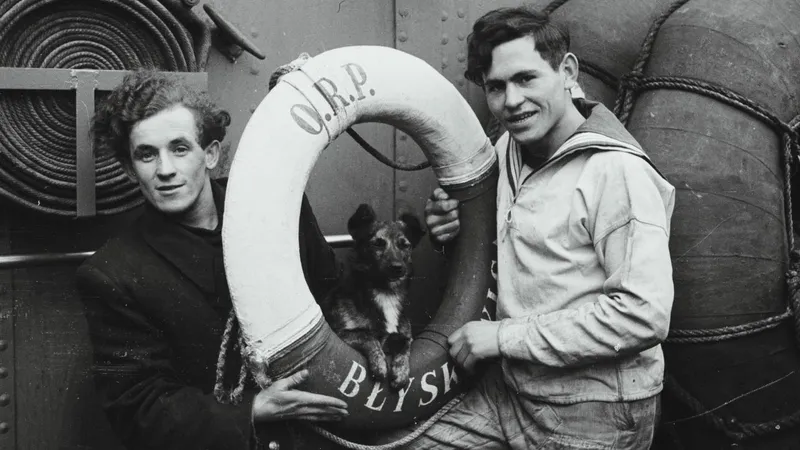
Błyskawica, the oldest surviving destroyer in the world, was launched on 1 October 1936 at the shipyard in Cowes on the Isle of Wight. During the Second World War, Błyskawica sailed almost 150 thousand nautical miles, escorted 85 convoys and lost seven sailors. A steam pipe failure on 9 August 1967 killed another seven sailors aboard Błyskawica. The museum ship Błyskawica has received about 7.5 million visitors since 1 May 1976 and remains part of the 3rd Ship Flotilla.
The sponsor was the wife of Count Edward Raczyński, Polish ambassador in London and, from 1979 to 1986, president of the Republic of Poland in exile. Little more than two months earlier the same yard had launched the prototype sister ship Grom. The two destroyers were among the most modern and most powerful ships of their class in the world.
From Peking to Deadlight
With war looming, Grom, Błyskawica and the older Burza sailed for Britain under the order code-named Peking. Grom was sunk on 4 May 1940 in the Rombaken fjord near Narvik, bombed by the Luftwaffe. Błyskawica came through the entire war: the North Sea and the Atlantic, the Norwegian campaign, the evacuation from Dunkirk, the defence of Cowes against air raids while under repair at her builder's yard in May 1942, the Mediterranean with the relief of Malta and the landings in North Africa, and the cover of the Normandy invasion. After Germany's surrender she took part in Operation Deadlight, the scuttling of captured U-boats.
The record of that service, released by the Polish Naval Museum for the anniversary, is precise: almost 150,000 nautical miles, 85 convoys escorted, 108 combat patrols. Her guns shot down four aircraft for certain and probably three more, and together with other ships she sank two destroyers, two merchant vessels and several smaller craft, and fought submarines with success. She was seriously damaged three times. Over the whole war seven of her sailors were killed and 48 wounded.
She is the only Allied warship to have been continuously engaged in operations from 1 September 1939 to 8 May 1945.
Return, disaster and a battery in Świnoujście
Błyskawica returned to Poland on 4 July 1947 under Commander Bolesław Romanowski, a famous submariner. She remained in active service for another 20 years, but the worn-out ship's condition deteriorated. On 9 August 1967, during exercises, her steam pipes failed; seven sailors died, as many as in the whole war. That effectively ended her active service. After repairs she served as an anti-aircraft battery in Świnoujście, and in 1975 she was finally decommissioned.
She then replaced Burza, another war veteran, as a museum ship. She received her first visitors on 1 May 1976; since then around 7.5 million people have come aboard.
A ship, not an exhibit
Błyskawica remains part of the 3rd Flotilla of Ships with a serving naval crew. It is the venue for officer commissioning ceremonies and state occasions, a stronghold of naval ceremony and, in the museum's words, a superbly maintained monument of naval engineering of world standing. In 1987 the ship was awarded the Virtuti Militari. Since 2021 the daughters of her sponsor, Viridianna Rey and Katarzyna Raczyńska, have held honorary family patronage over her.
The ship marks the 90th anniversary of her launch for the first time without any witness to her service. In May this year Lech Scott-Skorobohaty, the last sailor to have served aboard Błyskawica, died at the age of 91. The last major docking took place in 2021 at the PGZ Naval Shipyard, so the question of the next one will return within a few years.
Today, as Gdynia and Szczecin argue over where the sail training ship Dar Młodzieży should stand after she retires, Błyskawica is proof that a museum ship can remain a ship: with an ensign, a crew and a ceremonial life. For half a century at the Pomorskie Quay nobody has asked whether it pays.
Source: Gazeta Morska · Compiled by: Kamil Kusier
Related articles
 History Two Lancaster wrecks, one operation. The bombers fell over the Baltic laying mines still disarmed today
 Shipbuilding industry Batavia goes ashore. The Dutch show what to do with a ship no longer worth keeping afloat
 History 17 September 1939. The Soviets invaded Poland. Aggression, deportations and Katyn
 Navy and defence 563 years ago Gdańsk and Elbląg destroyed the Teutonic fleet. 44 vessels against 30 privateers
 History Nearly 5,000 motorcycles ride to Piaśnica. The memory of a crime the Germans failed to burn
 History Suicide according to the secret police, murder according to Solidarity. IPN seeks answers 43 years on
Comments (0)
The discussion is moderated by the editors: a comment appears after review. Your e-mail address is not published.
Nobody has commented on this article yet.