Naftoport expansion in Gdańsk enters execution phase. Strategic boost to Poland’s energy security
Poland’s accelerated investment cycle in the energy sector is entering a decisive phase as construction begins on the expansion of Naftoport in Gdańsk - one of the most critical elements of the country’s energy infrastructure and a key asset in the Baltic region. The project centers on the development of a new unloading berth, designated "W", which will significantly enhance the terminal’s operational capacity and reinforce the security of crude oil and fuel supplies.
business power engineering investments politics pomerania ports tricity news19 march 2026 | 16:27 | Source: Gazeta Morska | Prepared by: Kamil Kusier | Print
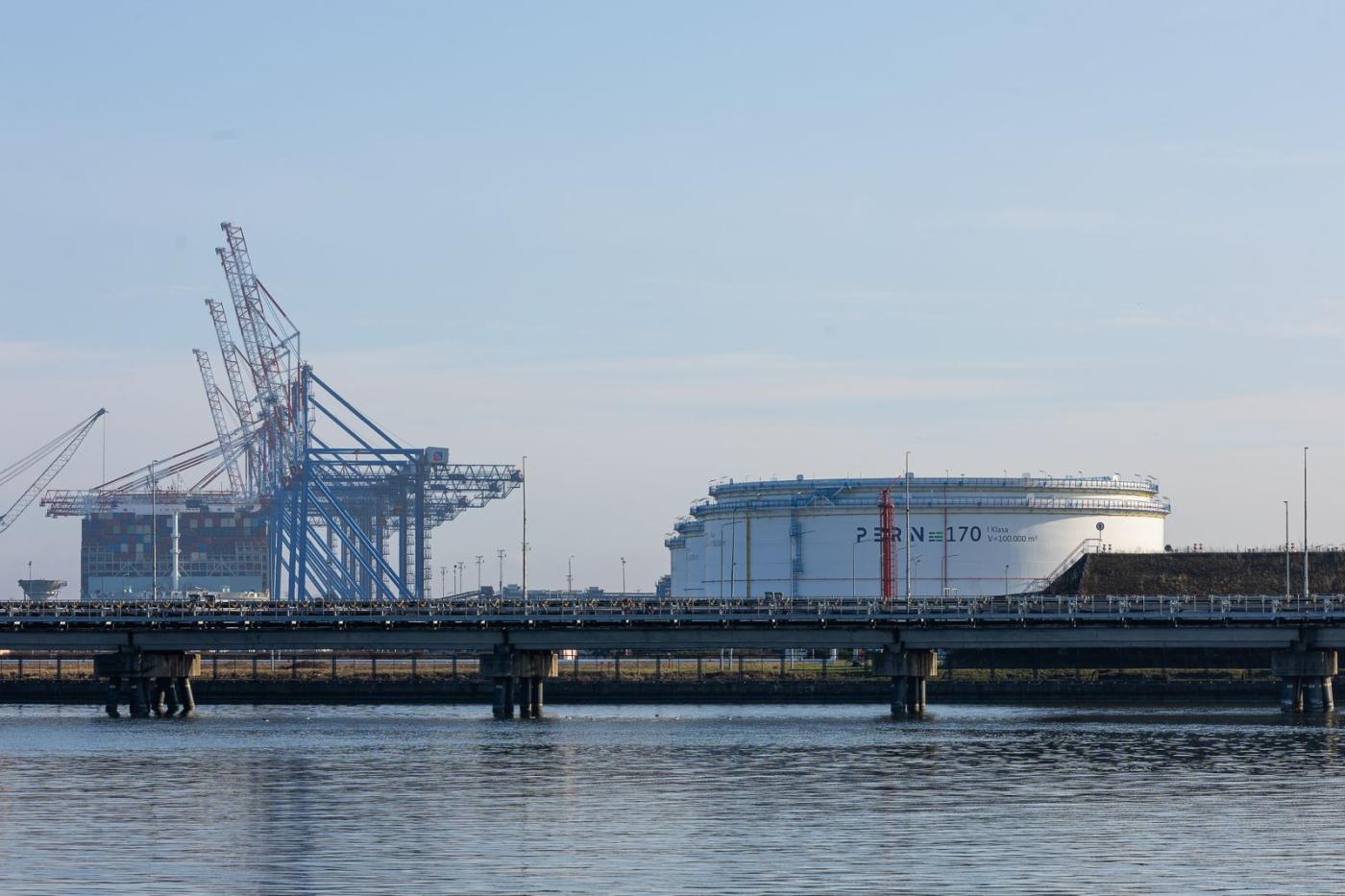
fot. Ministerstwo Energii
The investment is being implemented in cooperation with the Port of Gdańsk Authority and reflects both increasing market demand and the need to strengthen resilience against disruptions in global supply chains.
Pomerania emerging as a regional energy hub
The Naftoport expansion forms part of a broader transformation of Poland’s Pomeranian region into a major energy investment hub in Central and Eastern Europe. Parallel projects include the development of a nuclear power plant, offshore wind farms, and large-scale energy storage systems.
- Pomerania is becoming one of the key centers for energy investments. A nuclear power plant is under development, offshore wind farms are expanding, and large-scale energy storage is being deployed. At the same time, we are expanding Naftoport, strengthening fuel supply security and the resilience of the distribution system. This strategic decision will increase the terminal’s capacity by nearly 20%. In the face of the most severe oil crisis in over 50 years, such investments significantly improve the preparedness and resilience of Poland’s energy sector, said Minister of Energy Miłosz Motyka.
Naftoport: a pillar of supply security
Naftoport, part of the PERN Group, serves as Poland’s primary maritime gateway for crude oil and petroleum product imports. The terminal supplies refineries in Gdańsk and Płock while also supporting deliveries to Central European markets.
In 2025, Naftoport achieved record operational performance:
- 37.4 million tonnes of crude oil received
- 38 million tonnes of total throughput
- 463 vessels handled
These figures underline the terminal’s growing role as a cornerstone of stable energy supply for both Poland and the wider region.
- Naftoport is a key gateway for crude and fuel imports, enabling the Polish economy to function securely—even under highly challenging conditions. This infrastructure already serves the country effectively, and its further expansion is an investment in security, jobs, and regional development. It confirms that energy security remains our top priority, emphasized Wojciech Wrochna, Government Plenipotentiary for Strategic Energy Infrastructure.
Berth “W”: capacity, flexibility, and future readiness
The new “W” berth is the central component of the project, with an estimated value of approximately PLN 500 million. Once completed, it will significantly enhance terminal capabilities:
- handling capacity of approx. 9 million tonnes per year
- increase in total terminal throughput to 49 million tonnes annually
- simultaneous handling of up to four large tankers
- capability to accommodate VLCC-class vessels (over 300 meters in length)
The development will also increase flexibility in handling various crude grades and prepare the terminal for future fuels such as ammonia and methanol.
An important operational advantage will be the ability to carry out modernization works on existing infrastructure without interrupting terminal operations—enhancing overall system reliability.
Strengthening energy system resilience
The project directly contributes to Poland’s energy sovereignty by:
- ensuring full independence in seaborne crude oil imports
- increasing resilience to geopolitical disruptions
- enabling further diversification of supply sources
- supporting NATO and EU objectives related to critical infrastructure and regional energy security
Against the backdrop of ongoing geopolitical instability, the expansion represents a concrete step toward securing long-term supply stability.
Economic impact and regional development
Beyond energy security, the project is expected to deliver tangible economic benefits:
- job creation in construction and marine engineering sectors
- increased tax revenues and port fees
- new contracts for local and international contractors
- enhanced competitiveness of the Port of Gdańsk in the European market
The scope of works includes the construction of a new jetty, cargo handling installations, pipeline racks, and advanced environmental protection systems.
Timeline and strategic outlook
The construction permit was obtained in May 2025, and the EPC contract was signed in November 2025. Project completion is scheduled for the second half of 2028.
The “W” berth development exemplifies a modern infrastructure project that integrates energy security, economic growth, and sectoral transformation. Upon completion, it will further strengthen Gdańsk’s position as a leading energy hub in the Baltic Sea region and reinforce Poland’s role as a reliable and resilient partner in the European energy market.
Buy us a coffee, and we’ll invest in great maritime journalism! Support Gazeta Morska and help us sail forward – click here!
Kamil Kusier
redaktor naczelny
comments
Add the first comment
see also
Port Haller a strategic maritime investment for Poland and the Baltic region
Polish tactical communications breakthrough: COMP@N-Z enters NATO catalogue
Baltica 2 HDD landfall completed. Offshore wind farm cable route ready for grid connection
CRIST Offshore launches production of BC-Wind offshore power station
Poland advances satellite radar capabilities with new Eycore-MoD initiative in Kashubia
PGZ Naval Shipyard and OSI Maritime Systems: towards a new model of naval industry cooperation
Remontowa Shipbuilding delivers hybrid ferry Bjarkøy to Norwegian operator
Baltic Towers and Siemens Gamesa launch strategic cooperation for Baltica 2 offshore wind project
Polish universities and industry join forces to develop dual-use autonomous underwater drone swarms
PERN expands fuel logistics backbone as maritime capacity grows
ADVERTISEMENT
ADVERTISEMENT