









90 years ago, Dar Pomorza completed its historic voyage around the world
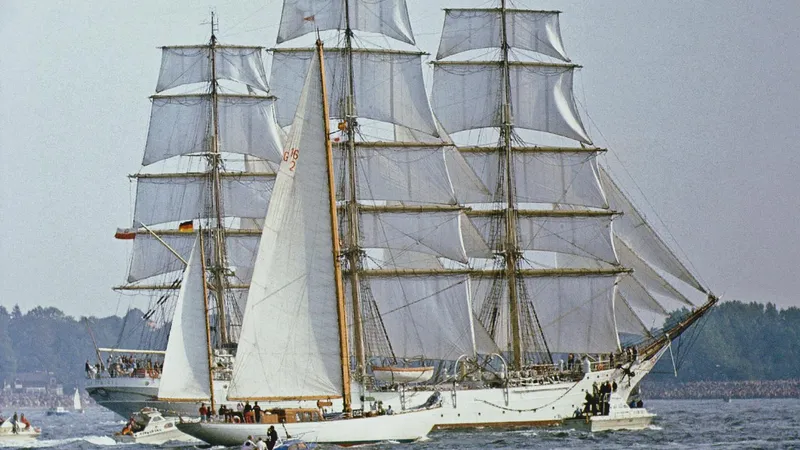
On 3 September 1935, the Polish training ship Dar Pomorza returned to Gdynia, completing the first circumnavigation of the globe by a Polish vessel. The voyage lasted 352 days and carried not only training value for maritime cadets but also significant political and symbolic weight for Poland, then only recently restored to the map of Europe.
In brief
The sailing ship Dar Pomorza returned to Gdynia on 3 September 1935, completing the first round-the-world voyage in the history of Polish shipping. The voyage, begun on 16 September 1934, lasted 352 days, passed through 23 ports, covered 38,746 nautical miles and crossed the equator four times, with a crew of 106 under captain Konstanty Maciejewski. Arleta Gałązka, curator of the museum ship, stresses that the voyage was meant to show the world Poland's presence at sea. By 1981 Dar Pomorza had completed 102 training voyages and trained more than 13 thousand students.
First Polish ship to sail around the globe
Launched on 16 September 1934, Dar Pomorza sailed through 23 ports on several continents, covering 38,746 nautical miles and crossing the equator four times. Commanded by Captain Konstanty Maciejewski, the ship carried a crew of 106, most of them cadets from the Maritime School in Gdynia.
According to Arleta Gałązka, curator of the Dar Pomorza museum ship, the voyage was much more than a training exercise:
– The aim was to show that Poland was present at sea. Only a dozen years after regaining independence, the Polish flag circled the world, symbolising both national pride and maritime ambition, she noted.
Meeting the Polish diaspora and promoting Poland
Throughout the journey, Dar Pomorza acted as a maritime ambassador for the young republic. The crew met Polish communities abroad, often drawing emotional gatherings where expatriates travelled hundreds of kilometres just to step aboard a piece of their homeland. Polish products, from Wedel sweets to Baczewski spirits, were part of the ship’s outreach efforts, enhancing the symbolic role of the voyage.
The voyage was widely covered by Polish Radio and national newspapers, while several crew members later published memoirs, including books by Zbigniew Rokiciński, Stanisław Koska, and Tadeusz Meissner, further cementing the significance of the expedition in maritime history.
The legacy of the “White Frigate”
Nicknamed the “White Frigate,” Dar Pomorza entered service under the Polish flag in 1930, replacing the ageing Lwów. Until her retirement in 1981, she completed 102 training voyages, sailed over half a million nautical miles, and trained more than 13,000 cadets. In 1983, she was converted into a museum ship, permanently moored at Gdynia’s Kościuszko Square, where she remains a proud monument of Poland’s maritime tradition.
Ninety years after her landmark circumnavigation, Dar Pomorza continues to stand as a symbol of Poland’s maritime heritage and a reminder of the voyage that placed the nation firmly on the map of global seafaring.
Source: Gazeta Morska / PAP · Compiled by: Kamil Kusier
Related articles
 History Two Lancaster wrecks, one operation. The bombers fell over the Baltic laying mines still disarmed today
 History Seven dead in war, seven in peacetime. Błyskawica turns 90 and still flies the ensign
 Shipbuilding industry Batavia goes ashore. The Dutch show what to do with a ship no longer worth keeping afloat
 History 17 September 1939. The Soviets invaded Poland. Aggression, deportations and Katyn
 Navy and defence 563 years ago Gdańsk and Elbląg destroyed the Teutonic fleet. 44 vessels against 30 privateers
 History Nearly 5,000 motorcycles ride to Piaśnica. The memory of a crime the Germans failed to burn
Comments (0)
The discussion is moderated by the editors: a comment appears after review. Your e-mail address is not published.
Nobody has commented on this article yet.