









2026 the Year of Gdynia. Poland’s maritime heart at the core of national memory and innovation
By resolution of the Senate of the Republic of Poland, the year 2026 has been officially designated as the Year of Gdynia — a symbolic tribute to one of the country’s most pivotal maritime and economic centers, marking the 100th anniversary of Gdynia being granted city rights. This centennial offers a timely opportunity to reflect on the city’s immense role in shaping Poland’s maritime identity, driving economic development, and steering socio-political transformation across the 20th and 21st centuries.
In brief
The Senate of the Republic of Poland has declared 2026 the Year of the City of Gdynia, marking the 100th anniversary of Gdynia being granted city rights. The Sejm passed the act on the construction of the port in Gdynia on 23 September 1922, Gdynia received city rights in 1926, and in the 1930s more than 6 thousand ships a year called at the port. Gdynia has nearly 250 thousand inhabitants and runs one of the most diversified ports on the Baltic, handling containers, general cargo, bulk commodities and passengers. Senators wrote in the resolution that 2026 is to be an impulse for further development with respect for tradition.
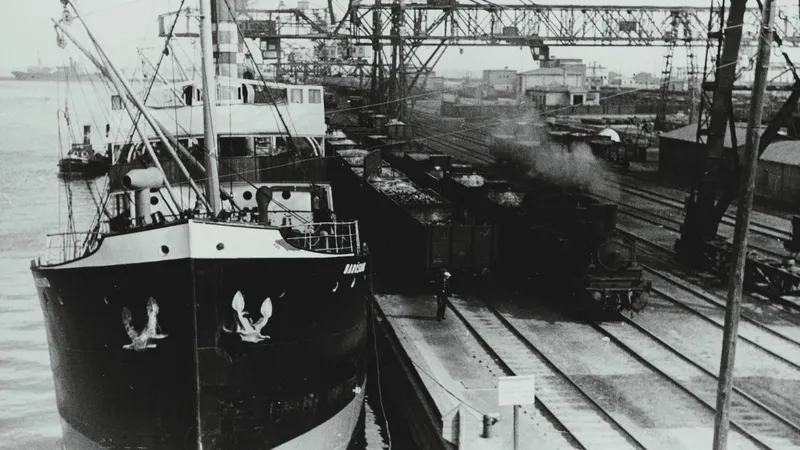
Molo węglowe w Gdyni. Fiński statek SS Bar? sund . Po lewej holownik bunkrowy Hala wrzesień 1935 roku / fot. Henryk Poddębski / Wikimedia / AP
Gdynia: the port of national aspirations
As emphasized in the Senate’s resolution, Gdynia stands as a “symbol of dynamic economic growth and modernity in Polish history.” The construction of an independent, modern seaport was a strategic objective of the Second Polish Republic following the nation’s rebirth in 1918. On September 23, 1922, the Polish Parliament passed the act authorizing the construction of the port in Gdynia, initiating the rapid transformation of a modest fishing village into a cornerstone of Poland’s maritime infrastructure.
Only four years later, in 1926, Gdynia was granted city rights. Within a decade, it evolved into one of Europe’s largest and most technologically advanced ports. By the 1930s, over 6,000 vessels called at Gdynia annually. The establishment of the State Maritime School further cemented the city’s role in shaping generations of professionals for Poland’s merchant navy.
Maritime DNA: economy and modernity intertwined
Today, Gdynia represents far more than a success story from the interwar period. It is a dynamic, modern port city integrating industry, logistics, maritime education, and cutting-edge technologies. Home to nearly 250,000 residents, Gdynia remains a vital node in Poland’s and Europe’s transportation and trade networks. Its seaport is among the most diversified in the Baltic Sea region, efficiently handling containers, bulk cargo, general cargo, and passenger traffic.
The Year of Gdynia is not merely a retrospective celebration. It is a forward-looking initiative — a platform to promote Poland’s maritime economy, reaffirm the strategic significance of its seaports, and underscore the need for sustained investment in infrastructure, innovation, and maritime education.
Why the year of Gdynia matters — beyond the centennial
This Senate designation recognizes Gdynia as a national symbol — a city that has consistently proven that Poland’s presence on the Baltic is more than geographical; it is strategic. The year 2026 offers the maritime industry an unparalleled opportunity to highlight its contributions, strengthen its voice in public and international discourse, and attract the next generation of maritime professionals.
As the Senate noted: “Let 2026 be a time to commemorate Gdynia’s exceptional history — and a catalyst for future creative development grounded in tradition and achievement.”
Gdynia: A City of the Future Anchored in Tradition
This centennial year is the perfect moment to rediscover Gdynia — a model of the modern European port city that has, for a century, merged maritime legacy with forward-thinking progress. For media, local governments, cultural institutions, maritime academies, and industry stakeholders, 2026 presents a unique opportunity to intensify efforts to showcase Gdynia’s potential on both the national and international stage.
Source: Gazeta Morska · Compiled by: Kamil Kusier
Related articles
 History Two Lancaster wrecks, one operation. The bombers fell over the Baltic laying mines still disarmed today
 History Seven dead in war, seven in peacetime. Błyskawica turns 90 and still flies the ensign
 Shipbuilding industry Batavia goes ashore. The Dutch show what to do with a ship no longer worth keeping afloat
 History 17 September 1939. The Soviets invaded Poland. Aggression, deportations and Katyn
 Navy and defence 563 years ago Gdańsk and Elbląg destroyed the Teutonic fleet. 44 vessels against 30 privateers
 History Nearly 5,000 motorcycles ride to Piaśnica. The memory of a crime the Germans failed to burn
Comments (0)
The discussion is moderated by the editors: a comment appears after review. Your e-mail address is not published.
Nobody has commented on this article yet.