Violating a drone restricted area in the Port of Gdańsk could cost you thousands - or even jail time
The use of unmanned aerial vehicles (UAVs), commonly known as drones, has become widespread across industries — from media and surveying to logistics and port operations. Yet, not every area is open for flight. The Port of Gdańsk, one of Poland’s key maritime gateways, is covered by a drone restricted area (DRA) – a specially designated zone where flying drones without authorization is strictly prohibited.
marine lifestyle aviation pomerania ports equipment and technology tricity news29 october 2025 | 09:40 | Source: Gazeta Morska | Prepared by: Kamil Kusier | Print
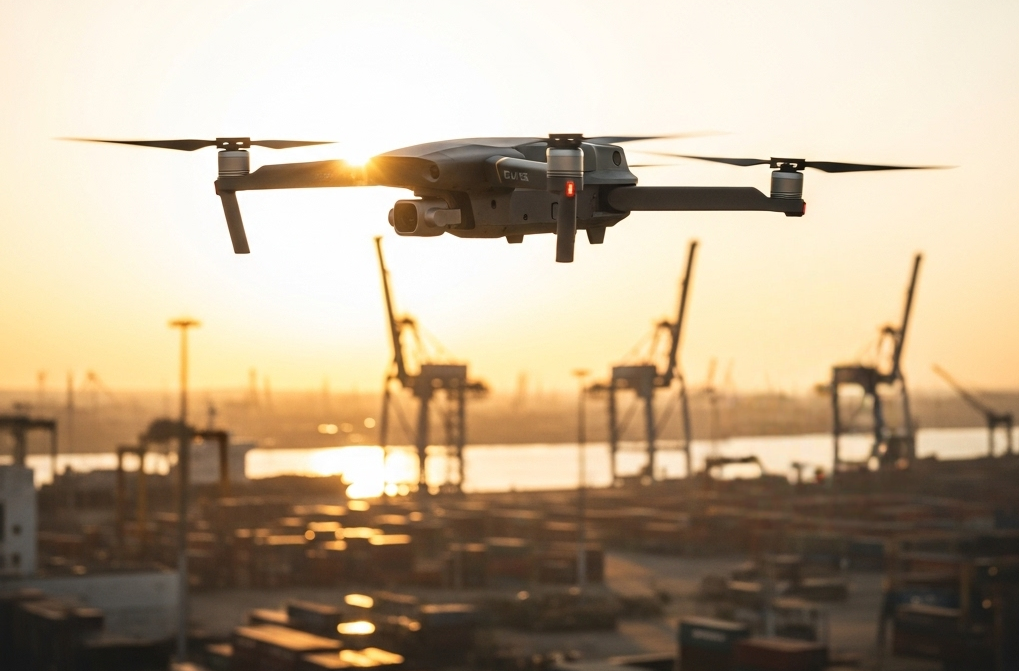
fot. Port Gdańsk
Violating this restriction can lead to confiscation of the drone, financial penalties of up to PLN 24,000 (≈€5,500), and in severe cases – criminal prosecution and imprisonment.
What are drone restricted areas (DRA)?
DRA zones are defined areas where drone operations are limited or entirely banned due to national security and safety considerations.
Such zones are typically established around seaports, refineries, airports, power plants, and military bases.
In the case of the Port of Gdańsk, DRA boundaries protect:
- critical cargo-handling infrastructure,
- vessel traffic and navigation safety,
- port personnel and passengers.
- Any unauthorized drone flight within the DRA is treated as a potential threat to port security. It’s not about restrictions – it’s about protecting people and infrastructure, explains Ireneusz Litwinowicz, head of the operations centre at the Port of Gdańsk.
Legal consequences: up to 5 years in prison
According to article 212 of the Polish Aviation Law, an individual who:
- violates aviation traffic rules, or
- breaches airspace restrictions imposed for public safety,
may face up to 5 years of imprisonment.
If the violation is unintentional, penalties may include a fine, community service, or imprisonment of up to one year.
Even a simple recreational flight “to capture a sunset over the port” can result in a criminal case if it occurs within a protected airspace.
Financial penalties: up to PLN 24,000 per incident
Beyond criminal liability, drone operators are subject to administrative fines issued by the Civil Aviation Authority (ULC):
- PLN 10,000 – for operating against DRA rules,
- PLN 10,000 – for failing to register as a drone operator,
- PLN 4,000 – for violating EU open-category drone regulations.
Combined, these sanctions can total PLN 24,000 per single incident.
Real case: unauthorized drone halts port operations
Last year, a drone entered a restricted cargo-handling zone in a Polish port, forcing a temporary shutdown of a container crane. The operator claimed ignorance of the restriction, but port security immediately reported the case to the police and the Civil Aviation Authority. The incident led to formal proceedings for breaching aviation regulations.
- Lack of knowledge doesn’t excuse the violation,” says Litwinowicz. “Every operator must be aware of the legal framework governing the airspace they fly in.
Flying legally near the Port of Gdańsk
Before launching a drone near the port, operators should:
- Register at drony.gov.pl and label the UAV with their operator ID.
- Complete online training and pass the mandatory test (depending on the drone’s category).
- Check airspace availability using the Drone Tower app before every flight.
- Keep the UAV within visual line of sight and below 120 meters altitude.
- Obtain prior authorization from the Port of Gdańsk before operating within port boundaries.
Drones are not toys – especially over maritime infrastructure
Drone technology offers enormous potential for inspection, logistics, and monitoring, but within port environments, it poses serious safety risks.
Unauthorized flights can disrupt vessel navigation, crane operations, and cargo logistics, creating hazards for workers and infrastructure.
The Port of Gdańsk reminds all UAV users: check the rules before you fly. The cost of ignorance can far exceed the value of the drone itself.
see also
Buy us a coffee, and we’ll invest in great maritime journalism! Support Gazeta Morska and help us sail forward – click here!
Kamil Kusier
redaktor naczelny
comments
Add the first comment
see also
Galeon Yachts and Meyer Shank Racing: merging luxury yachts with motorsport expertise
Winter periscope mode and sandbanks instead of ice: how seals rest in the southern Baltic
Baltic Sea water levels at a record low: a meteorological-oceanographic anomaly with major implications
106 years ago Poland “turned to the sea”. Split celebrations, one goal: a strong maritime Poland
Red Rose trapped in ice on the Bay of Puck. Sequence of events and structural risks
Crystal Sails Awards presented. Pomeranian sailing officially concludes the 2025 season
The Famous Project: first all-female crew sails non-stop around the world
Robert Lewandowski becomes Sunreef Yachts ambassador, orders 80-foot power catamaran built in Poland
Polish ice sailors claim a haul of medals as “Hollywood ice” delivers top-level competition
World Sailing sets a new benchmark for sustainability with life-cycle assessments of Olympic sailing equipment
ADVERTISEMENT
ADVERTISEMENT