Winter periscope mode and sandbanks instead of ice: how seals rest in the southern Baltic
Two to three decades ago, winter in the Baltic Sea meant extensive ice cover, particularly in its northern and central parts. Ice functioned as a natural haul-out platform for seals—most notably the grey seal—providing space for resting, moulting and pupping.
ecology marine lifestyle pomerania marine tourism and recreation newsToday | 13:10 | Source: Gazeta Morska | Prepared by: Kamil Kusier | Print
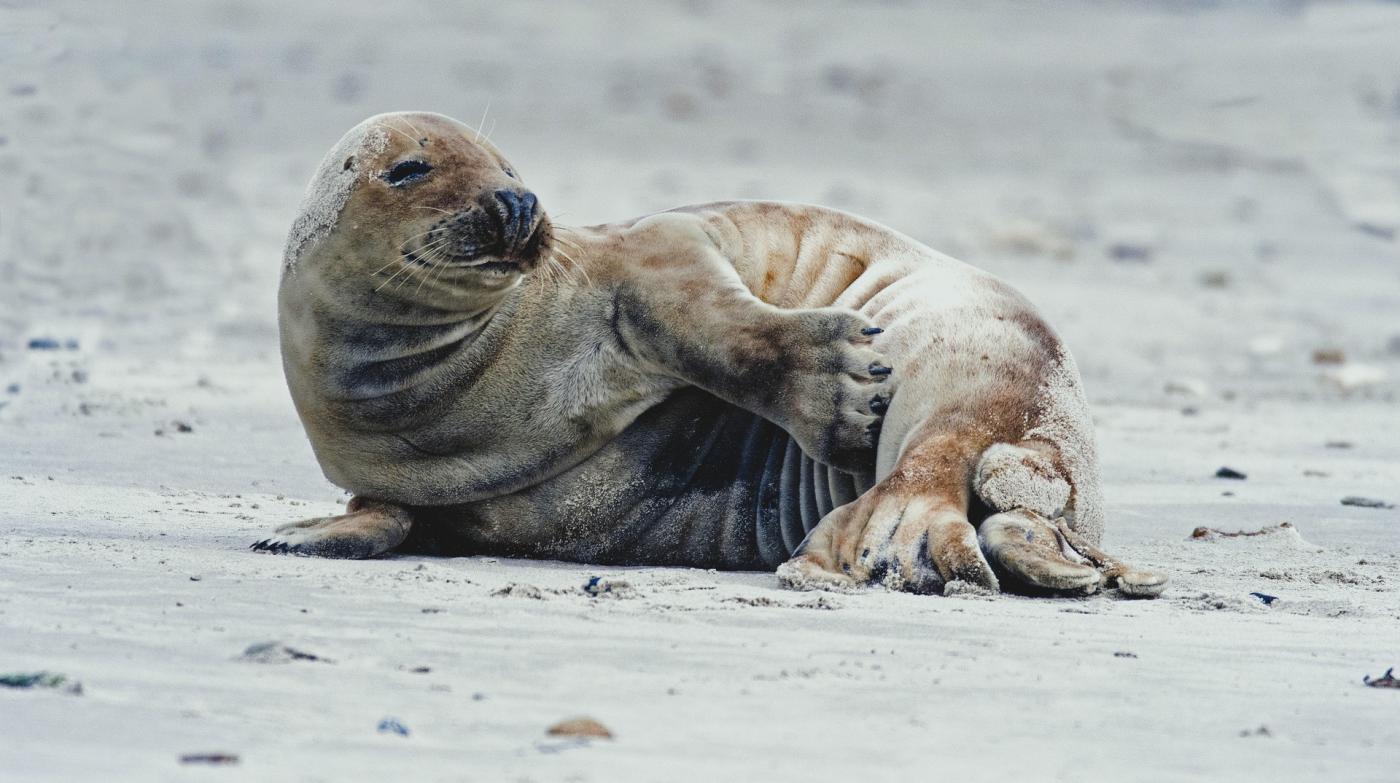
fot. Georg Wietschorke / pixabay
Today, in the southern Baltic, stable sea ice forms only sporadically. Although the winter of 2026 brought unusually severe frosts and partial coastal freezing, ice is no longer the structural basis of seal winter ecology in Polish waters.
In the Polish Exclusive Economic Zone, three seal species are recorded: grey seal (Halichoerus grypus), harbour seal (Phoca vitulina) and ringed seal (Pusa hispida). In the southern Baltic, however, the grey seal is by far the dominant and most frequently observed species.
– In the Polish part of the Baltic Sea we have three seal species, but in the south we most often encounter grey seals – says Capt. Konrad Kończak of Rejsy na FOKI – GROM Mikoszewo.
From ice to sandbanks: changing winter habitats
In the northern Baltic, stable ice cover still supports pupping and resting. In the south, where winters are milder and ice is unreliable, this ecological function has largely shifted to coastal sandbanks and shallow deltaic zones.
The most important site in Poland is the Mewia Łacha nature reserve at the mouth of the Wisła (Vistula River). This dynamic estuarine system, shaped by fluvial sediment transport and ongoing deposition, creates extensive sandbars and shoals that now act as key haul-out sites.
Environmental characteristics of the Vistula mouth include:
- continuous formation and reshaping of sandbanks through sedimentation processes,
- mixing of freshwater and marine waters, increasing nutrient availability and productivity,
- rich feeding grounds for both benthic and pelagic fish species.
– The Vistula mouth benefits seals because fish flowing down the river effectively arrive right under their snouts – notes Konrad Kończak. – It does not replace offshore foraging trips, but it certainly improves prey availability in the coastal zone.
Hauling out on sandbanks allows seals to conserve energy and maintain thermoregulation. Their thick blubber layer and dense fur provide insulation, yet regular emergence from the water remains essential for moulting and for the physiological condition of juveniles.
Periscope mode and year-round behavioural strategy
In conditions of unstable or absent ice, seals increasingly rely on what observers describe as a “periscope mode” posture—remaining submerged with only the head above the surface.
This behaviour enables them to:
- limit exposure to wind and surface cooling,
- monitor surroundings for disturbance or threats,
- maintain access to breathing openings in fragmented ice fields.
Periscope positioning is not limited to winter. It forms part of a broader, year-round behavioural strategy. Neurophysiological research indicates that automatic surfacing for respiration is regulated by hemispheric brain mechanisms, allowing partial rest while maintaining vigilance. This dual-state adaptation supports energy efficiency and situational awareness in dynamic coastal environments.
Sandbanks as the new winter platform
Although extreme winters such as that of 2026 may temporarily restore partial ice cover, long-term trends suggest that sandbanks and shallow estuarine systems are becoming the primary winter resting structures in the southern Baltic.
Observations confirm that seals occasionally move upstream along the Vistula, following fish migrations—even during daytime hours.
– Sometimes seals travel upriver after fish. Such situations are observed even in broad daylight – adds Konrad Kończak.
The southern Baltic population demonstrates high behavioural plasticity. Instead of relying solely on stable ice platforms, seals increasingly exploit geomorphologically dynamic coastal habitats. Deltaic bathymetry, sediment plumes and shallow sandbanks now function as ecological substitutes for historical ice fields.
In this evolving winter landscape, seals remain a permanent element of the region’s marine biodiversity—resting on shifting sandbanks, scanning the horizon in periscope mode, and adapting to a Baltic Sea defined less by ice and more by sediment and hydrodynamics.
see also
Buy us a coffee, and we’ll invest in great maritime journalism! Support Gazeta Morska and help us sail forward – click here!
Kamil Kusier
redaktor naczelny
comments
Add the first comment
see also
Baltic Sea water levels at a record low: a meteorological-oceanographic anomaly with major implications
PLN 15 million allocated for beach nourishment along Poland’s Baltic coast
Dolphins spotted in Szczecin: rare observation near the Pioneers’ Bridge ahead of Christmas
Beka nature reserve: protecting coastal heritage with support from WFOŚiGW Gdańsk
Marina Szafarnia deploys new PortBin through joint business-GOS initiative
The sound of heavy boots: summer season begins at Poland’s Arctowski Station
Bird monitoring confirms low impact of Baltic 2 offshore wind farm on local avifauna
Dead seal washed ashore on Ustka’s western beach. Marine organisations urge public to report, not approach
SG-301 General Józef Haller drills oil spill response off Gdynia
Submarines, Oder National Park, offshore law and VAT. Wednesday marks maritime policy shifts
ADVERTISEMENT
ADVERTISEMENT