The submarine contract of the decade? Canada weighs South Korea against Germany
Canada is on the verge of one of the most consequential defense decisions in its modern history. The Canadian Patrol Submarine Project (CPSP), which could see the procurement of up to twelve new submarines, aims to replace the aging Victoria-class fleet and enhance the Royal Canadian Navy’s operational presence across the Atlantic, Pacific, and the Arctic. This is more than a simple procurement program: CPSP is a strategic, economic, and geopolitical investment that may define the future trajectory of Canada’s underwater capabilities and its standing in the global defense industry for decades.
security business maritime economy investments navy worldwide nato shipbuilding industry defense industry newsToday | 09:09 | Source: Gazeta Morska | Prepared by: Kamil Kusier | Print
fot. Hanwha Ocean
Objectives and operational requirements
The CPSP is designed to ensure long-term underwater operational capabilities. The Victoria-class boats, introduced in the 1990s, are reaching the limits of their operational life. The new submarines must be capable of extended deployments in harsh Arctic conditions, sustained patrols across vast oceanic theaters, and effective force projection. Canadian authorities emphasize that CPSP will integrate advanced command-and-control systems, sensors, and weapons platforms, creating one of the most sophisticated conventional submarine fleets in the world.
Hanwha Ocean: modernity and industrial partnership
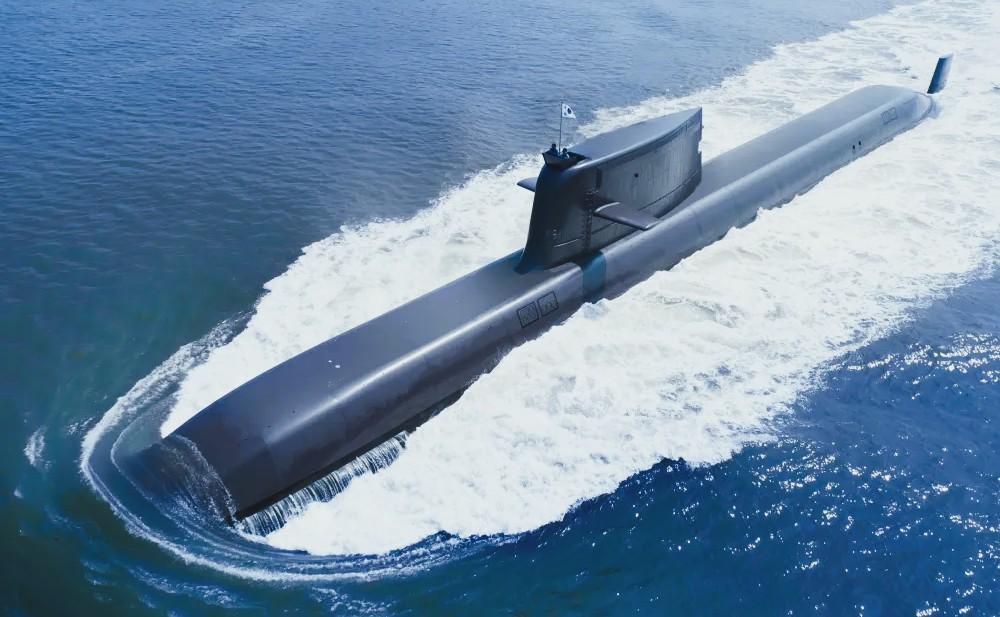
South Korea’s Hanwha Ocean is offering the KSS‑III Batch‑II, a diesel-electric submarine with high endurance and operational flexibility, optimized for Arctic missions. Hanwha emphasizes the immediate production readiness of its platform, full integration with Canadian command systems, and a comprehensive industrial partnership framework.
Central to Hanwha’s strategy is sovereign sustainment—establishing domestic service infrastructure in Canada with active participation of local industries. This initiative promises hundreds of thousands of job-years, long-term crew training centers, and Canadian industrial involvement in the production, maintenance, and modernization of the fleet. The KSS‑III platform features cutting-edge digital integration, advanced sensor suites, and modern combat systems, offering Canada a potential operational edge in flexibility and situational awareness.
ThyssenKrupp Marine Systems: proven technology and industrial cooperation
Germany’s ThyssenKrupp Marine Systems (TKMS) proposes the Type 212CD, an evolution of the proven 212A class currently in service with Germany and Norway. These submarines feature low detectability, Air-Independent Propulsion (AIP), long endurance, and extensive operational experience. TKMS prioritizes risk minimization through proven technology, enabling faster operational readiness for Canada.
TKMS also emphasizes industrial partnership through the Team 212CD network, incorporating Canadian firms in component manufacturing, simulations, training, and fleet support. Type 212CD ensures NATO interoperability, readiness for joint operations, and long-term sustainment under Canadian standards.
Technical comparison: KSS‑III vs Type 212CD
From a technological standpoint, KSS‑III focuses on modernity, digital integration, and advanced sensor technology, while Type 212CD relies on proven operational experience and established reliability.
- Propulsion and range: Both designs utilize diesel-electric propulsion with AIP. Type 212CD has an edge in operationally tested AIP performance and low acoustic signature, enhancing stealth in contested waters.
- Weapons and sensors: KSS‑III features state-of-the-art digital weapons and sensor integration, whereas Type 212CD relies on tried-and-tested torpedo systems and sonar arrays.
- Endurance and sustainability: Both platforms support multi-week deployments with limited port infrastructure, though Type 212CD has demonstrated resilience under extreme conditions.
Industrial and economic considerations
Both bids emphasize local industrial development. Hanwha focuses on rapid deployment of a ready platform coupled with extensive Canadian industrial participation. TKMS offers a proven platform integrated into an established European production system, with Canadian partners responsible for components, training, and sustainment. Both approaches meet Canada’s industrial benefits criteria, creating jobs, enabling technology transfer, and building local defense expertise, albeit through different strategic pathways: rapid implementation versus tested reliability.
Strategic scenarios
Ottawa faces a choice between awarding the contract to a single supplier—simplifying logistics and training—or splitting it between Hanwha and TKMS, which could maximize diplomatic and economic influence. A single-fleet scenario offers operational uniformity, reduced sustainment costs, and streamlined crew training. A split order enhances Canada’s strategic ties with both partners but introduces logistical complexity and heterogeneity of systems.
Geopolitical implications
CPSP is also a strategic signal: Canada is diversifying defense relationships, balancing traditional NATO and European partnerships with South Korean technological collaboration. The supplier decision will reflect military, industrial, and political priorities, with substantial implications for Canada’s influence in key maritime regions and its role in allied security networks.
The Canadian Patrol Submarine Project is far more than a procurement contract. It is a strategic, industrial, and political decision that will shape the Royal Canadian Navy’s future and the Canadian defense industry for decades. The choice between KSS‑III and Type 212CD will determine the balance between modernity and operational experience, rapid deployment and proven reliability, South Korea and Germany. Every submarine that enters service will symbolize Canada’s technological ambition, strategic foresight, and underwater sovereignty.
Buy us a coffee, and we’ll invest in great maritime journalism! Support Gazeta Morska and help us sail forward – click here!
Kamil Kusier
redaktor naczelny
comments
Add the first comment
see also
Strait of Hormuz at a strategic crossroads: sinking of IRIS Dena and implications for maritime transport
When two powers clash, Poland must be ready to act. Military security must be the priority
Commodore Przemysław Karaś appointed deputy commander of the Maritime Operations Centre - Naval Component Command
Radmor hosts delegation from the Republic of Turkey. Advancing maritime security cooperation
French Navy expands global operations from the Pacific to the Red Sea
"Let everyone know we will prevail". Poland’s armed forces set strategic course for 2026-2039
“Army 500” and strategic transformation: Poland sets the course for long-term deterrence and allied readiness
Medical evacuation from offshore vessel in the Baltic. Rescue 511 helicopter and m/s Huragan deployed
Karol Nawrocki: “The strength of the republic lies in its armed forces”. Security requires national unity
Human trafficking, money laundering, millions frozen. Successful operation by border guard and tax administration
ADVERTISEMENT
ADVERTISEMENT