Ukraine maintains a safe maritime corridor amid ongoing war
Despite ongoing hostilities and security risks in the Black Sea, Ukraine continues to ensure the uninterrupted maritime export of agricultural commodities, reinforcing its role as a key pillar of global food security. The Ukrainian maritime corridor has emerged as a vital shipping route for grain exports.
business maritime economy logistics worldwide ports transport and forwarding news06 february 2026 | 14:46 | Source: Gazeta Morska | Prepared by: Oskar Wojciechowski | Print
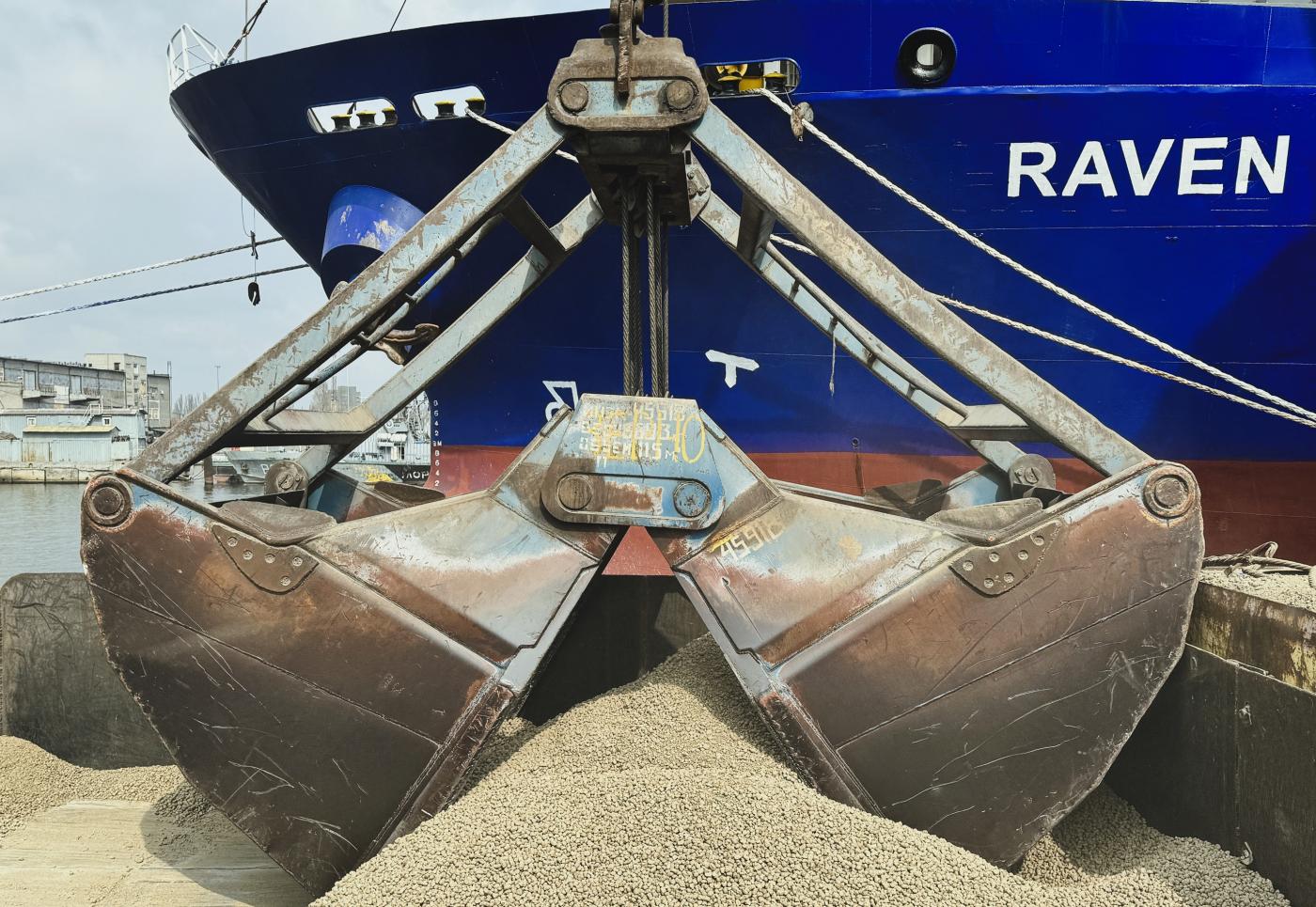
fot. Zarząd Portu Morskiego w Odessie
Ukraine’s strategic role in global food supply
Historically known as the “breadbasket of Europe,” Ukraine has become one of the world’s leading grain exporters. In 2021, prior to Russia’s full-scale invasion, Ukrainian agricultural production was sufficient to feed approximately 400 million people worldwide, excluding its domestic consumption.
In a peacetime scenario, Ukraine could have supplied food for up to one billion people by 2030, positioning itself as a cornerstone of global food security.
Port blockade and maritime security risks
Following Russia’s invasion on 24 February 2022, Ukrainian seaports were effectively blocked. Dozens of foreign merchant vessels and hundreds of crew members were stranded, while commercial navigation in the Black Sea faced unprecedented military risks.
With over 90% of Ukraine’s agricultural exports traditionally transported by sea, the blockade severely disrupted global grain supply chains.
The Black Sea Grain Initiative
On 22 July 2022, Ukraine, the United Nations, and Türkiye signed the Black Sea Grain Initiative in Istanbul.
Between August 2022 and July 2023, 1,004 vessels exported 32.8 million tonnes of agricultural products from the ports of Odesa, Chornomorsk, and Pivdennyi to 45 countries, helping stabilize global food prices.
Ukrainian maritime corridor – a national solution
After Russia’s unilateral withdrawal from the agreement in July 2023, Ukraine established its own Ukrainian maritime corridor, enabling civilian vessels to safely access the ports of Greater Odesa.
Since its launch in August 2023, more than 100 million tonnes of grain have been exported via this corridor.
Implications for the maritime industry
Despite continued attacks on port infrastructure, Ukraine has demonstrated remarkable operational resilience. For shipowners, charterers, and port operators, the Ukrainian maritime corridor represents a stable bulk cargo flow in the Black Sea region and continued access to key export markets in Africa and Asia.
Buy us a coffee, and we’ll invest in great maritime journalism! Support Gazeta Morska and help us sail forward – click here!
Oskar Wojciechowski
redaktor
comments
Add the first comment
see also
Gdańsk - Karlshamn ferry route strengthens Baltic shipping network
Local content strengthened amid rising market interest in Poland’s energy transition
Port of Gdańsk’s T5 terminal advances as key installation hub for Baltica 2 offshore wind project
Connecting Poland with Sweden for 50 years: Polferries on the Baltic, past, present, and future of shipping
Port of Gdynia surpasses 1 million TEU for the first time in history
Poland’s nuclear project secures landmark financing as PEJ signs first loan agreement with US EXIM
Shipbuilding industry is awesome. Stability. When shifting mass takes control away
Ellerman City Liners launches BALTEX service, positioning Port of Gdynia at the heart of the Baltic network
Port of Gdańsk posts strong 2025 performance as liquid fuels dominate and container volumes hit record high
UK sets offshore wind auction record. Offshore beats gas and nuclear on price
ADVERTISEMENT
ADVERTISEMENT