









F-111 Bonifaz launched in Ferrol. A historic milestone for the Spanish Navy and shipbuilding industry
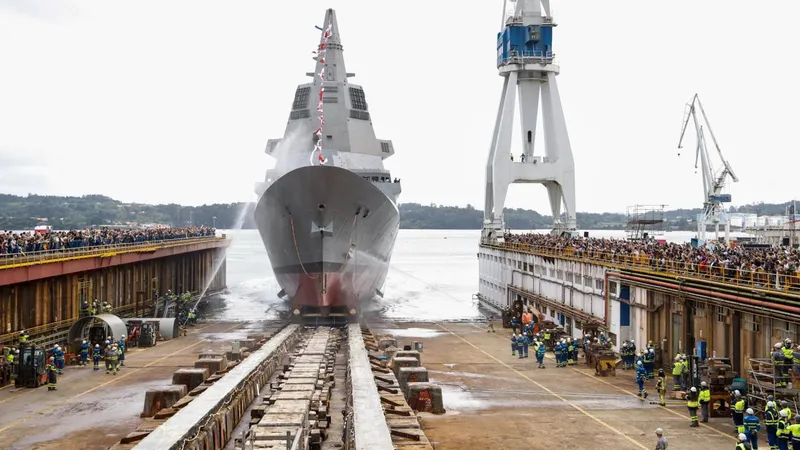
The Ferrol shipyard of Navantia hosted the launch of the frigate F-111 Bonifaz, the first unit of the new F-110 class (Bonifaz class). The ceremony marked a turning point not only for the Spanish Navy but also for the country’s wider naval and defence industry.
In brief
The frigate F-111 Bonifaz, the first F-110 class vessel, was launched at the Navantia shipyard in Ferrol in the presence of more than five thousand people. Queen Sofía became the frigate's sponsor, and Prime Minister Pedro Sánchez, Defence Minister Margarita Robles and Navantia president Ricardo Domínguez attended the ceremony. The launch took place a month ahead of schedule, with construction more than 70 percent complete, and entry into service is planned for 2028. The F-110 programme covers five frigates, more than 9,000 direct and indirect jobs and about 500 companies across Spain.
A ceremony of national significance
More than 5,000 people gathered at Navantia’s Ferrol facilities to witness the launch. Employees, their families, subcontractors, and local residents filled the stands for what became both a technical milestone and a civic celebration.
The christening followed long-standing naval tradition: a bottle of Albariño wine was broken against the ship’s hull as the vessel slid into the water to the sound of the Spanish national anthem, performed by the Tercio Norte Naval Band. The ship was blessed by Navy Chaplain Vicente Hernández Chumillas.
The launch was presided over by Queen Sofía, who acted as the ship’s sponsor, and attended by top-level authorities including Prime Minister Pedro Sánchez, Defence Minister Margarita Robles, Admiral Antonio Piñeiro (AJEMA, Chief of the Navy), and Navantia’s Chairman Ricardo Domínguez.
- This milestone defines a new era in the history of our Navy. It is a decisive day for Spain’s naval industry, for Ferrol, for Galicia, and for the entire nation, said Prime Minister Pedro Sánchez.
- The F-111 is not just a new ship. It is the embodiment of Spain’s commitment to innovation and technological sovereignty, add Admiral Antonio Piñeiro, AJEMA.
- The F-110 programme represents Spanish innovation and engineering at its best. We are confident it will replicate the international success of the F-100 class, said Ricardo Domínguez, Chairman of Navantia.
F-111 Bonifaz: first of a new generation
The frigate takes its name from Ramón Bonifaz, the 13th-century Admiral of Castile who secured a historic naval victory at Seville. The symbolism links Spain’s medieval maritime heritage with its technological future.
The ship was launched one month ahead of schedule, already over 70% complete, with delivery scheduled for 2028.
A technological leap forward
The F-111 introduces groundbreaking capabilities to the Spanish Navy:
- Digital Twin: a full virtual replica that collects and analyses operational data in real time to enhance maintenance, logistics, and training.
- Integrated Mast: a single structure housing AESA radars, infrared sensors, electronic warfare equipment, and IFF systems.
- SCOMBA Combat System: Spain’s indigenous combat management system, integrating weapons, sensors, and unmanned systems with NATO-level interoperability.
- Smart Ship Network: more than 2,000 intelligent nodes under the SSI (Integrated Services System), streamlining cabling, diagnostics, and energy efficiency.
- Full-spectrum warfare: advanced anti-air, anti-surface, and anti-submarine capabilities.
The F-110 class is designed not just as a replacement for the successful F-100 Álvaro de Bazán class, but as a platform that will guide Spanish naval operations into the mid-21st century.
The F-110 programme: five pillars of the future
Spain plans to build five Bonifaz-class frigates under the programme, a cornerstone of the #Armada2050 strategy.
- Timeline: a 10+ year programme.
- Workforce: more than 9,000 jobs across Spain.
- Industry: involvement of around 500 companies nationwide.
- Strategic role: ensuring innovation, digitalisation, and technological sovereignty while strengthening NATO interoperability.
National and regional impact
For Ferrol, a city whose identity is deeply tied to naval construction, the launch of Bonifaz is a symbol of continuity and renewal. For Spain, it is an investment in technological independence, industrial strength, and operational excellence at sea.
The launch of the F-111 Bonifaz is far more than a shipyard milestone. It represents Spain’s entry into a new era of naval warfare, underpinned by innovation and sovereignty. With delivery scheduled for 2028, the Bonifaz will stand among the most advanced frigates worldwide, while Navantia and Ferrol reinforce their position at the forefront of European naval shipbuilding.
Source: Gazeta Morska · Compiled by: Kamil Kusier
Related articles
 Navy and defence ORP Mewa marks four months with SNMCMG1. Poland's first Kormoran II deployment runs to year-end
 Shipbuilding industry Ex-Enterprise towed to Mobile under $418.5m contract. Test case for Nimitz-class disposal begins
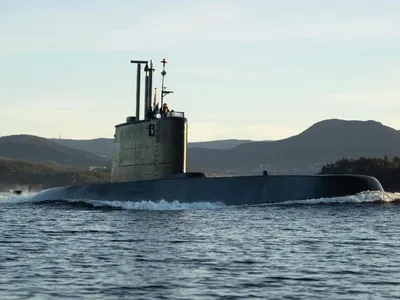 Navy and defence Norwegian submarine Utstein completes NATO patrol guarding offshore oil and undersea infrastructure
 History Polish Naval Museum in Gdynia opens its doors on Independence Day, 11 November
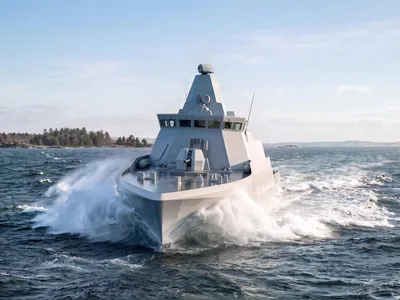 Equipment and technology Saab unveils Sea Giraffe AMB D naval radar with 250 km air surveillance range
 Navy and defence Polish minehunters and NATO group search Gulf of Gdańsk port approaches
Comments (0)
The discussion is moderated by the editors: a comment appears after review. Your e-mail address is not published.
Nobody has commented on this article yet.