Baltica 2 cable corridor taking shape: 150 km of inter-array routes completed in the Baltic Sea
The first major stage of seabed preparation for the offshore wind farm Baltica 2 has been completed, marking a significant milestone for Poland’s rapidly developing offshore wind sector. The 1.5 GW project is jointly developed by Ørsted and PGE.
business power engineering maritime economy investments offshore pomerania newsToday | 20:39 | Source: Gazeta Morska | Prepared by: Kamil Kusier | Print
fot. Orsted
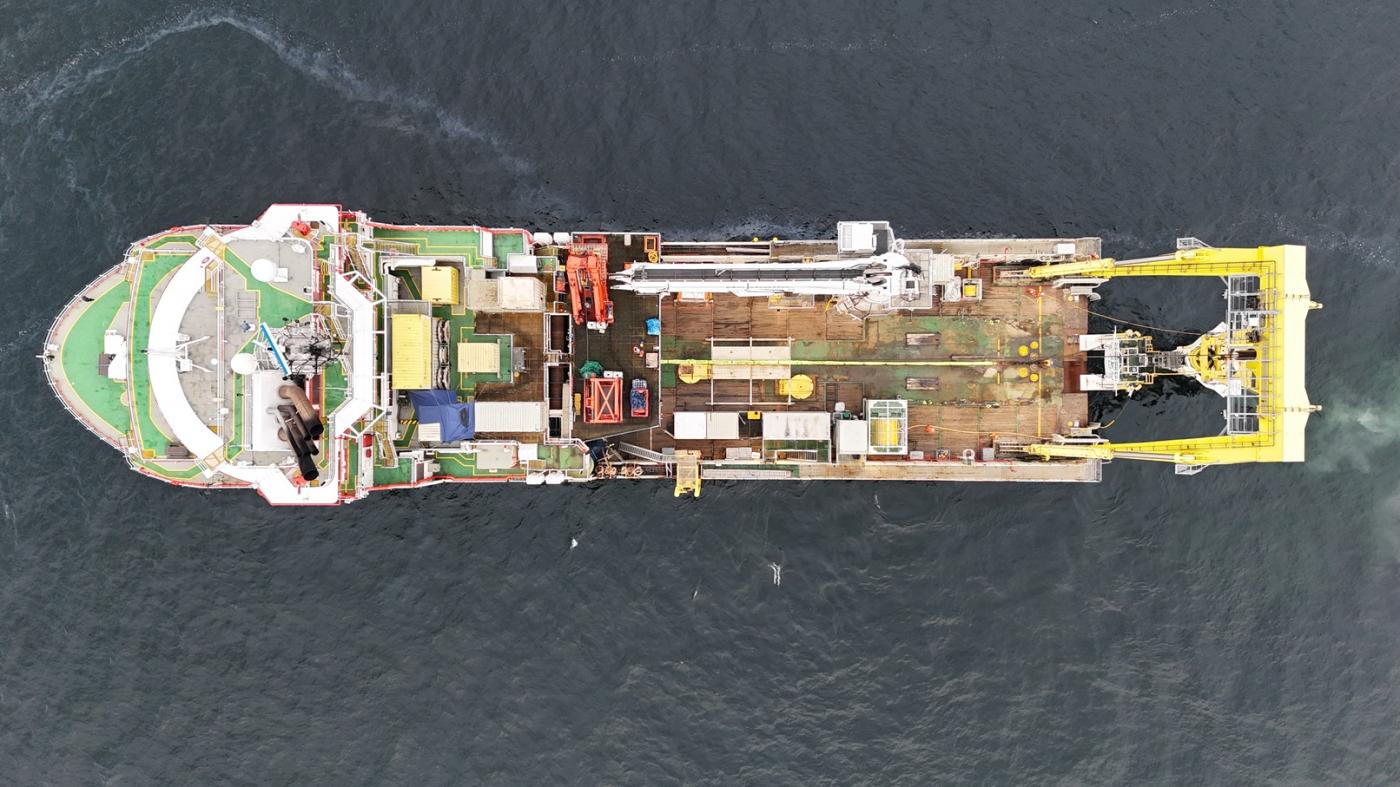
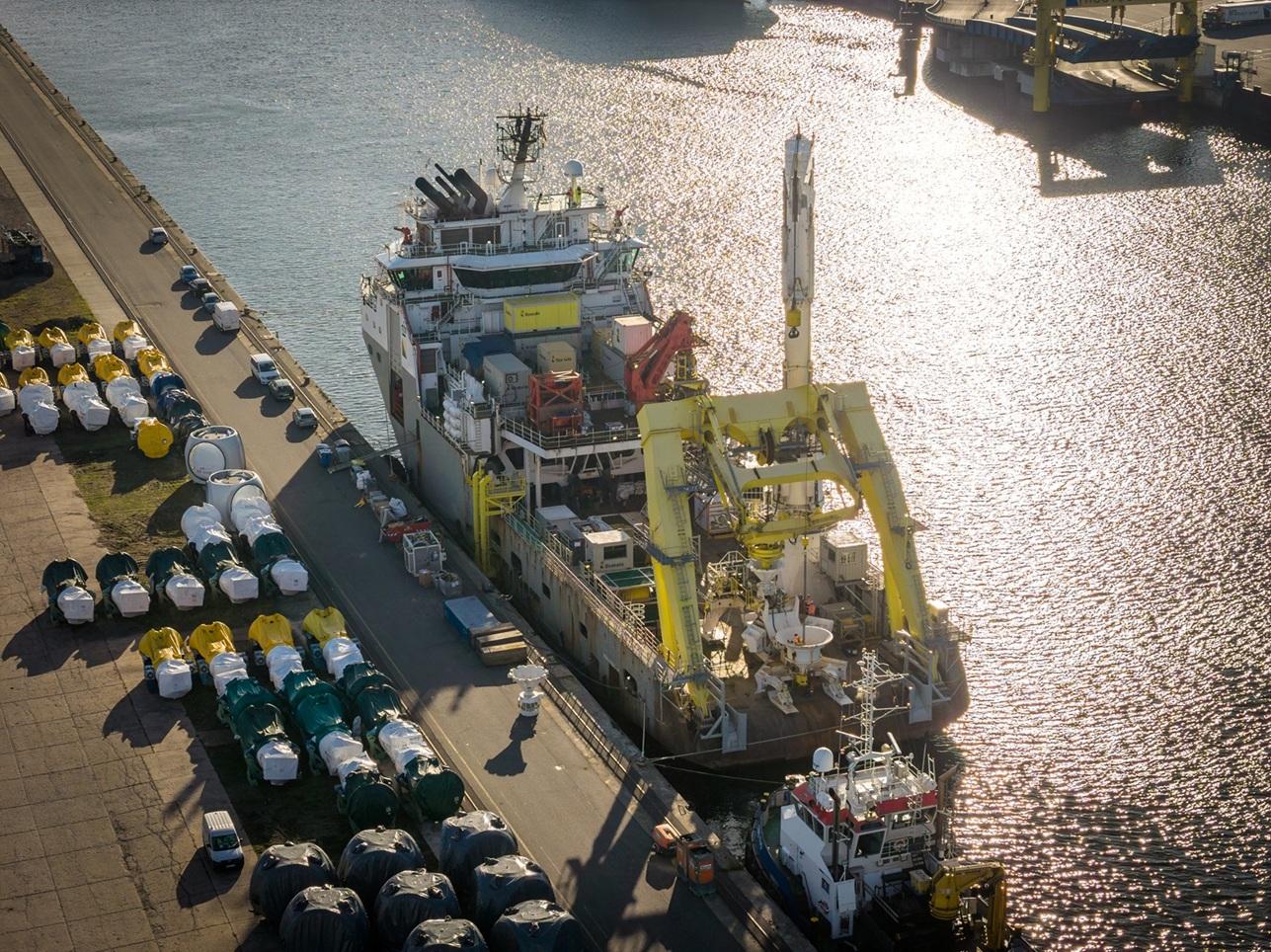
Offshore contractor Boskalis has prepared 150 km of inter-array cable routes using its vessel BOKA Falcon. These internal cables will connect the wind turbine foundations with the offshore substations. The next stage will focus on preparing a 260-kilometre export cable corridor to transmit power from the offshore substations to shore.
From geotechnical surveys to trenching operations
Seabed preparation for offshore cable installation follows a strictly defined sequence of technical operations. The campaign began with detailed geotechnical investigations along the planned cable routes to assess soil conditions and determine the appropriate installation methodology.
This was followed by UXO (unexploded ordnance) and ERW (explosive remnants of war) surveys - a standard requirement in the Baltic Sea region. No such objects were detected along the planned routes, allowing works to proceed without delay.
The next step involved the removal of large boulders — some measuring up to two metres in diameter - from both inter-array and export cable routes. Using the T-Rex plough, BOKA Falcon cleared the cable corridors, preparing the seabed for trenching operations.
- Completion of works on the inter-array cable routes means we are closing a key stage of seabed preparation for turbine-to-turbine connections. This is an important milestone, as the quality of trenching and corridor preparation directly impacts installation safety and long-term cable protection. We are now focusing on the next offshore work packages, maintaining project momentum and sequence in line with the schedule, said Ulrik Lange, Vice President and Managing Director of the Baltica 2 project at Ørsted.
Trenching campaign: securing long-term cable integrity
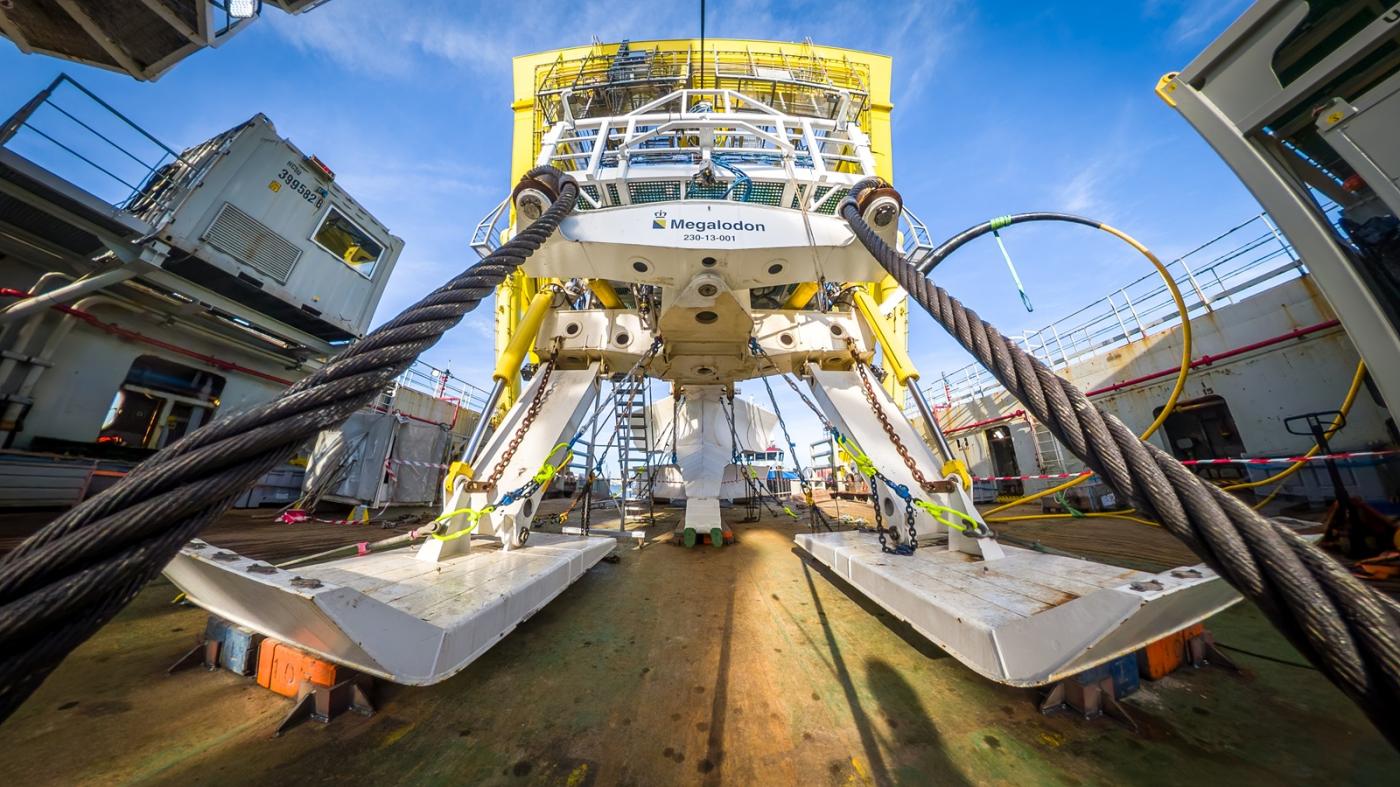
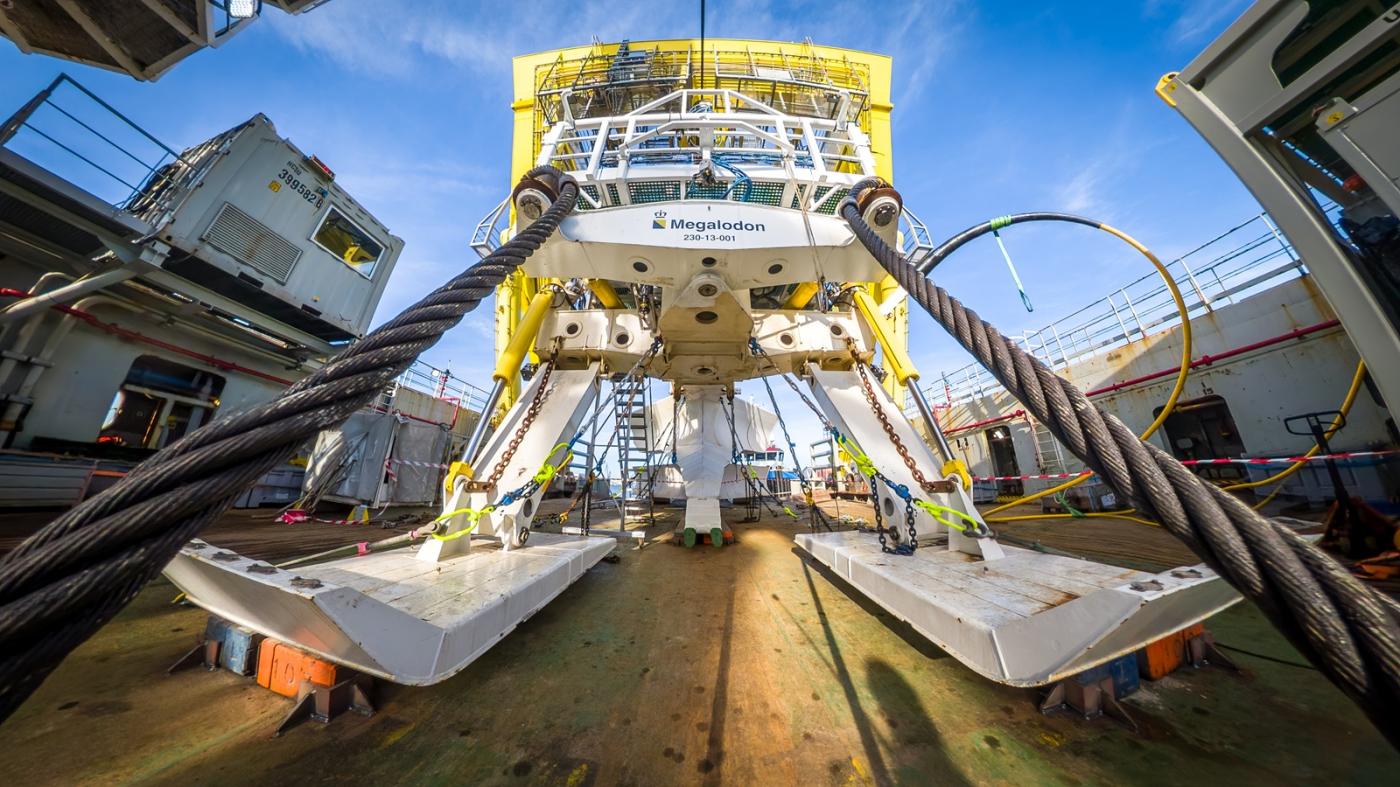
At the end of 2025, trenching operations commenced using the Megalodon plough. The process involves cutting a trench in the seabed to the required depth, enabling cables to be laid and subsequently protected against hydrodynamic forces, fishing activities and potential external interference.
The completed campaign covered 150 km of inter-array cable routes. The next phase will involve preparation of the 260 km export cable route. Cable installation itself will later be carried out by the vessels Ndurance and Boka Ocean, also operated by Boskalis.
- Although we are still ahead of installing the first major Baltica 2 components offshore, seabed preparation works for both foundation installation and cable laying are already at an advanced stage. Following the creation of inter-array cable corridors, contractors are now moving to prepare the export cable route. Soon, these cables will connect with the onshore section. Once Baltica 2 becomes operational, electricity generated offshore will be transmitted to the onshore substation in the Choczewo municipality and further into Poland’s National Power System, said Bartosz Fedurek, President of the Management Board of PGE Baltica.
2025-2027: entering full offshore execution phase
The year 2025 is set to be pivotal for the project. Installation of foundations, export cables and offshore substations is scheduled to begin this year. Subsequent phases will include the installation of inter-array cables between turbine foundations and offshore substations.
Testing of the onshore substation is also planned for 2025, forming a crucial part of the grid connection infrastructure.
Commissioning of Baltica 2 is scheduled for 2027. Once operational, it will become the largest offshore wind farm in Poland, with the capacity to supply renewable electricity to more than 2.5 million households.
Offshore wind execution in the Polish Baltic
The progress on Baltica 2 confirms that Poland’s offshore wind market has moved decisively into the execution phase. After years dominated by permitting, design and contracting processes, the focus has shifted to offshore operations - seabed preparation, foundation installation and subsea cable infrastructure deployment.
For the maritime sector, these developments represent not only an energy transition milestone but also a structural expansion of offshore engineering capabilities in the Baltic region. Baltica 2 is no longer a conceptual project - it is now a large-scale offshore construction site taking shape beneath the Baltic Sea.
see also
Buy us a coffee, and we’ll invest in great maritime journalism! Support Gazeta Morska and help us sail forward – click here!
Kamil Kusier
redaktor naczelny
gallery
comments
Add the first comment
see also
PGE Baltica opens 2026 procurement pipeline to the market. Supplier webinar on 26 February
Gateway to the Baltic: Elbląg Moves Forward with Modular, Multimodal Port Expansion
ORLEN acquires 25% stake in Aphrodite field on the Norwegian Continental Shelf
100 years of Gdynia: PGZ Naval Shipyard at the heart of Poland’s Baltic security strategy
Poland as Europe’s food hub. Minister Stefan Krajewski on export, security, and global competition
Gdańsk - Karlshamn ferry route strengthens Baltic shipping network
Ukraine maintains a safe maritime corridor amid ongoing war
Local content strengthened amid rising market interest in Poland’s energy transition
Port of Gdańsk’s T5 terminal advances as key installation hub for Baltica 2 offshore wind project
Connecting Poland with Sweden for 50 years: Polferries on the Baltic, past, present, and future of shipping
ADVERTISEMENT
ADVERTISEMENT