Baltic Sea on the job. How Baltica 2 will transform the job market in Pomerania
The Baltic Sea has long provided jobs for the people of Pomerania—through shipping, port services, and fishing. Now, a new pillar of the local economy is emerging: offshore wind energy. As the development of Baltica 2, the largest offshore wind investment under construction in Poland’s part of the Baltic Sea, progresses, new jobs based on advanced technology and operational work are emerging—ranging from turbine service to crew transfer vessel (CTV) operations, to marine logistics planning. This marks the beginning of a new era of work in the Baltic, being jointly built by Ørsted and PGE.
Content partner: Ørsted business power engineering maritime economy investments offshore pomerania work at mare news02 january 2026 | 12:00 | Source: Gazeta Morska | Print
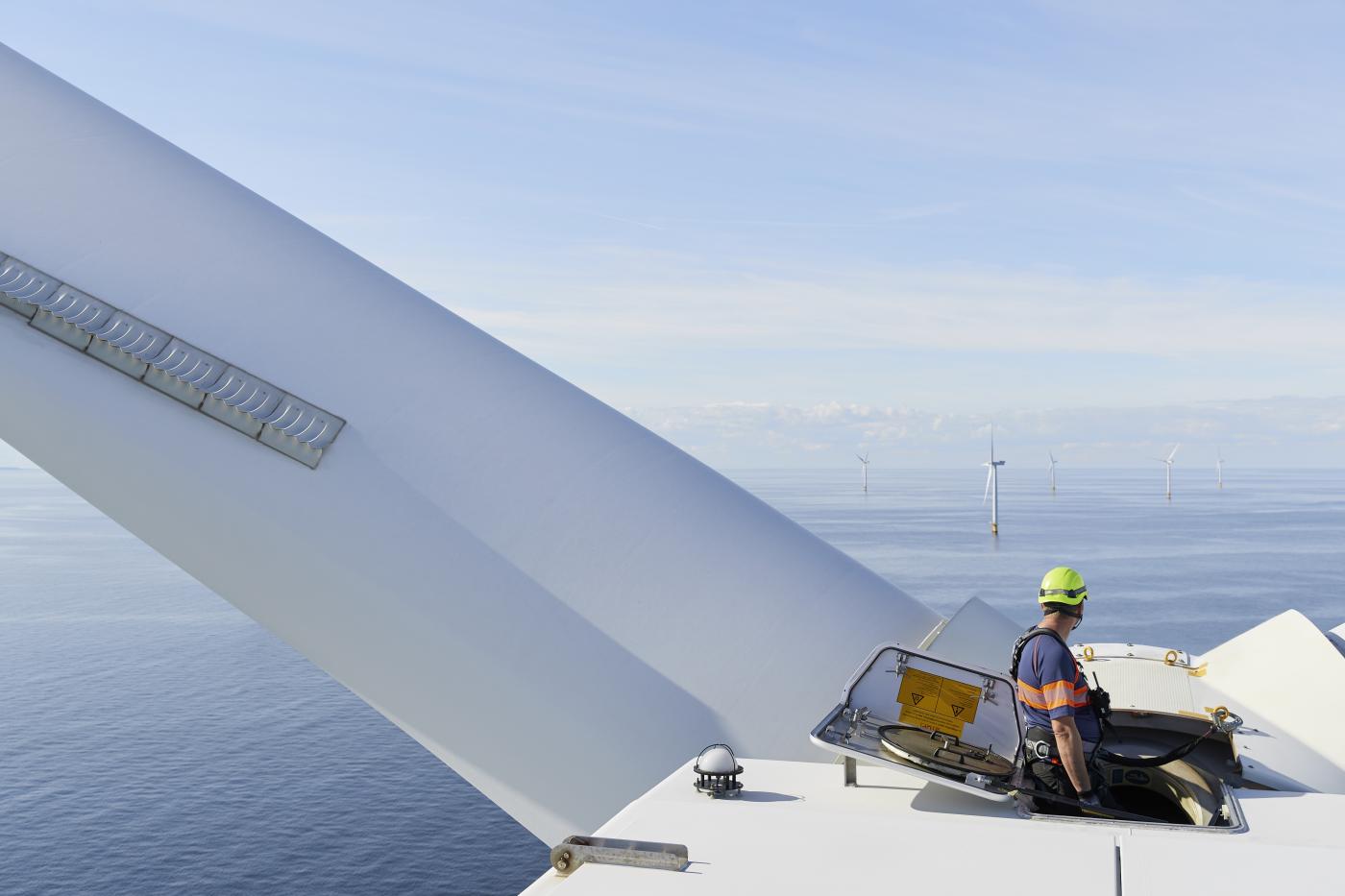
fot. Ørsted
Baltica 2 enters the critical phase
The Baltica 2 project is entering its decisive phase, and alongside it begins the most important aspect from the perspective of the people and the region: building the team that will manage the farm’s operations for the next three decades. This is when the big investment begins to rely on concrete specialists, technicians, future coordinators, and engineers—people who will work at sea and help give the project a local character.
Currently, Baltica 2, being developed by Ørsted and PGE, is at an advanced stage of preparation both on land and at sea. Offshore, the seabed is being prepared for installation works, while key components of the wind farm are being produced in factories, including monopiles, offshore substations, and foundation support structures. On land, the construction of an electricity substation, responsible for receiving and transmitting power to the national grid, is also underway.
Next year, offshore activities will ramp up, with the installation of foundations, cables, and turbines. Two crucial dates are already on the horizon: in the second quarter of 2027, the farm will start supplying its first energy, and by the end of 2027, it will reach full commercial readiness. However, the longest chapter of this story is the 30-year operational and service phase (operations & maintenance). This is the phase Ørsted is now building a team for—by recruiting talent across Poland, especially in Pomerania.
When the farm ‘truly lives’
Jakub Stanosz, operations senior project manager at Ørsted, has been preparing the operational strategy for four years and leads the O&M team towards full readiness.
- Building an offshore wind farm is impressive, but from an energy system perspective, it’s just the beginning, says Jakub Stanosz. - The real life of the project starts when it enters the operational and service phase. From that moment, O&M is responsible for ensuring turbines reliably deliver power to the grid, which millions of Poles will benefit from.
The transition from construction to operation is a time-consuming process involving tests and technical handovers, during which every component of the infrastructure—from foundations and cables to control systems—is thoroughly checked. Only after these procedures can the farm begin functioning as a fully active energy installation.
What is Ørsted looking for today?
The offshore operations team for Baltica 2 is being gradually built. Key positions in the structure have already been filled this year, including head of site, head of HV & transmission operations, and QHSE advisor. These individuals will be responsible for organizing work, ensuring safety, and maintaining the high-voltage infrastructure connecting the farm to the national grid.
Recruitment has also begun for other positions, such as turbine service technicians, operations managers, control systems engineers, and high-voltage specialists. This process will continue next year, with more roles opening for planners, warehouse managers, site assistants, and project and contract managers.
- To put it simply, without people, the operational and service phase won’t work, says Jakub Stanosz. - We can have the latest ships, base facilities, and IT systems, but it’s the crew, technicians, engineers, and planners who will ensure that Baltica 2 delivers energy for the next 30 years as planned.
A new industry, but not just for offshore experts
Although offshore wind energy is still a new sector in Poland, this doesn’t mean that only individuals with years of offshore experience can work in the operational and service phase. Experience from mature markets shows that many skills can be transferred from other industries, such as conventional energy, manufacturing, logistics, automation, and even oil and gas or shipbuilding sectors. Electricians, mechanics, automation specialists, safety experts, planners, logisticians, and contract managers are all needed.
- What I often tell interested candidates is that the offshore industry is not a closed world, says Jakub Stanosz. - If someone has solid technical experience, is motivated, wants to learn, and works well in a team, they don’t need ten years of experience in marine projects to start a career in the operational and service phase.
A typical day at the operational and service base
The operational and service phase may conjure up film-like scenes: a technician in a harness climbing to a turbine gondola, wind howling, and waves crashing against the foundation. However, in reality, the work is quite different. It’s precision marine logistics, tightly scheduled departures of fast CTV units, simultaneous team coordination, full process digitalization, and strict safety discipline.
The daily operations rely on CTV units, which technicians use to reach turbines in the morning, perform assigned tasks, and return to the base in the afternoon. Drones also play a significant role, enabling quick inspections of hard-to-reach elements.
For longer service campaigns, SOV vessels—large service units with onboard accommodation and workshops—are used, allowing the crew to live and work at sea for extended periods.
In Ustka, the central coordination center monitors turbine operations, analyzes data, responds to alarms, and plans actions according to weather windows that determine when it’s safe to depart for offshore work.
Global standards of offshore work
At Ørsted, key to operations is the culture of work standards developed across various offshore markets. Above all, the principle of “safety first” is paramount, meaning decisions are only made when all actions are fully safe for people, equipment, and the environment. It’s also important that the work in operational teams is based on openness, respect, and mutual support between technicians, coordinators, and engineers.
- This is a job for people who can combine procedures with quick reactions, says Jakub Stanosz. - The sea teaches humility: waves, wind, and the situation on a 300-meter turbine can change dynamically, so teamwork and clear communication are key. At Ørsted, we focus on a culture of cooperation, where everyone has a role in ensuring safety and operation quality. This way, people can not only do their job but also contribute to the energy transition.
Ustka: the future hub for daily operations
The heart of this work will beat on land in Ustka, where Ørsted is building an operational service base for Baltica 2. Designed according to Ørsted’s international standards, the base is planned to operate for over thirty years, drawing from experiences in Denmark, the UK, Germany, and the Netherlands.
The Ustka base will house the daily operations center, facilities for technicians, spare parts warehouses, office spaces, and a state-of-the-art coordination and monitoring center. Here, decisions will be made for each service visit, planned inspections, weather windows for offshore work, or potential emergency actions.
- Grimsby in the UK, Norddeich in Germany, and Vlissingen in the Netherlands show how an operational hub can transform a port city, says Jakub Stanosz. - We see how the presence of an operational hub drives services and attracts expertise. In Ustka, we’re bringing the best practices from these locations, but we’re designing the base to be tailor-made for the Polish Baltic.
The development of the operational service base in Ustka could bring an entirely new dimension of maritime activities to the region. The long-term presence of the O&M teams will not only create new jobs in the base—from technicians to operations specialists—but also stimulate local services such as hospitality, catering, transport, and training. Offshore wind energy will create stable, year-round demand for skills and services, which could eventually become a vital part of the local economy.
- Base workers will live nearby, raise families, and use local services, says Jakub Stanosz. - This is not a short-term project. Ustka could become the cradle of offshore wind energy in Poland.
Five f’s: five key questions to ask yourself
Jakub Stanosz notes that professional decisions are rarely made solely based on salary. Candidates—especially in such a demanding industry—take a broader view, considering what he calls the “five f’s”: fit, fortune, family, flexibility, and fun.
- The operational and service phase of an offshore wind farm can really meet all these needs, says Jakub Stanosz. - It’s a job where you combine technical skills with a real impact on energy transition. You have a clear thirty-year perspective for the project’s lifespan, a global employer with experience, and the opportunity to grow in an international environment. But it’s not a job for everyone. You need to like the sea, technology, and the specific rhythm of this work.
A good time to spot new career opportunities
Recruitment for the operational and service phase of Baltica 2 is already underway and will continue over the coming years. Ørsted, in collaboration with PGE, is building a team that will manage one of the key offshore wind farms in the Baltic Sea for the next three decades. Both technical specialists and engineers, planners, logisticians, and those responsible for organizing the base’s operations are needed.
With the launch of Baltica 2, the Baltic Sea will not only become a source of energy but also new jobs and life-changing stories. For some, this will be a career turning point; for others, the beginning of a journey spanning thirty years of Polish maritime energy.
see also
Buy us a coffee, and we’ll invest in great maritime journalism! Support Gazeta Morska and help us sail forward – click here!
Redakcja Gazeta Morska
użytkownik
comments
Add the first comment
see also
StartupHack 3.0 at GPNT: Space and maritime technologies at the core of innovation
Polish technology powers zero-emission public transport. AREX secures largest municipal contract
Defence.Hub strengthens capabilities in technologies supporting maritime infrastructure security
Hanseatic Global Terminals takes full ownership of Florida International Terminal
Aleksandra Kosiorek: The sea has always been a space of openness for us, and that will not change
Gdańsk to launch Baltic Sea monitoring center
Türkiye advances indigenous GNSS ambitions: what FGN-100-D3 means for the maritime sector
Lithium at the core. TKMS and E3 Lithium align on Canada’s submarine ambitions
Błażej Konkol appointed vice president for infrastructure at the Port of Gdańsk Authority
WB Group expands into Romania, strengthening presence in the Black Sea region
ADVERTISEMENT
ADVERTISEMENT