









A New Era of Maritime Autonomy in the Baltic
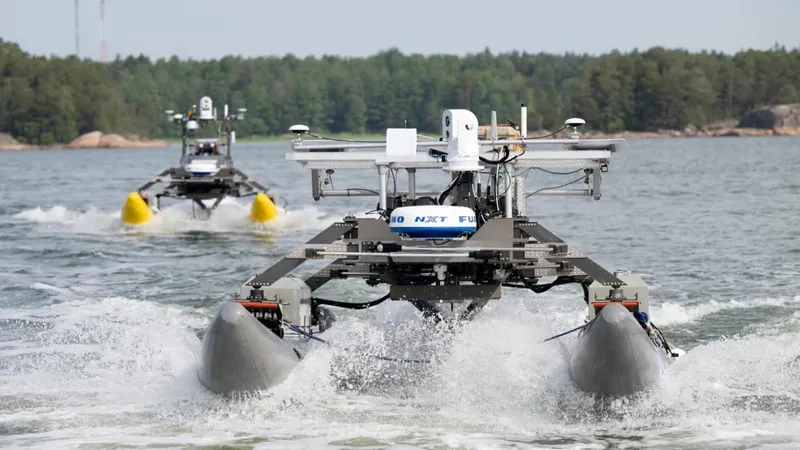
Cutting-edge trials of unmanned maritime systems — locally dubbed meridroonit — are currently underway at the Finnish Navy base in Upinniemi. Conducted in cooperation with NATO, the exercises aim to enhance allied capabilities in monitoring maritime areas and safeguarding critical underwater infrastructure in the Baltic Sea.
In brief
The Finnish Navy is testing autonomous maritime systems, known as meridroonit, at the Upinniemi base together with NATO. The unmanned surface vessels operate west of Porkkalanniemi as far as Hanko, where the conditions of the Finnish coast create a demanding test environment. Commodore Marko Laaksonen, chief of operations of the Finnish Navy, pointed out that intelligent and autonomous technologies enable effective monitoring of sea areas and facilities and free up human resources. The tests serve to protect subsea infrastructure in the Baltic Sea.
The operations extend west of Porkkalanniemi, reaching as far as the waters off Hanko. Finland's complex coastal environment offers a demanding yet ideal testing ground for validating the performance of autonomous maritime technologies.
- Unmanned systems offer vast potential and versatile applications. Intelligent and autonomous platforms can monitor areas and key assets, freeing up valuable human resources for other critical tasks, said Commodore Marko Laaksonen, Director of Operations at the Finnish Navy.
For the Finnish Navy, cooperation with NATO on deploying emerging technologies is a vital component of national defense development. The ongoing tests align with broader strategic objectives — strengthening maritime security and increasing resilience of seabed-based energy and communication infrastructure.
As geopolitical tensions rise and hybrid threats evolve, unmanned maritime systems may prove essential to ensuring persistent surveillance and rapid response capabilities across the Baltic. Finland’s efforts represent a forward-leaning contribution to NATO’s collective maritime situational awareness and undersea security framework.
Source: Gazeta Morska · Compiled by: Kamil Kusier
Related articles
 Maritime economy Poland’s constitutional crisis is also a maritime story
 Navy and defence Norwegian submarine Utstein completes NATO patrol guarding offshore oil and undersea infrastructure
 Safety and rescue Polish SAR’s new rescue vessel Mistral launched at Kewatec in Finland
 Safety and rescue Icelandic Coast Guard and police delegation visits Polish Border Guard’s Maritime Division
 Safety and rescue Polish Navy helicopter evacuates man from Baltic platform 100 km off Władysławowo
 Navy and defence SNMG2 joins Allied warships in PASSEX as Italy's Mare Aperto 2026 gets under way
Comments (0)
The discussion is moderated by the editors: a comment appears after review. Your e-mail address is not published.
Nobody has commented on this article yet.