









Poland’s maritime offensive: ambitions, delays and expectations - is it enough for the Baltic?
After decades of underinvestment and combat capability erosion, the Polish Navy (Marynarka Wojenna RP) has entered a phase of intense modernization. The years 2023–2025 have brought breakthrough decisions and tangible shipyard progress. Nine new combat vessels are currently under construction in Polish shipyards, with additional units in the design or pre-production phase. The Polish Navy is regaining its operational capabilities, enabling it to truly protect national interests in the Baltic Sea. But are these investments sufficient in the face of growing geopolitical threats?
In brief
Nine new combat vessels for the Polish Navy are being built at Polish shipyards, with more at the design stage. The Miecznik programme covers three frigates based on the Arrowhead 140 design: ORP Wicher since 2023, ORP Burza since May 2025 and ORP Huragan planned for 2026 at PGZ Stocznia Wojenna in Gdynia. Remontowa Shipbuilding SA is building three Kormoran II mine countermeasure vessels, and the Delfin programme covers two reconnaissance ships entering service in 2027. President-elect Karol Nawrocki, who takes office on 6 August 2025, expects the contract for the Orka programme to be signed without delay.
"Miecznik" frigates: backbone of the future surface fleet
The most prestigious and expensive undertaking is the “Miecznik” program, aiming to build three multi-role frigates based on the British Arrowhead 140 design. Their roles include engaging surface, air, and underwater threats, as well as providing air and missile defense support.
The first vessel, ORP "Wicher," began construction in 2023. In May 2025, construction of the second frigate, ORP "Burza," commenced. The third, ORP "Huragan," is scheduled to begin in 2026. The vessels are being built by the PGZ-Miecznik consortium at the PGZ Naval Shipyard in Gdynia.
Experts highlight that three frigates are the bare minimum. Given the increasing threat level in the Baltic and heightened activity of the Russian Baltic Fleet, the construction of a fourth frigate should be seriously considered.
Kormoran II: continuing mine warfare success
In parallel, the Kormoran II-class minehunter program is progressing. Following the successful deployment of the first three vessels (ORP Kormoran, ORP Albatros, ORP Mewa), three more are under construction: ORP Jaskółka, ORP Rybitwa, and ORP Czajka. These are being built by Remontowa Shipbuilding SA in cooperation with the CTM Maritime Technology Center.
These modern mine countermeasure vessels are equipped with automated mine detection and neutralization systems, as well as equipment supporting combat divers. Their role in securing maritime routes and port infrastructure is critical. However, experts suggest that with the growing prevalence of precision sea mines, Poland should operate at least eight such vessels.
Delfin program: new eyes and ears of the fleet
Another key project is the “Delfin” program, which includes two signals intelligence (SIGINT) ships: ORP Henryk Zygalski and ORP Jerzy Różycki. These will replace the aging Project 863 vessels.
Equipped with SIGINT and ELINT capabilities, these ships will enable advanced strategic eavesdropping and electronic reconnaissance. Scheduled to enter service in 2027, they will significantly strengthen Poland’s naval intelligence. Again, a concern arises: are two vessels sufficient for continuous surveillance and NATO support?
Orka submarine program: the long-awaited decision
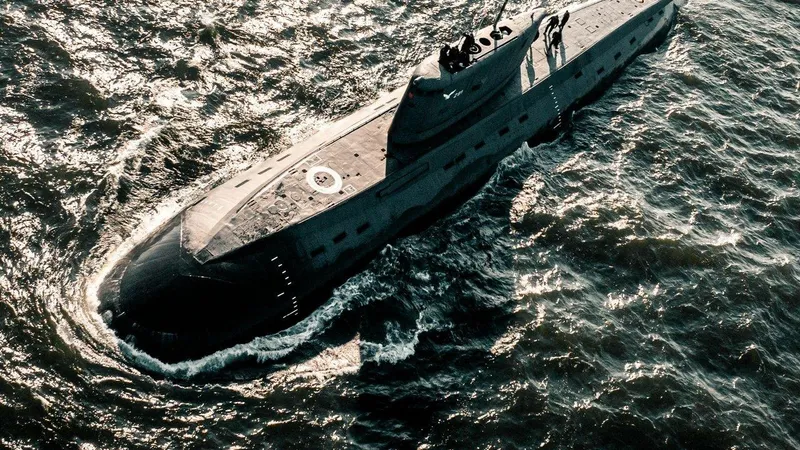
The biggest gap in the Polish Navy remains the submarine fleet. The long-delayed “Orka” program is still under technical review. Potential suppliers include partners from South Korea, Sweden, and Germany.
While most shipbuilding programs were inherited from the previous government, the current administration faces a decisive moment on procuring new-generation submarines (OPNT). This decision is not only strategic but also a test of political determination. Poland needs modern submarines for both deterrence and full NATO interoperability.
Support and logistics: from tugboats to rescue ships
Complementing the core combat fleet are support programs. The six B860 tugboats are already operational. Analysis is underway to revive the “Ratownik” program, which envisions a new submarine rescue ship.
These auxiliary programs, alongside prospective missile patrol boats (Murena/Toczony program), must proceed without delay to ensure the Polish Navy’s operational flexibility.
Infrastructure, industry and education: building the foundation of "Maritime Poland"
Fleet size is important, but so are expertise and industrial capacity. The growth of PGZ Naval Shipyard, the intensified efforts of the Naval Academy, and the expansion of the Maritime Operations and Reconnaissance Centers are laying systemic foundations for “maritime Poland.” The strengthening synergy between the defense ministry, military academia, and industry demonstrates a maturing strategy for national maritime power. Yet more investment is needed in advanced maritime technologies, digitalization, and autonomous platforms.
- The Polish Navy has been the most neglected branch of our armed forces for decades. Fortunately, this trend has begun to reverse. The recent launching of the fifth minehunter in the “Kormoran” series is a positive step. Once the sixth vessel, currently under construction, is commissioned, we can consider our mine countermeasures needs adequately addressed. The Naval Shipyard, rescued from liquidation a few years ago, is now operating at full capacity on the first frigate of the “Miecznik” program—a project that must proceed without delays. However, I’m concerned that no contract has been signed for the “Orka” program, aimed at restoring our submarine capabilities. We risk losing both operational capacity and training continuity entirely. As President, I would push for the immediate signing of a contract for this program, ideally paired with a stopgap solution to bridge the gap - says President-elect Karol Nawrocki, referring to Poland’s maritime responsibilities as the “Daily Mare.” He will assume office as President of the Republic of Poland on August 6, 2025.
Baltic competition: how are neighbors modernizing?
Poland does not operate in a vacuum. Other Baltic nations are also reinforcing their naval forces. Lithuania is developing maritime reconnaissance and upgrading acquired second-hand patrol vessels. Latvia is investing in mine countermeasures and modernizing port infrastructure in Riga and Liepāja. Estonia, despite lacking a large navy, is advancing unmanned systems, underwater sensors, and maritime cooperation with Finland and Sweden.
Sweden and Finland—the newest NATO members—are rapidly developing modern missile frigates, submarine capabilities, and coastal defense systems. Their strategies emphasize offensive deterrence via agile, flexible fleets. This is a benchmark Poland should closely observe.
Development outlook: a new era for the Polish fleet, but more is needed
The Polish Navy’s modernization is entering its most intensive phase since the post-communist transition. Investments in surface and subsurface platforms, advanced sensors and command systems, and logistics support form a robust base for rebuilding Poland’s naval power.
Yet experts warn: while ambitious, current programs may fall short. To achieve credible maritime deterrence and defense capabilities, Poland needs:
- at least 4 multi-role frigates,
- 8 mine countermeasure vessels,
- 3 modern submarines,
- a missile boat flotilla,
- sustained investment in unmanned and reconnaissance systems,
- strong educational and industrial infrastructure.
The coming decade could witness a renaissance of the Polish Navy—if political consistency, stable funding, and program continuity are ensured. Otherwise, the ambitions may remain only on paper.
Source: Gazeta Morska · Compiled by: Kamil Kusier
Related articles
 Navy and defence ORP Gopło will not be preserved intact. Prototype laminate minesweeper passes to Poland's Military Property Agency
 Navy and defence HMS Prince of Wales takes on ammunition in Norway. First resupply outside the UK
 Navy and defence ORP Mewa marks four months with SNMCMG1. Poland's first Kormoran II deployment runs to year-end
 Shipbuilding industry Ex-Enterprise towed to Mobile under $418.5m contract. Test case for Nimitz-class disposal begins
 Navy and defence Norwegian submarine Utstein completes NATO patrol guarding offshore oil and undersea infrastructure
 History Polish Naval Museum in Gdynia opens its doors on Independence Day, 11 November
Comments (0)
The discussion is moderated by the editors: a comment appears after review. Your e-mail address is not published.
Nobody has commented on this article yet.