









A NATO debut for the Kormoran II: ORP Mewa begins its six-month deployment with SNMCMG1
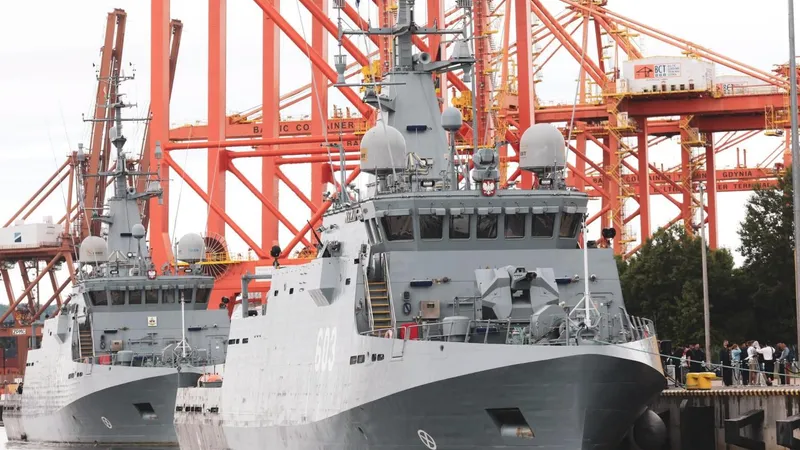
The minehunter ORP Mewa has joined Standing NATO Mine Countermeasures Group 1 (SNMCMG1), beginning a six-month deployment in the waters of northern Europe. It is the first time a Kormoran II-class vessel has served with an allied naval group.
In brief
ORP Mewa is the first Kormoran II class vessel to join Standing NATO Mine Countermeasures Group 1. From 1 July to 31 December 2026 the ship forms the Polish Military Contingent Kormoran 2026, established by a decision of the President of the Republic of Poland of 19 June 2026, with a crew from the 13th Minesweeper Squadron of the 8th Coastal Defence Flotilla. ORP Mewa's tasks will include neutralising underwater objects in the Baltic Sea, the Norwegian Sea, the North Sea and the Atlantic. Contingent commander Lieutenant Commander Bartosz Blaszke pledged the crew's safe return after 6 months.
From 1 July to 31 December 2026, the ship forms the Polish Military Contingent Kormoran 2026, deployed under a decision by the President of Poland of 19 June 2026 authorising its participation in a NATO task group. Its crew is drawn from the 13th Minesweeper Squadron of the 8th Coastal Defence Flotilla, and the contingent's principal task will be to reinforce allied forces operating within SNMCMG1 (Standing NATO Mine Countermeasures Group 1).
The contingent's service began as the ship left the naval base at Gdynia; ORP Mewa is due to join the group in the coming days. For the Project 258 vessel this marks a first deployment under the NATO flag. Previously, Poland assigned Project 206FM minehunters to mine countermeasures missions and, after their withdrawal, Project 207P minesweepers.
The commander of the contingent and of ORP Mewa, Lieutenant Commander Bartosz Blaszke, told the send-off ceremony that the crew would do everything possible to carry out the mission to the highest standard and to return safely to its home port after six months.
Four standing groups at sea
The North Atlantic Alliance keeps four standing naval groups in continuous rotational service. Two of them, Standing NATO Maritime Group 1 and 2, bring together major surface units, chiefly destroyers and guided-missile frigates. The other two are mine countermeasures groups built around a multi-role command ship: SNMCMG1, which usually operates in the north of Europe, and SNMCMG2 in the south. It is Group 1 that has now taken on a modern Kormoran II-class minehunter for the first time.
ORP Mewa enters service just as the Czernicki 2026 contingent completes its mission. The Polish Navy stresses that the country's contribution to NATO mine countermeasures has been continuous: ORP Necko recently served with SNMCMG1, and the command ship ORP Kontradmirał Czernicki is now ending its own tour. Although the two vessels performed different roles, with Czernicki acting as flagship and command platform and Mewa as a unit carrying out mine countermeasures work directly, the smooth handover confirms the Polish fleet's ability both to field combat units and to hold command functions within multinational structures.
From wartime ordnance to infrastructure protection
The tasks of the Kormoran 2026 contingent will include searching for, detecting and neutralising dangerous underwater objects, among them remnants of the arsenals of both world wars, as well as clearing port approaches, confined waters and key shipping lanes. The ship will operate in the Baltic, Norwegian and North Seas and in areas of the Atlantic Ocean, building situational awareness and demonstrating the Alliance's unity.
The vessels of the Standing NATO Mine Countermeasures groups form what is described as a "Mine Countermeasures Shield" across European waters. Beyond mine clearance, their role is to monitor shipping lanes, strengthen the protection of critical infrastructure and remain ready to respond to potential acts of sabotage. This work fits within the Alliance's wider maritime security initiatives, such as Baltic Sentry, aimed at deterrence and at safeguarding freedom of navigation across the Baltic. The mine countermeasures groups are also among the most effective elements of the NATO Response Force (NRF).
Source: Gazeta Morska · Compiled by: Kamil Kusier
Related articles
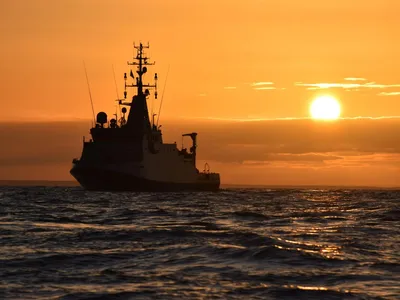 Navy and defence ORP Mewa marks four months with SNMCMG1. Poland's first Kormoran II deployment runs to year-end
 Shipbuilding industry Ex-Enterprise towed to Mobile under $418.5m contract. Test case for Nimitz-class disposal begins
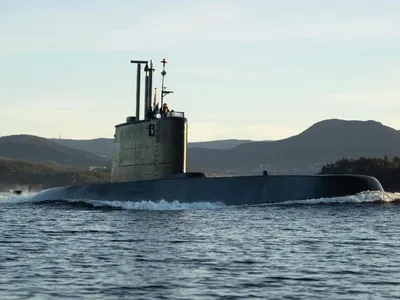 Navy and defence Norwegian submarine Utstein completes NATO patrol guarding offshore oil and undersea infrastructure
 History Polish Naval Museum in Gdynia opens its doors on Independence Day, 11 November
 Equipment and technology Saab unveils Sea Giraffe AMB D naval radar with 250 km air surveillance range
 Navy and defence Polish minehunters and NATO group search Gulf of Gdańsk port approaches
Comments (0)
The discussion is moderated by the editors: a comment appears after review. Your e-mail address is not published.
Nobody has commented on this article yet.