150 years ago: Captain Matthew Webb conquered the English Channel
On 25 August 1875, maritime history was made when Captain Matthew Webb became the first person to swim across the English Channel. His achievement marked the beginning of long-distance open-water swimming and remains a milestone in the relationship between seafaring and human endurance.
marine lifestyle worldwide swimming news27 august 2025 | 14:05 | Source: Gazeta Morska / PAP | Prepared by: Kamil Kusier | Print
fot. Wikimedia Commons
Although the Channel narrows to just 32 kilometres at the Strait of Dover, treacherous currents extend the swimmer’s route far beyond that distance. Webb departed Dover at 1 p.m. and, after battling tides for 21 hours and 45 minutes, landed near Calais at 10:41 the following morning. In total, he covered more than 60 kilometres, maintaining a steady rhythm of 20 strokes per minute – and notably, he swam breaststroke throughout the entire crossing.
The crossing was no small test of resilience. With water temperatures at 19°C, Webb protected himself with a coating of grease against hypothermia. A support boat accompanied him, carrying provisions of broth, tea, brandy, and cod-liver oil. His feat, completed without the benefit of modern equipment or wetsuits, set the standard for all future Channel swimmers.
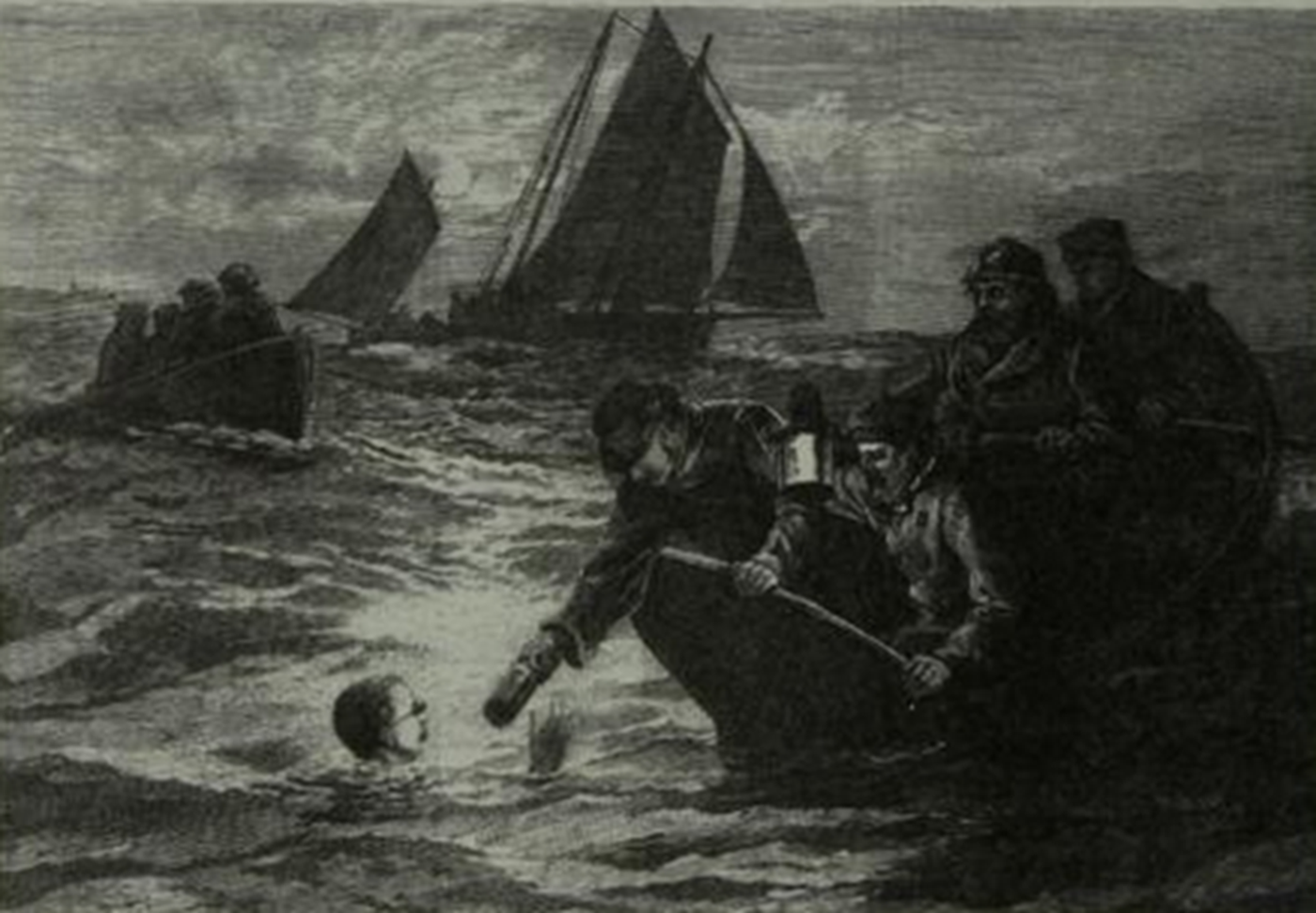
Webb had already captured public admiration two years earlier when, during a transatlantic voyage, he leapt into the sea at night upon hearing a cry for help. Though he was unable to save the victim, the daring act established his reputation for courage.
Tragically, Webb’s life ended just eight years after his Channel triumph. In 1883, at the age of 35, he died attempting to swim the rapids below Niagara Falls.
Today, the English Channel remains the most coveted route for open-water swimmers worldwide. The current record belongs to German swimmer Andreas Waschburger, who completed the Dover–Calais crossing in 6 hours and 45 minutes in 2005. For Poland, the most distinguished achievement belongs to Teresa Zarzeczańska-Różańska, who in 1975 – exactly a century after Webb – became the first Pole and the fourth woman in the world to conquer the Channel, finishing in 11 hours and 10 minutes.
Matthew Webb’s legacy endures not only in the record books but also in the spirit of maritime challenge. His crossing symbolises the unyielding determination of those who dare to pit human strength against the sea.
Buy us a coffee, and we’ll invest in great maritime journalism! Support Gazeta Morska and help us sail forward – click here!
Kamil Kusier
redaktor naczelny
comments
Add the first comment
see also
Galeon Yachts and Meyer Shank Racing: merging luxury yachts with motorsport expertise
Winter periscope mode and sandbanks instead of ice: how seals rest in the southern Baltic
Baltic Sea water levels at a record low: a meteorological-oceanographic anomaly with major implications
106 years ago Poland “turned to the sea”. Split celebrations, one goal: a strong maritime Poland
Red Rose trapped in ice on the Bay of Puck. Sequence of events and structural risks
Crystal Sails Awards presented. Pomeranian sailing officially concludes the 2025 season
The Famous Project: first all-female crew sails non-stop around the world
Robert Lewandowski becomes Sunreef Yachts ambassador, orders 80-foot power catamaran built in Poland
Polish ice sailors claim a haul of medals as “Hollywood ice” delivers top-level competition
World Sailing sets a new benchmark for sustainability with life-cycle assessments of Olympic sailing equipment
ADVERTISEMENT
ADVERTISEMENT