









Winter on Puck Bay: ice conditions, natural values, and responsible use
Puck Bay is a unique coastal area along the Polish Baltic Sea where, under favorable winter conditions, a solid ice cover can form. Its geographical location, partial enclosure by the Hel Peninsula, and shallow bathymetry allow the bay to freeze faster and more consistently than the open sea, creating rare opportunities for winter recreation and observation of natural processes.
In brief
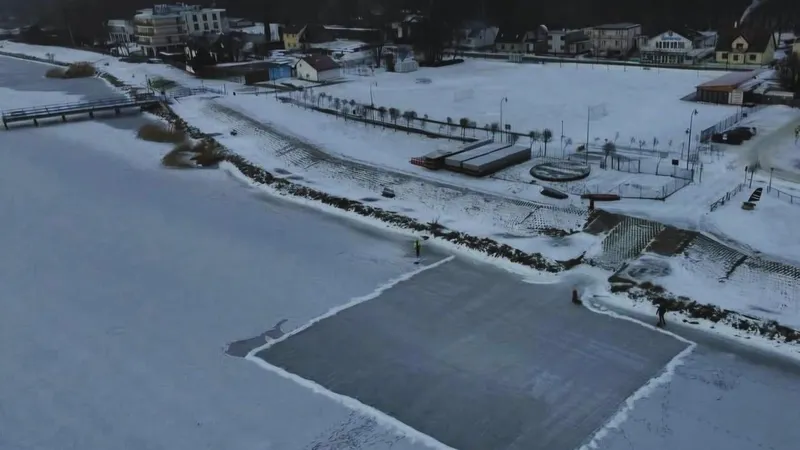
Ice thickness on Puck Bay near Chałupy is currently around 15 centimetres, and forecasts point to further growth of the ice cover. Puck Bay freezes faster and more stably than the open Baltic thanks to the shelter of the Hel Peninsula and shallow depths, which near Chałupy in many places do not exceed around half a metre. The load-bearing capacity of the ice depends on air temperature, wind, water salinity and local movements of water masses, and differences in thickness occur over short distances. During severe winters the frozen Puck Bay was once used for travel by sleigh and for ice fishing.
This phenomenon is not only a visual and environmental attraction but has also held practical significance for centuries, shaping the way local communities historically used the frozen bay.
How the bay freezes
The ice formation process in Puck Bay is gradual and spatially uneven. Ice first appears along the shallow, sheltered coastal areas, where water volume is minimal and heat loss to the atmosphere is fastest. In the Chałupy area, water depth rarely exceeds half a meter, which allows ice to form quickly and even create natural skating surfaces.
However, shallow water does not automatically equal safety. Ice thickness and stability can vary dramatically over short distances due to wind exposure, water salinity, and local currents. Even visually uniform ice can have weak spots, especially near reed beds, historical water channels, or small underwater depressions.
Historical context
Historical records indicate that Puck Bay frequently froze during harsh winters. Frozen waters served as temporary transport routes between coastal settlements, facilitated under-ice fishing, and functioned as natural extensions of the shoreline. Although modern winters tend to be shorter and more variable, periods of extensive bay ice still occur and continue to attract both residents and visitors.
Shallow water, but caution required
The Chałupy ice rink area is exceptionally shallow, with water depths around 0.5 meters in many places. This enables rapid ice formation but should not lead to complacency. Ice over shallow water remains dynamic and can be weakened by temperature changes, wind, or local water flows. Even in small areas, thickness may vary significantly, creating potential hazards for those on the ice.
Responsible ice use
Every activity on the frozen bay should be preceded by an assessment of current conditions. Ice thickness should be measured in multiple locations, not just at the entry point. Weather forecasts and recent temperature trends must also be considered, as temporary thaws, strong winds, or snowfall can compromise ice stability.
Current ice thickness in the Chałupy area is approximately 15 centimeters, with forecasts indicating further thickening in the coming days. While this increases load-bearing capacity, caution remains essential. Visitors should avoid gathering in large groups, carry basic safety equipment such as ice picks and a rope, and steer clear of areas with known currents, inlets, or ports.
Safe engagement with the winter bay
Winter on Puck Bay offers a unique natural and recreational experience along the Baltic coast. It provides rare opportunities to enjoy skating, walking, and observing the winter landscape. Safe use of these natural assets requires awareness, knowledge of the bay’s dynamics, and continuous monitoring of ice and weather conditions. Even as ice thickens day by day, responsible behavior remains the foundation of safe enjoyment.
Source: Gazeta Morska · Compiled by: Kamil Kusier
Related articles
 Safety and rescue Polish SAR’s new rescue vessel Mistral launched at Kewatec in Finland
 Safety and rescue Icelandic Coast Guard and police delegation visits Polish Border Guard’s Maritime Division
 Safety and rescue Polish Navy helicopter evacuates man from Baltic platform 100 km off Władysławowo
 Navy and defence SNMG2 joins Allied warships in PASSEX as Italy's Mare Aperto 2026 gets under way
 Safety and rescue From lightships to solar power: 160 years of the Grundkallen light station
 Education 254 people, manikins and life rafts: Maritime University of Szczecin joins national CPR record attempt
Comments (0)
The discussion is moderated by the editors: a comment appears after review. Your e-mail address is not published.
Nobody has commented on this article yet.