









Water safety in focus: Szczecin water police intensify jet ski inspections
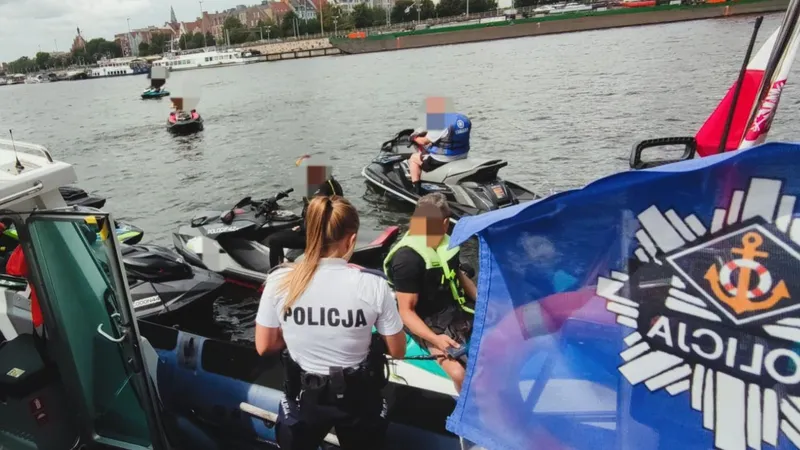
As summer brings increased traffic to the waterways in and around Szczecin, the local Waterborne Police Unit is stepping up patrols to ensure safety on inland waters. Particular attention is being paid to jet ski operations, where speed, power, and accessibility can create significant risks if misused.
In brief
The Water Police Station in Szczecin is conducting intensified checks of jet ski users on Szczecin's waters. Officers check vessel registration and licences, rescue equipment, including life jackets for every person on board, the technical condition of the steering system and engine, and how the craft are operated near bathing areas and nature reserves. The Water Police remind users of the ban on operating a jet ski under the influence of alcohol and of keeping a safe distance from swimmers. The checks are to continue throughout the summer.
What is being checked?
Despite their compact size, jet skis are powerful machines that require both technical knowledge and legal authorization to operate. Police officers are conducting regular inspections focused on:
- Operator certification – A valid personal watercraft license (patent) is mandatory.
- Vessel registration – All jet skis must be properly registered and display identification.
- Mandatory safety equipment – Each person on board must wear a life jacket.
- Technical condition of the craft – Functional steering systems, engines, and safety components are essential.
- Safe operation – Officers are monitoring speed, distance from shorelines and swimmers, and general behaviour on the water.
Why does it matter?
Jet skis offer an exciting form of recreation, but they also pose significant risks, especially when used irresponsibly. Excessive speed near beaches, residential areas, or nature reserves can endanger swimmers, other boaters, and wildlife. In recent seasons, incidents involving jet skis have prompted greater regulatory oversight and community concern.
The Szczecin Water Police remind all users of key safety principles:
- Respect speed restrictions and wake limits – particularly in ports, marinas, near beaches, and along busy navigation routes.
- Keep a safe distance – from swimmers, other boats, and the shoreline. Even small waves can destabilise other vessels or harm those in the water.
- Minimise noise – especially near residential areas and protected zones.
- Stay alert and aware – keep a constant watch on the water, shoreline, and your surroundings.
- Protect the environment – never discard waste into the water and avoid polluting sensitive ecosystems.
- Never operate under the influence – alcohol or drugs are strictly forbidden when operating any watercraft.
- Inform someone of your route – share your plans and expected return time for safety.
Safety through education and enforcement
The ongoing inspections are part of a broader effort to promote responsible waterway use. Rather than focusing solely on penalties, the Water Police aim to raise awareness and foster a safety culture among both locals and visiting water users.
This initiative is supported by cooperation between police, local authorities, marina operators, and boating organizations. Patrols and spot checks will continue throughout the summer, reinforcing the message that safe, respectful use of inland waters is a shared responsibility.
Source: Gazeta Morska · Compiled by: Kamil Kusier
Related articles
 Safety and rescue Polish SAR’s new rescue vessel Mistral launched at Kewatec in Finland
 Safety and rescue Icelandic Coast Guard and police delegation visits Polish Border Guard’s Maritime Division
 Safety and rescue Polish Navy helicopter evacuates man from Baltic platform 100 km off Władysławowo
 Navy and defence SNMG2 joins Allied warships in PASSEX as Italy's Mare Aperto 2026 gets under way
 Safety and rescue From lightships to solar power: 160 years of the Grundkallen light station
 Education 254 people, manikins and life rafts: Maritime University of Szczecin joins national CPR record attempt
Comments (0)
The discussion is moderated by the editors: a comment appears after review. Your e-mail address is not published.
Nobody has commented on this article yet.