









USCGC Stratton deploys to Indo-Pacific, bolstering U.S. maritime presence in the region
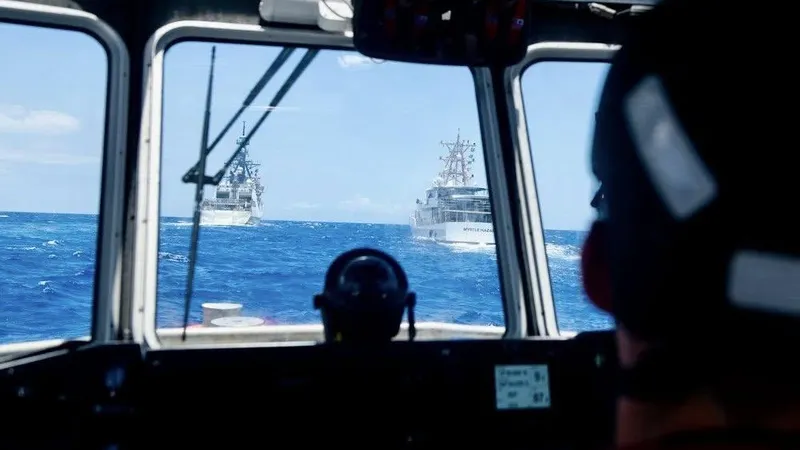
The U.S. Coast Guard Cutter Stratton (WMSL 752), a 418-foot Legend-class National Security Cutter, has deployed to the Indo-Pacific and is now operating under Destroyer Squadron 15—the largest surface force in the U.S. Navy’s 7th Fleet.
In brief
The Legend-class cutter USCGC Stratton (WMSL 752) has begun a mission in the Indo-Pacific region, where it has been assigned to Destroyer Squadron 15, the largest surface force of the United States Navy's 7th Fleet. The 127-metre (418-foot) vessel is normally homeported in Alameda, California, and will conduct maritime law enforcement, counter-smuggling and crisis response operations. Seaman William Kirk stressed that joint patrols and exercises with regional partners serve to build trust and maritime security.
This deployment is part of the Coast Guard’s enduring commitment to the Indo-Pacific, where it has maintained a presence for over 150 years. The mission underscores the strategic role of U.S. maritime forces in enhancing regional security, protecting shared interests, and deepening cooperation with allied and partner nations.
Homeported in Alameda, California, the Stratton is designed for high-endurance operations on the high seas, capable of supporting a broad range of missions including law enforcement, counter-smuggling, humanitarian response, and defense readiness.
“As Coast Guardsmen, we play a vital role in promoting maritime governance and operational stability,” said Petty Officer 3rd Class (equivalent to Leading Seaman) William Kirk. “Through joint patrols, interoperability exercises, and presence operations, we aim to build trust and reinforce a rules-based maritime order.”
Throughout the deployment, the Stratton will operate alongside other National Security Cutters and Fast Response Cutters, engaging in strategic patrols and bilateral engagements across key maritime corridors.
The Coast Guard’s expanded footprint in the Indo-Pacific reflects a coordinated whole-of-government approach to support free, open, and secure waters, while countering coercive maritime behavior and illicit activity in contested areas.
Source: Gazeta Morska · Compiled by: Kamil Kusier
Related articles
 Safety and rescue Polish SAR’s new rescue vessel Mistral launched at Kewatec in Finland
 Safety and rescue Icelandic Coast Guard and police delegation visits Polish Border Guard’s Maritime Division
 Safety and rescue Polish Navy helicopter evacuates man from Baltic platform 100 km off Władysławowo
 Navy and defence SNMG2 joins Allied warships in PASSEX as Italy's Mare Aperto 2026 gets under way
 Safety and rescue From lightships to solar power: 160 years of the Grundkallen light station
 Education 254 people, manikins and life rafts: Maritime University of Szczecin joins national CPR record attempt
Comments (0)
The discussion is moderated by the editors: a comment appears after review. Your e-mail address is not published.
Nobody has commented on this article yet.