









Toxic algal bloom devastates marine life and disrupts South Australia's maritime economy
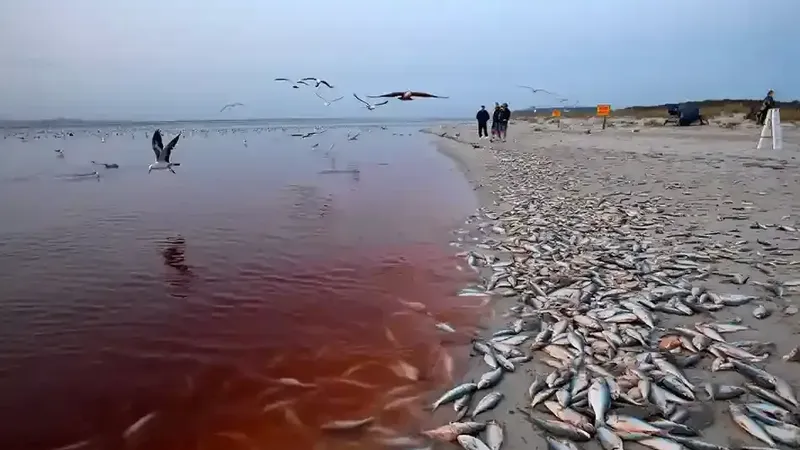
A massive bloom of toxic algae has been declared a natural disaster by South Australia's premier, Peter Malinauskas, after wiping out hundreds of marine species and heavily impacting aquaculture and tourism along the state’s coastline.
In brief
A bloom of the toxic algae Karenia mikimotoi has covered more than 4,500 square kilometres of coastal waters off South Australia and has been declared a natural disaster. South Australian Premier Peter Malinauskas told ABC Australia that more than 400 species of marine life have been killed or severely depleted. Scientists point to water temperatures that have remained on average 2.5 degrees Celsius above seasonal norms since 2024, and more than 13,850 reports of dead animals have been logged on the iNaturalist platform. The state government and the federal government have each announced support packages of USD 9.11 million covering clean-up, research and aid for aquaculture.
Zakwit toksycznych wodorostów Karenia mikimotoi który objął już ponad 4500 km wód przybrzeżnych uznany został za klęskę żywiołową
First detected in March, the bloom has now spread across an estimated 4,500 square kilometres of coastal waters. According to environmental scientists, the phenomenon has been intensified by a persistent marine heatwave, with sea surface temperatures 2.5°C above average since 2024.
– Over 400 marine species have been killed or decimated by this bloom – Peter Malinauskas told ABC News. – Let’s call it what it is: a natural disaster.
Economic fallout and emergency response
The bloom, caused by the explosive growth of Karenia mikimotoi, poses a severe threat to marine ecosystems. The decomposition of these algae reduces oxygen levels and damages the gills of fish, leading to mass die-offs. As a result, multiple oyster and shellfish farms have been forced to shut down temporarily, hitting the local seafood industry hard.
In response, both the South Australian government and the federal government have announced relief packages worth 9.11 million USD each, supporting water clean-up operations, environmental monitoring, and direct assistance to affected businesses.
Local residents have reported more than 13,850 instances of dead marine life – including sharks, rays, fish and invertebrates – via the iNaturalist platform, highlighting the scale of the ecological damage.
A global wake-up call
Marine biologists warn that this event is part of a broader trend: harmful algal blooms are becoming more frequent and more destructive, driven by rising sea temperatures and human-induced nutrient pollution in coastal waters.
– What’s happening off the coast of South Australia is not an isolated event – one marine ecologist noted. – It’s a warning sign for the global maritime sector, especially aquaculture, tourism and coastal economies.
Source: Gazeta Morska / PAP · Compiled by: Kamil Kusier
Related articles
 Environment Two tonnes of oil and sand collected by sieve. Rowy to Ustka clean, two stretches still need work
 Environment A disaster warning on Lake Łebsko, a fishing dispute and a CBA arrest. Słowiński National Park's hardest autumn
 Environment The world's largest seahorses move into the Gdynia Aquarium. In this species it is the male that gets pregnant
 Maritime lifestyle and tourism Fuel oil along 50 km of Polish coast. Ustka beaches closed, illegal discharge suspected
 Safety and rescue Fuel oil on the beach in Ustka. The Baltic hands back what nobody wants to collect
 Ports and logistics Maersk to fit a 35 m rotor sail on an 8,700 TEU Lima-class ship in 2027
Comments (0)
The discussion is moderated by the editors: a comment appears after review. Your e-mail address is not published.
Nobody has commented on this article yet.