









125,000 cubic metres of sand under the cliff at Babie Doły. The beach will grow to 40 metres
The Maritime Office in Gdynia signed on 9 October a contract for artificial nourishment of the shore between Oksywie and Babie Doły. Around 125,000 cubic metres of sand will be placed along a stretch of about 2.5 kilometres, and the beach at the foot of the Oksywie cliff is to reach a width of around 40 metres. The task, worth 4.8 million zloty gross, is being delivered on a design-and-build basis; the contractor has six months for documentation and works. The aim is to protect the cliff from abrasion; a wider beach for residents and tourists is a by-product.
In brief
Artificial beach nourishment between Oksywie and Babie Doły will place about 125 thousand cubic metres of sand along a stretch of about 2.5 kilometres. The Maritime Office in Gdynia signed the contract on 9 October, and the design and build task is worth 4.8 million zlotys gross, with six months for documentation and works. The beach at the foot of the Kępa Oksywska cliff is to reach about 40 metres in width and protect the cliff from abrasion. Sand for the Babie Doły nourishment is to come from the approach channel to the Wisła Śmiała mouth near Górki Zachodnie.
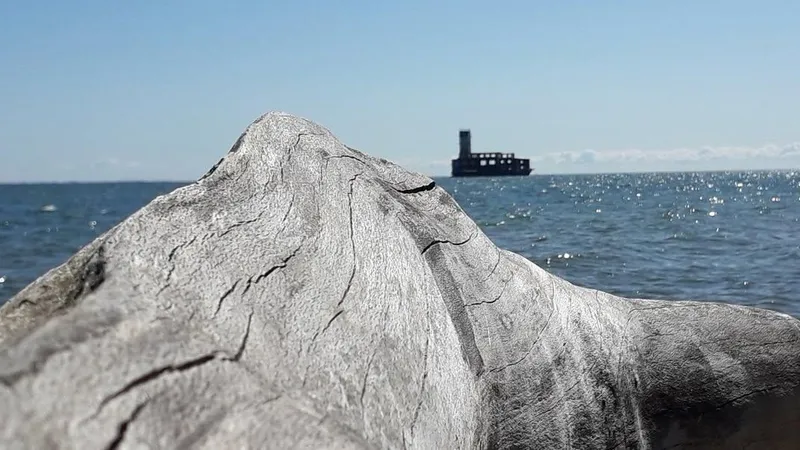
It is the same stretch of coast where divers from Baltictech identified last week the wreck of a Lancaster bomber at a depth of 11 metres, between the port entrance and the torpedo station. The sand will go onto the shore, not the seabed, but the contractor will have to take account of what lies off this beach, because besides the aircraft wreck this is seabed searched many times since the war.
Sand from the Wisła Śmiała approach, piped ashore
The material is to come from the approach channel to the mouth of the Wisła Śmiała near Górki Zachodnie, which the office has to dredge regularly in any case. A dredger will lift the sand from the seabed, carry it to Babie Doły, and a mixture of water and sand will then be pumped through pipelines onto the designated stretch of shore; once the water drains off, the sand will be spread and profiled to the intended beach shape. The details of the works are to be set according to the current state of the shore and conditions on site.
Beach nourishment, or replenishment, replaces the sand the sea washes away, especially in storms. A wider beach absorbs part of the wave energy before it reaches the base of the cliff and so limits undercutting. The office stresses that the beach's width will change under natural processes; this is not a structure but a buffer that will need renewing.
Before design work an ornithological survey and a check for marine mammals are planned, with environmental monitoring during the works. The contractor is responsible for protecting the marine environment and obtaining consents for the works and the transport of equipment.
Part of a 150-million project: Jastarnia, Rewa, Orłowo
Babie Doły is one element of the project "Protecting the shores against flooding from the waters of the Bay of Gdańsk", worth around 150 million zloty and co-financed by the EU's FEnIKS programme under its climate adaptation measure. The three main tasks are: in Jastarnia, flood embankments on the Bay of Puck side, mobile barriers and a cored dune ridge, with a hall for the barriers and equipment; in Rewa, shore reinforcement over about 480 metres using rock armour, a retaining wall and mobile flood defences, with dune restoration; in Gdynia Orłowo, extension of the system of submerged sills that dissipate wave energy and stabilise the shoreline, with dune rebuilding by biotechnical methods. Added to these are the modernisation of the coastal protection services' base at Jelitkowo and protection of dunes, coastal forests and cliffs around the whole bay.
The project combines classic hydro-engineering, embankments and rock armour, with methods based on what the shore does by itself: dunes, beach, underwater sills that do not stop sand but slow it. On the Bay of Gdańsk, closed off by the Hel Peninsula and densely built up, storms do not come as often as on the open coast, but when they do they have nowhere to spend themselves; hence Jastarnia, Rewa and Orłowo, the three places flooded most often in recent years.
A cliff retreating for a century
The Oksywie upland, home to the naval port, the Naval Academy and Gdynia's housing estates, is a moraine plateau ending in a cliff the sea has been undercutting forever. The old torpedo station at Babie Doły, built in 1940 on piles in the water a few dozen metres from the shore, stands further from the beach today than it did, because the shore behind it has retreated. Every storm takes sand from the foot of the cliff, then clay, and every such winter brings the sea closer to what stands on top.
A hundred and twenty-five thousand cubic metres of sand will not stop that process, but it will slow it, and that is the whole philosophy of nourishment: give the sea something to take before it takes the cliff. The maritime office has done this along the Polish coast for years, from Hel to Ustka, and with every such contract repeats the same sentence: the beach may change. It will. What matters is that the cliff does not.
Source: Gazeta Morska · Compiled by: Kamil Kusier
Related articles
 Maritime lifestyle and tourism Fuel oil along 50 km of Polish coast. Ustka beaches closed, illegal discharge suspected
 Safety and rescue Fuel oil on the beach in Ustka. The Baltic hands back what nobody wants to collect
 Ports and logistics Maersk to fit a 35 m rotor sail on an 8,700 TEU Lima-class ship in 2027
 Environment From the UAE to Reda: sharks and rays move into a modernized and secured aquarium
 Maritime economy Will the sharks return to Reda? Locals and tourists have grown used to seeing them through the glass
 Maritime lifestyle and tourism 21 blacktips in Seoul, 17 sharks in Wrocław, 9 in Bournemouth. Will they return to Reda too?
Comments (0)
The discussion is moderated by the editors: a comment appears after review. Your e-mail address is not published.
Nobody has commented on this article yet.