









The turtle I have never met. How our everyday choices drift further than we think
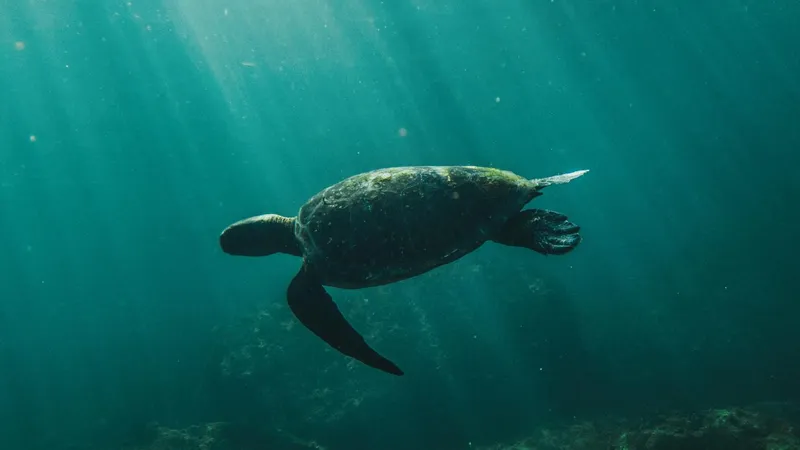
I have never seen a sea turtle in the wild. And yet I think about it often. I picture an animal that has been crossing the oceans for millions of years, returning to the very beach where it hatched, capable of surviving storms, powerful currents and predators. The paradox is that a creature able to cross entire oceans can lose to something a human uses for just a few minutes.
In brief
Plastic items used by humans for a few minutes remain in the environment for hundreds of years and threaten sea turtles, for which a straw, a plastic bag or a bottle can resemble food. Decomposing plastic creates microplastics that enter the water, seabed sediments and marine organisms, and thus the entire ecosystem. The author of the column points to waste sorting, limiting single-use packaging and choosing reusable items as everyday decisions with real significance. Indifference does the greatest harm to nature.
It is perhaps one of the greatest contradictions of the modern world. We can make an object that serves us for a moment and then remains in the environment for centuries. A plastic straw, a carrier bag or a single-use bottle is, to us, ordinary rubbish. To a turtle, it can look like food, or become a lethal trap.
What puzzles me most, though, is something else. Most of us have no intention of harming nature. Nobody wakes up in the morning thinking, today I will pollute the ocean. We simply live fast. We buy, we use, we throw away, and we rarely stop to wonder what happens to our waste once it disappears from view. Yet the bin is not a magical place where rubbish ceases to exist, and the sea is not an infinite warehouse for our mistakes.
The problem does not end with large pieces of plastic. Over time they break down into ever smaller fragments, becoming microplastics. These enter the water, the seabed sediments and marine organisms, working their way into the entire ecosystem. This is no longer a problem for turtles and fish alone. It is our problem too, because nature does not separate the human world from the animal one. Everything is connected.
Someone will say: surely one straw or one carrier bag changes nothing. Perhaps one really does not. The trouble is that there are millions of such ones every single day. It is precisely from seemingly trivial decisions that the problems arise which we then spend decades trying to fix.
I will not save all the turtles. Neither, most likely, will you. But we can do something far simpler - not add another piece of plastic to the ocean. Sort our waste, cut back on single-use packaging, reach for reusable things, and sometimes think twice before throwing something away. For a person, it is a small effort. For nature, it can make an enormous difference.
We often assume that responsibility for the environment rests solely with governments, scientists or environmental organisations. Yet every great change begins with the small decisions of ordinary people.
The greatest harm we do to nature is not when we set out to hurt it, but when we are indifferent. And indifference always begins with the belief that just this once will change nothing.
Source: Gazeta Morska · Compiled by: Anna Kubaszewska
Related articles
 Safety and rescue Polish SAR’s new rescue vessel Mistral launched at Kewatec in Finland
 Safety and rescue Icelandic Coast Guard and police delegation visits Polish Border Guard’s Maritime Division
 Safety and rescue Polish Navy helicopter evacuates man from Baltic platform 100 km off Władysławowo
 Navy and defence SNMG2 joins Allied warships in PASSEX as Italy's Mare Aperto 2026 gets under way
 Safety and rescue From lightships to solar power: 160 years of the Grundkallen light station
 Education 254 people, manikins and life rafts: Maritime University of Szczecin joins national CPR record attempt
Comments (0)
The discussion is moderated by the editors: a comment appears after review. Your e-mail address is not published.
Nobody has commented on this article yet.