









The second Polish-flagged yacht caught with cocaine this year. The problem sits in the register
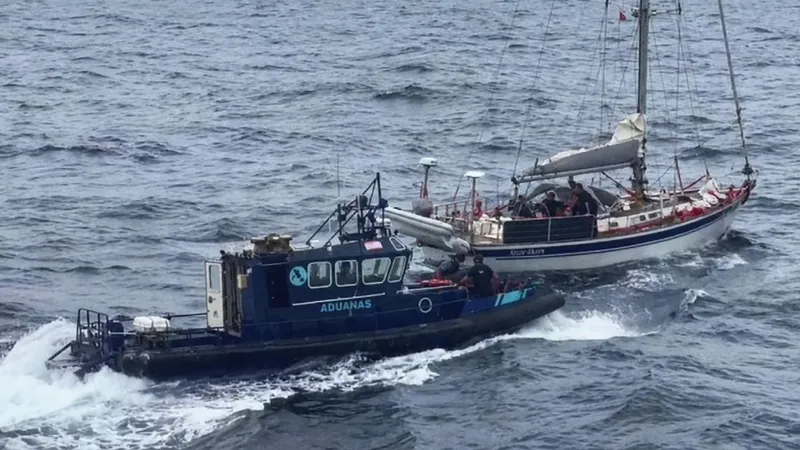
On 14 September Spain's Customs Surveillance Service intercepted the Seute Deern, a 14-metre Polish-flagged sloop, about 400 nautical miles off the coast of Galicia with more than two tonnes of cocaine on board. Three months earlier, on 11 June, French and Spanish customs stopped another Polish-flagged sailing yacht 400 miles south of the Canary Islands carrying almost 500 kilograms of cocaine.
In brief
The Spanish Customs Surveillance Service seized the Polish-flagged yacht Seute Deern on 14 September with more than two tonnes of cocaine, about 400 nautical miles off the coast of Galicia. Officers counted 70 packages weighing nearly 2,100 kilograms aboard the Seute Deern, worth about 20 million euros, and the vessel was towed to Vigo. French and Spanish customs officers intercepted another Polish-flagged sailing yacht on 11 June carrying almost five hundred kilograms of cocaine. The Polish REJA24 register held more than 100,900 vessels on 21 December 2025, of which 40,018 had owners based outside Poland.
Two cases in four months is no longer coincidence. It is a question about how the Polish yacht register works, a register that at the end of 2025 held more than 100,000 vessels, close to 40 per cent of them owned outside Poland.
Seute Deern: 400 miles off Galicia
The investigation, codenamed Doncella, was run by the Customs Surveillance Service unit in Girona. It began in February, when intelligence pointed to a 13 to 15-metre sailing vessel on the Catalan coast possibly linked to an illegal operation near the Spanish-French border. In June officers identified the yacht in the port of Roses in Girona province. On 11 July officers recorded it leaving Roses without activating its AIS transponder, which is mandatory under way.
It was relocated in the early hours of 14 September, when the special operations ship Petrel I found it far out in the Atlantic. After boarding, packages of cocaine were found hidden in various parts of the yacht. After boarding, 70 bales weighing close to 2,100 kilograms were counted. The yacht was towed to Vigo, where the drugs and the detainees were handed over to the courts on 21 September. The cargo is valued at around 20 million euros.
Four people were detained on board, nationals of Argentina, Uruguay, Colombia and Albania. Investigators describe the Albanian as the receiving organisation's notary, the man who vouches to his own group that the operation is going to plan. A fifth detainee, a Chilean national regarded as the head of the network, was arrested in Girona province, and Spanish officers have announced the coming arrest of a sixth, a Spanish national in Barcelona who guarded the boats and watched for any approach by the authorities. None of those detained was Polish.
The operation was run in close cooperation with DNRED, the French customs intelligence and investigation directorate, with support from Spain's CITCO and the Maritime Analysis and Operations Centre Narcotics, while Britain's National Crime Agency and the United States DEA supplied information. Those detained face charges of membership of a criminal organisation, smuggling and offences against public health, and the case will be handled by the Audiencia Nacional. The investigation remains open and further arrests have not been ruled out.
June, the Canaries, the same flag
French customs reported that during an operation conducted between 27 May and 15 June in the Macaronesia region, covering the Azores, Madeira, the Canaries and Cape Verde, a Polish-flagged sailing yacht was intercepted on 11 June with almost 500 kilograms of cocaine, valued by the French at around 33 million euros. Three crew members were arrested, two Brazilians and a Moroccan.
The operation involved a Beechcraft KA350 aircraft and the French customs patrol vessel Jean-François Deniau alongside Spain's Petrel, with support from MAOC-N and Frontex. There too the drugs were prepared for transfer at sea. The Spanish tax agency places both cases on the Atlantic cocaine route, where sailing yachts from South America hand over cargo in mid-ocean before it reaches Europe.
A register open to the whole world
Poland's register of yachts and other vessels up to 24 metres has operated since 1 August 2020 through the REJA24 system, administered by the Maritime Office in Szczecin. An application can be filed with any of 382 registering authorities, run by district governors, mayors of cities with district status and two sports federations. The procedure is electronic, cheap and quick.
The decisive feature lies elsewhere. The register is open and allows a vessel to obtain Polish nationality with no restriction on the owner's country of origin, and the registration document is issued without an expiry date. As of 21 December 2025 REJA24 held more than 100,900 vessels, of which 40,018, about 40 per cent, had an owner based or resident outside Poland. Around 20,000 new entries are added every year.
A brokerage market has grown around that accessibility. Companies register yachts for foreign clients and advertise the Polish flag as available to practically anyone with a correspondence address or a representative in Poland, with multilingual service and the entire procedure online.
What Spanish investigators found
According to the Spanish tax agency, the yacht matched many of the risk criteria the Customs Surveillance Service routinely analyses using maritime surveillance tools. On top of that, the person who appeared to be its owner had a record for theft and robbery. Those were Spanish findings made during the investigation, not the result of any check carried out at registration.
The investigating team asked the Polish authorities through CITCO to establish the yacht's ownership and the people connected to it while the case was still being built, long before the interception in the Atlantic. Spanish customs, in other words, profiled an owner whom the Polish register had earlier admitted without any such filter.
According to investigators, the network they broke up specialised in moving drugs using recreational vessels under the flags of various countries, and offered its services to criminal organisations from Eastern Europe and the Balkans. In that model the flag is a tool. The easier it is to obtain and the weaker the oversight of the register, the lower the risk that a boat attracts attention before it sails.
The government has seen the problem
Poland's Ministry of Infrastructure has drafted an amendment to the yacht registration act, and the Council of Ministers adopted the bill in July this year. Its stated aim is to strengthen the maritime administration's oversight of vessels flying the Polish flag and to ensure that the data in REJA24 is current and reliable.
The central change is a mandatory initial survey of a vessel before registration, together with an obligation to keep owner data updated. According to the ministry, this is to ensure real contact with the owner or operator and make safety inspections enforceable. A parallel amendment to the maritime safety act is intended to make it easier to inspect foreign vessels, including detaining and penalising shadow fleet ships that breach EU sanctions.
The sector flagged the issue earlier. During work on the bill it was pointed out that the simplicity of filing, liberal rules and low costs had left registered vessels effectively without supervision, and that proper verification of the documents of vessels obtaining the right to the Polish flag was needed.
What the amendment does not settle
An initial survey answers a technical problem. It confirms that the vessel exists, matches its declared parameters and that its owner can be reached. It does not answer the question of who that owner is.
Neither of the two cases involved a ghost yacht. Both were real boats that crossed the Atlantic. The question is whether, when granting the right to its flag, the state should check who is applying, whether there is a real party or a front behind the application, and whether that party appears in criminal records or on sanctions lists. Polish procedure currently has no such filter, and the adopted bill does not add one.
This is not only a problem for law enforcement. More than a hundred thousand vessels fly the Polish flag, the overwhelming majority owned by honest sailors for whom the flag's reputation translates directly into how they are treated during inspections in foreign ports. Every further yacht carrying cocaine with the white and red ensign on its stern lowers that reputation.
Source: Gazeta Morska · Compiled by: Kamil Kusier
Related articles
 Safety and rescue Polish SAR’s new rescue vessel Mistral launched at Kewatec in Finland
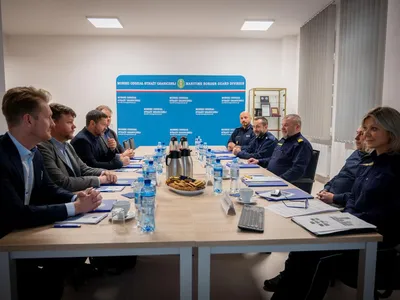 Safety and rescue Icelandic Coast Guard and police delegation visits Polish Border Guard’s Maritime Division
 Safety and rescue Polish Navy helicopter evacuates man from Baltic platform 100 km off Władysławowo
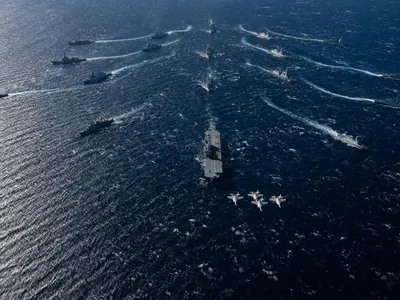 Navy and defence SNMG2 joins Allied warships in PASSEX as Italy's Mare Aperto 2026 gets under way
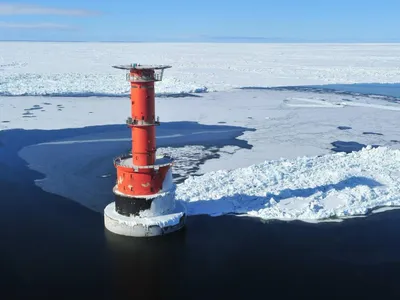 Safety and rescue From lightships to solar power: 160 years of the Grundkallen light station
 Education 254 people, manikins and life rafts: Maritime University of Szczecin joins national CPR record attempt
Comments (0)
The discussion is moderated by the editors: a comment appears after review. Your e-mail address is not published.
Nobody has commented on this article yet.