The most important piece of ice in the world. The political crisis around Greenland and its consequences
Ideas about the United States taking control of Greenland long predate Donald Trump’s first presidency in 2017. Such concepts had already appeared in American foreign policy in the 19th century and again in the mid-20th century. In this context, one can recall the principles of the Monroe Doctrine. It assumed that the American continent should not be subject to colonization or expansion by European powers. More broadly, it suggested that exclusive American presence in the Western Hemisphere was key to U.S. security. Based on this logic, some argued that the United States had the “right” to intervene or take over territories over which another actor was unable to exercise full control, potentially threatening U.S. interests.
business worldwide politics news06 april 2026 | 19:50 | Source: Gazeta Morska | Prepared by: dr Łukasz Wyszyński, dr Paweł Kusiak | Print
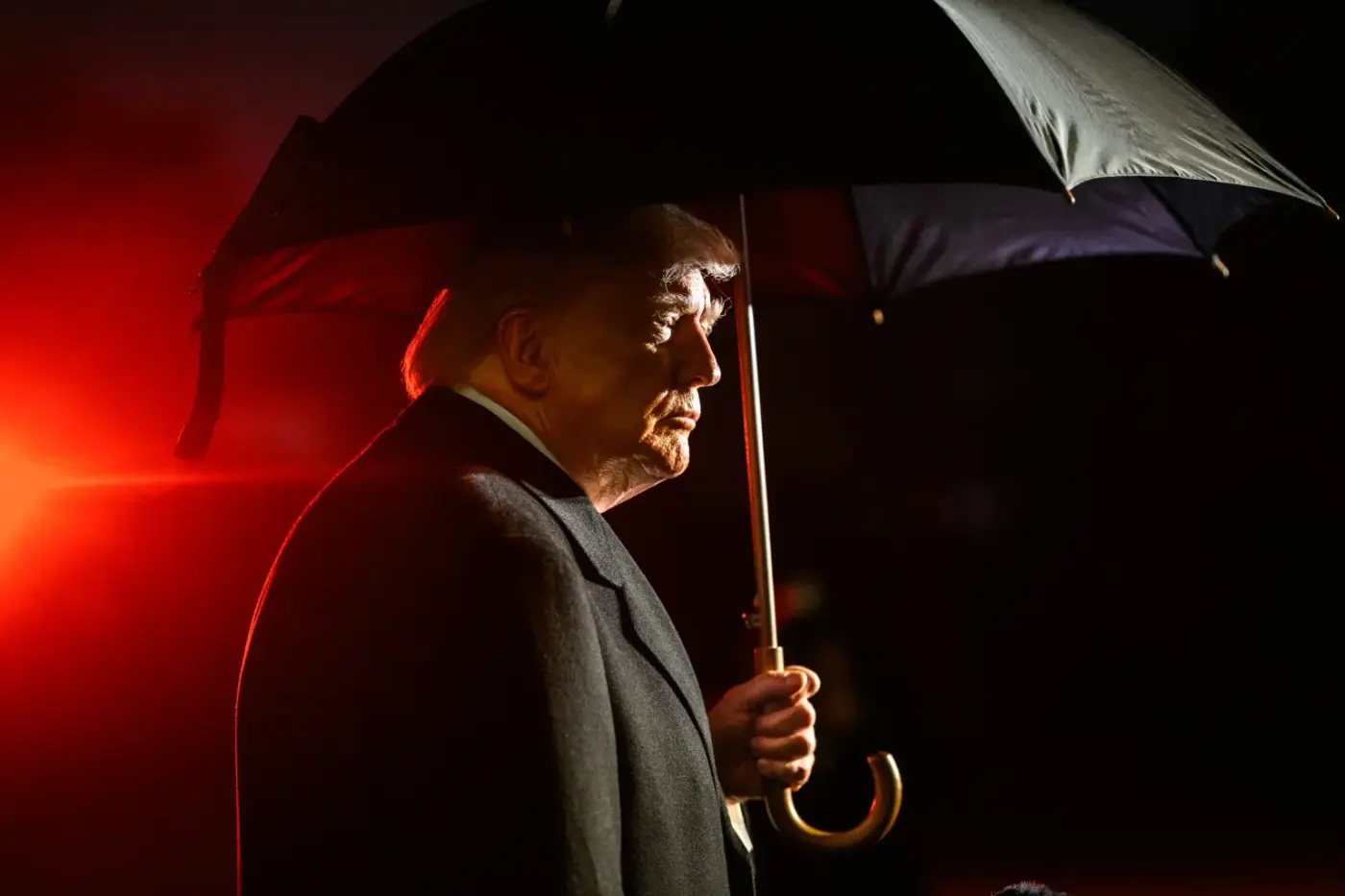
fot. White House / Czy parasol USA nad Europą jest gwarancją czy narzędziem nacisku
These assumptions were visible in U.S. policy toward Florida, and later toward Greenland, where concerns emerged about possible German control during World War II and its use as a base for attacks against U.S. territory. After the war, the Truman administration put forward claims regarding Greenland. In 1946, the U.S. proposed either purchasing the island from Denmark or reaching a special agreement with the governments in Nuuk and Copenhagen. Ultimately, these efforts led indirectly to a 1951 agreement between Copenhagen and Washington. Under this arrangement, the United States gained the right to establish military bases in Greenland under specified conditions.
The issue of U.S. acquisition of Greenland gained renewed momentum during Donald Trump’s presidency. In August 2019, media reports revealed that the American president was considering buying the island, prompting firm rejection from both Denmark and Greenland’s authorities. Trump responded by canceling a planned visit to Copenhagen and escalating his rhetoric. He suggested that the United States would “get Greenland sooner or later.”
After losing the 2020 election, the issue temporarily faded, but it returned with greater intensity following Trump’s inauguration for a second term in 2025. The president resumed pressure on allies, threatening Denmark with trade sanctions (including tariffs on EU goods) and questioning the purpose of continued cooperation within NATO. Trump openly challenged existing alliance norms, arguing that Greenland should become part of the United States for security reasons and that only Americans were capable of properly managing the island.
“I believe we are the only country with enough strength to defend and develop Greenland,” he argued, calling for negotiations with Denmark over the island’s transfer.
The campaign for U.S. annexation of Greenland became a central element of Trump’s policy toward Denmark and European allies, alarming both Greenlanders and European capitals. Tensions peaked in early 2026, when media speculation suggested the possibility of a forceful takeover if negotiations failed.
Unexpectedly, however, during his speech at the World Economic Forum in Davos in January 2026, Trump backed away from threats of military force. He stated: “I don’t need to use force. I don’t want to use force. I will not use force,” easing the crisis. In Davos, a preliminary framework for a future Arctic security agreement was also announced, aimed at avoiding the need for U.S. annexation of Greenland. Although this reduced the immediate risk of confrontation with Denmark, many observers emphasized that it was only a tactical pause. Trump did not abandon interest in the island, signaling continued negotiations and leaving the door open for future escalation.
Why Greenland matters
Greenland holds strategic importance for the United States—arguably even existential—due to several key factors.
The first and most frequently discussed is military security. The United States has maintained a military presence in Greenland since World War II and has developed special arrangements with Denmark. When Denmark was invaded by Germany in 1940, its territories—including Greenland—faced the risk of hostile expansion. In 1941, in line with the Monroe Doctrine, the United States assumed defensive responsibility for Greenland with the consent of the Danish ambassador in Washington. American forces quickly established air bases that served as stopover points for flights between the U.S. and Europe.
After the war, the U.S. sought to purchase Greenland, but Denmark refused. Instead, a defense arrangement was established. In 1951, Copenhagen and Washington signed an agreement on Greenland’s joint defense within NATO. Under this agreement, the United States gained the right to establish military bases, while Greenland was divided into defense zones under American command, with Danish sovereignty preserved. This arrangement remains in force today.
Greenland’s geographic position places it along the trajectory of intercontinental ballistic missiles (ICBMs) potentially launched from Russia toward the United States. In the event of a global nuclear conflict, Greenland lies “in the middle of Armageddon,” as described by the Associated Press. The U.S. Pituffik Space Base (formerly Thule) operates on the island, equipped with radar systems capable of detecting ballistic missiles over the Arctic. Its location—roughly halfway between Washington and Moscow—gives the United States valuable additional minutes of response time.
Trump’s proposed “Golden Dome” missile defense system was expected to include Greenland. He argued that the U.S. must own the island to defend it effectively. Critics, however, note that this logic is flawed, as the U.S. has successfully utilized Greenland’s facilities for decades without sovereign control. Moreover, the growing role of satellites is shifting surveillance capabilities into space.
Opponents of maintaining the current arrangements argue that the 1951 agreement requires U.S. actions to be coordinated with Denmark. Indeed, the two countries have not always agreed. In the 1960s, Washington planned to deploy nuclear weapons in Greenland, which Copenhagen rejected. This history may lead Trump to believe that U.S. autonomy is overly constrained. However, under current conditions, redeploying nuclear weapons in Greenland would likely require a significant escalation in tensions with Russia or China.
Another military aspect is Greenland’s role in controlling access to the Arctic. This includes logistical, economic, and naval considerations—particularly submarine operations and broader maritime activity near the North Pole. The GIUK gap (Greenland–Iceland–UK) is a critical chokepoint for access to the Atlantic, especially for Russia’s Northern Fleet.
Beyond military considerations, Greenland’s natural resources are of strategic importance. Beneath its ice lie vast deposits of uranium, precious metals, and rare earth elements. The island is believed to hold the world’s second-largest reserves of rare earths—around 38.5 million tons, or 25–30% of global resources. These materials are essential for advanced technologies, including smartphones, wind turbines, and military systems, and are currently dominated by Chinese supply.
In 2023, the European Union signed a strategic raw materials agreement with Greenland. However, despite optimistic estimates, actual extraction is limited by extreme conditions: 80% of the island is covered in ice, temperatures can drop to -60°C, and infrastructure is minimal. Since World War II, only nine mines have been opened, with just two currently operational.
While new projects are planned, analysts argue that Greenland will not become a major global supplier in the near term. Nonetheless, it remains a focal point of great-power competition.
The Great Game for the Arctic
Greenland’s importance cannot be separated from broader geopolitical competition in the Arctic. Once considered peripheral, the region is now emerging as a strategic frontier.
Russia has spent over a decade militarizing the Arctic, expanding bases, establishing new command structures, and deploying nuclear-powered icebreakers. It has also submitted claims to extend its exclusive economic zone to the North Pole.
China, although not an Arctic state, has declared itself a “near-Arctic” country and seeks to expand its presence through investments and the concept of a Polar Silk Road. Its cooperation with Russia is described as “unprecedented,” aimed at reducing Western influence.
In this context, Greenland stands out as one of the few Arctic territories not controlled by Russia. For NATO, it serves as a gateway between the Arctic and the Atlantic, particularly along the GIUK line—a cornerstone of Cold War strategy that is regaining importance.
For Washington, Greenland is part of broader great-power competition. Control over the island would strengthen U.S. leverage against Russia and block Chinese expansion.
Greenland and the NATO crisis
The political crisis surrounding Greenland has long-term implications for alliances and global security architecture. It has tested NATO’s credibility and cohesion.
The situation in which the United States—the alliance’s leader—openly threatens a fellow member (Denmark) with military force is unprecedented. While NATO has experienced internal conflicts before, none involved such direct threats.
Even without escalation, trust has been damaged. Many in Europe now question the reliability of U.S. security guarantees. The crisis undermines NATO’s core principle of solidarity.
If a military confrontation between the U.S. and Denmark were ever to occur, NATO would effectively cease to function. The episode has also reinforced calls for Europe to develop independent defense capabilities.
More broadly, the Greenland case sets a dangerous precedent: a major power willing to challenge the territorial integrity of an ally weakens international norms and legitimizes similar actions by others.
At the same time, the situation reflects a historical pattern in U.S. geopolitics rooted in the Monroe Doctrine. The Davos developments suggest that some form of compromise may have been reached—possibly involving limiting Chinese and Russian influence, expanding U.S. military autonomy, and securing access to resources.
The true nature of these arrangements, however, will only become clear in the coming years.
Buy us a coffee, and we’ll invest in great maritime journalism! Support Gazeta Morska and help us sail forward – click here!
Kamil Kusier
redaktor naczelny
comments
Add the first comment
see also
StartupHack 3.0 at GPNT: Space and maritime technologies at the core of innovation
Polish technology powers zero-emission public transport. AREX secures largest municipal contract
Defence.Hub strengthens capabilities in technologies supporting maritime infrastructure security
Hanseatic Global Terminals takes full ownership of Florida International Terminal
Aleksandra Kosiorek: The sea has always been a space of openness for us, and that will not change
Gdańsk to launch Baltic Sea monitoring center
Türkiye advances indigenous GNSS ambitions: what FGN-100-D3 means for the maritime sector
Lithium at the core. TKMS and E3 Lithium align on Canada’s submarine ambitions
Błażej Konkol appointed vice president for infrastructure at the Port of Gdańsk Authority
WB Group expands into Romania, strengthening presence in the Black Sea region
ADVERTISEMENT
ADVERTISEMENT