Shadows of Putin on the Baltic Sea
The Baltic Sea, after the end of the Cold War, was meant to become a space for building trust and developing economic cooperation. The collapse of the USSR on one hand, and the processes of European Union and NATO enlargement on the other, created the foundations for thinking about the region in terms of lasting peace. These assumptions began to erode quickly. Changes in the structure of the international system increasingly translated into political tensions, exposing contradictions between the key actors of international relations.
security logistics navy worldwide opinions and comments ports commentary transport and forwarding news01 december 2025 | 14:43 | Source: Gazeta Morska | Prepared by: dr Łukasz Wyszyński, dr Paweł Kusiak | Print
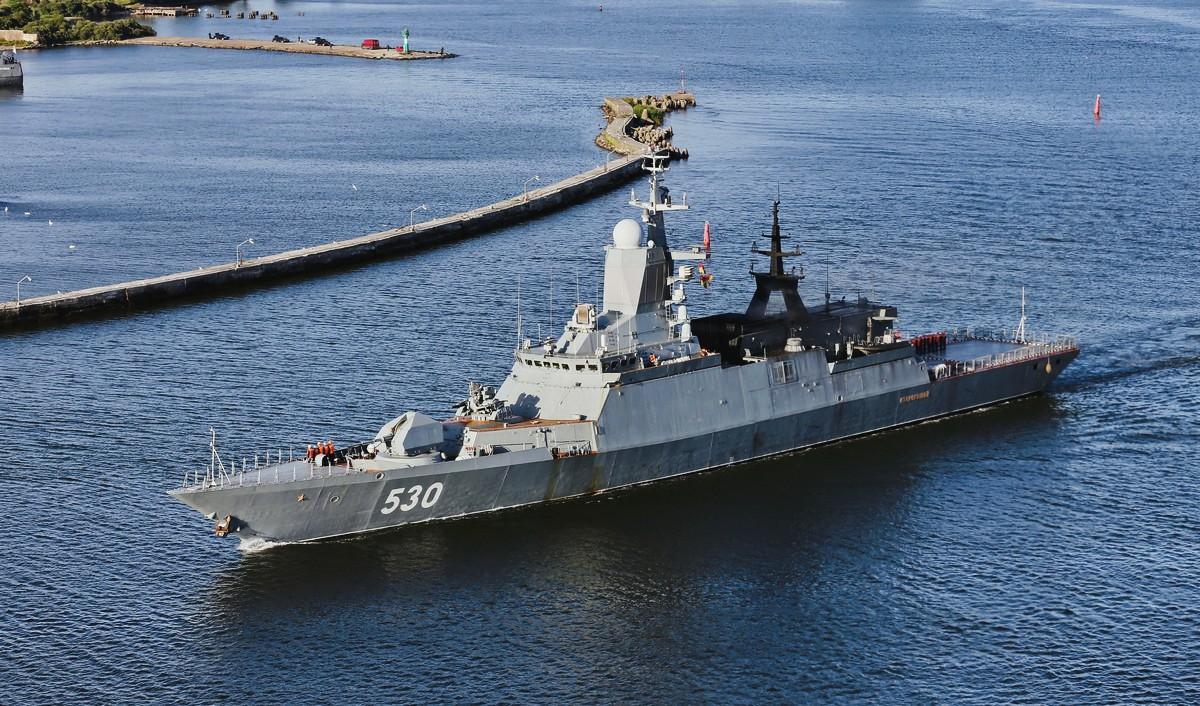
fot. Wikimedia
Today, the Baltic is an area where airspace and maritime space are increasingly violated, subsea infrastructure is damaged, information warfare is conducted, and political-economic frictions occur. One of the most spectacular manifestations of these tensions is the Russian “shadow fleet.” Nearly every day, hundreds of ghost tankers—often with transponders turned off and sailing under false flags—smuggle oil, bypassing the international sanctions imposed on the Russian Federation by the United States and the European Union. For the Kremlin, it is a financial artery of war; for the West, a test of determination and sanction cohesion.
The Baltic has become a place where security theory meets harsh reality, and where Poland and its allies must find a strategy that combines deterrence, law, and cooperation in the fight against Russia’s shadows.
This article attempts to frame the problem of the so-called “shadow fleet” through the lens of selected theories of international relations. This approach aims to help Poland’s political and military elites, as well as the broader public, see how a very real problem affecting national security can be interpreted from the perspective of the structure of the international system and its changes.
What is the Russian “shadow fleet”?
The term “shadow fleet” refers to a group of ships—mainly tankers—organized and used by the Russian Federation to transport crude oil and petroleum products to countries that do not recognize the sanctions imposed by the United States and the European Union after Russia’s kinetic invasion of Ukraine in February 2022.
The shadow fleet consists primarily of old, heavily exploited tankers with unclear ownership structures, often diversified across multiple states and companies, sailing under so-called “flags of convenience.” The place of registration, ownership structure, and crew composition hinder the enforcement of sanctions and limit political and legal pressure. States offering flags of convenience often have no real connection with the vessels in the shadow fleet—for example Panama, Liberia, the Comoros, Gabon, or the Marshall Islands. This group continues to evolve: Liberia and the Marshall Islands withdrew after the United States discovered that the companies administering these flags were based in the US. Their place was taken by other states and registries such as Sierra Leone, Eswatini, or Cambodia.
Many ships in the shadow fleet had previously been withdrawn from regular commercial fleets. They are typically uninsured—despite insurance being required by most states and shipping operators. They are characterized by low technical standards and poor maintenance. To conceal their activity, the crews often disable AIS transponders (Automatic Identification System) and navigation lights, effectively disappearing from maritime monitoring systems. This places their operations outside the direct jurisdiction of states enforcing sanctions.
In practice, Moscow has created a parallel maritime transport system functioning outside the main framework of international law and regulation. As Cmdr. Prof. Dariusz Bugajski of the Polish Naval Academy notes: “The raw material is loaded in Baltic ports and then transferred multiple times, often in open sea.”
Western states know exactly how this works. However, the maritime environment and international law—especially the UN Convention on the Law of the Sea—limit the ability of coastal states to act decisively if the activity takes place on the high seas or within exclusive economic zones.
The core of the shadow fleet consists of vessels previously owned by Russian operators (e.g., state-owned Sovcomflot) and older tankers bought on the secondary market in bulk when Russia anticipated the imposition of Western restrictions. According to estimates from the EEAS and independent experts, at the beginning of 2024 the shadow fleet consisted of around 435 vessels capable of handling about 60% of Russia’s seaborne crude exports and around 45% of petroleum product exports. By the end of 2025, this scale further increased. According to European Commission data from October 2025, the EU had already sanctioned 557 ships belonging to the shadow fleet.
Such a large parallel fleet allows Russia to continue exporting energy despite sanctions. As Prof. Sergey Radchenko observed in an interview: “Russia turned to the shadow fleet to make money—Putin needs hard currency to pay his soldiers and import crucial goods.” In other words, this silent armada keeps the Russian war machine funded.
The shadow fleet on the Baltic as a new regional threat
The Baltic Sea has become one of the main areas of operation for the shadow fleet because of Russian loading ports such as Primorsk and Ust-Luga, and because of the strategic importance of the Baltic for NATO and EU security.
The intensive activity of uninsured, aging tankers in the heavily trafficked Baltic poses serious ecological and navigational risks. Many experts classify the shadow fleet as one of the most serious contemporary maritime challenges for the region.
The fleet undermines the effectiveness and credibility of the Western sanctions regime. By transporting Russian oil to global markets, it reduces economic pressure on the Kremlin and finances the war effort. This prolongs the conflict in Ukraine and increases military pressure on NATO’s eastern flank. Moreover, Russia uses the West’s inability to block its oil exports as propaganda fodder.
Environmental risks are another major concern. The Baltic is an inland sea with limited water exchange, meaning that a major spill would have catastrophic, long-lasting consequences. The danger is real. In May 2023, the tanker Canis Power carrying Russian oil lost steering near the Danish island of Langeland, drifting for six hours with over 300,000 barrels of oil. Only luck and the intervention of Danish authorities prevented a disaster. Inspections later revealed 11 critical technical failures.
Other incidents include the Andromeda Star collision in March 2024 near Jutland and repeated suspicious maneuvers by Russian tankers near critical subsea cables. In December 2024, the Estlink-2 cable between Finland and Estonia was mysteriously damaged, with the shadow fleet tanker Eagle S identified as the culprit.
An even more alarming emerging threat is the use of shadow fleet vessels as platforms for drone operations. In September 2025, President Volodymyr Zelensky revealed intelligence that Russia uses the shadow fleet to “launch and control drones over European cities.” Around the same time, a wave of unidentified drones forced temporary airspace closures in Denmark, prompting investigations into their possible origins on shadow fleet tankers.
These suspicions gained weight when, on 1 October 2025, French naval commandos boarded the tanker Boracay, linked to the shadow fleet. President Macron confirmed it was part of Europe’s strategy to cut Russia’s illicit oil revenues, and investigators examined the vessel for drone-related equipment.
The shadow fleet is thus an attractive tool for Russian hybrid warfare—useful for sabotage, espionage, and creating deniable crises, including the potential for a “controlled accident” such as a deliberate spill to cripple Baltic maritime trade under the guise of mechanical failure.

Realist interpretation: the shadow fleet as a tool of Russian power
From a realist perspective, prioritizing state security and national interest, the shadow fleet is a strategic instrument enabling Russia to sustain vital revenue flows. Maintaining the export of energy is a matter of national survival, so the Kremlin will defend the shadow fleet as if it were defending its territory.
For Poland and other NATO Baltic states, a realist response means strengthening military capabilities and maritime control. Prepared legislative measures—such as the Polish Ministry of Defence’s proposed “Safe Baltic” law—fit this logic by expanding the navy’s authority beyond territorial waters, granting use-of-force rights, and giving crews law-enforcement powers.
Yet realist strategies entail escalation risks. A direct naval confrontation with Russian vessels—civilian only in name—could be used by Moscow as a pretext for aggression. Therefore, states must balance firm deterrence with careful risk calculation.
In practice, realist policy for Poland includes:
- Maximizing surveillance and protection of waters and infrastructure, including sensors, maritime drones, and cooperation with private maritime industry.
- Building regional security coalitions with Baltic and Nordic states.
- Signaling readiness to defend interests, discouraging Russian escalation.
- Instrumentally using international law to achieve security goals.
Given that Poland’s prosperity and security depend on the sea more than ever, the realist imperative is to keep the Baltic “as free as possible from Putin’s shadows.”
Liberal interpretation: a shadow of western weakness?
Liberals emphasize international institutions, law, and cooperation. The shadow fleet highlights gaps in the sanctions regime and global maritime governance. Russia’s ability to construct a parallel transport system shows that norms must be better enforced through coordinated action, not military power.
Liberal solutions include:
- closing legal loopholes,
- penalizing uninsured shipping,
- tightening flag-state responsibility,
- expanding multilateral cooperation.
Examples include:
- The IMO’s 2023 resolution urging action against shadow fleet operations.
- The October 2025 creation of the Shadow Fleet Task Force involving G7 and NB8++ states.
- The EU’s 19th sanctions package (October 2025) targeting hundreds of shadow fleet vessels and the “ecosystem” surrounding the trade.
- Pressure on flags of convenience—e.g., Panama agreeing to deregister sanctioned ships.
- Plans for bilateral agreements permitting pre-authorized inspections of foreign-flagged vessels.
For Poland, liberal logic argues for coordinated action through NATO, the EU, and multilateral frameworks—avoiding unilateral moves to ensure legitimacy and effectiveness.

Constructivist interpretation: narratives and norms
Constructivism focuses on ideas, norms, and shared meanings. The term “shadow fleet” itself constructs an image of illegality and danger. Baltic states deliberately use this narrative to frame Russia as a violator of international norms and themselves as defenders of order.
Constructivist analysis highlights:
- the importance of shaping international perception,
- building normative consensus that shadow fleet operations are unacceptable,
- using discourse to isolate Russia and pressure states offering flags of convenience.
Poland can strengthen its international identity by portraying itself as a guardian of maritime law and sanctions. Publicizing incidents—drone flights, sabotage attempts, AIS deactivation—helps build a shared understanding of Russia as a maritime threat.
Joint declarations from NB8 and other groups reinforce this shared narrative, pressuring third countries to withdraw support for shadow fleet operations.
In constructivist terms, the struggle takes place not only on the sea but also in the realm of ideas, legitimacy, and shared norms.
Buy us a coffee, and we’ll invest in great maritime journalism! Support Gazeta Morska and help us sail forward – click here!
Redakcja Gazeta Morska
użytkownik
comments
Add the first comment
see also
Defence.Hub strengthens capabilities in technologies supporting maritime infrastructure security
Damen to build 13 SAR units for Turkey. Strengthening search and rescue in the Aegean Sea
Sebastian Kluska, director of MSPiR SAR: No room for improvisation at sea. Skills and judgment matter
MS Kapitan Poinc to deploy FRB 850 in Baltic SAR upgrade
105th life-saving mission. Naval Aviators conduct double "Heart Action" transport
Another successful medical evacuation over the Baltic Sea. Yet another intervention at offshore wind farms
Fishing trip on Vistula Lagoon cut short due to missing certificates
Drifting tanker near Malta highlights risks linked to the global “shadow fleet”
Cross-border SAR operation on the ice of the Gulf of Bothnia
Body recovered from the waters of Puck Bay near Babie Doły in Gdynia
ADVERTISEMENT
ADVERTISEMENT