The World after february 24: has it truly changed?
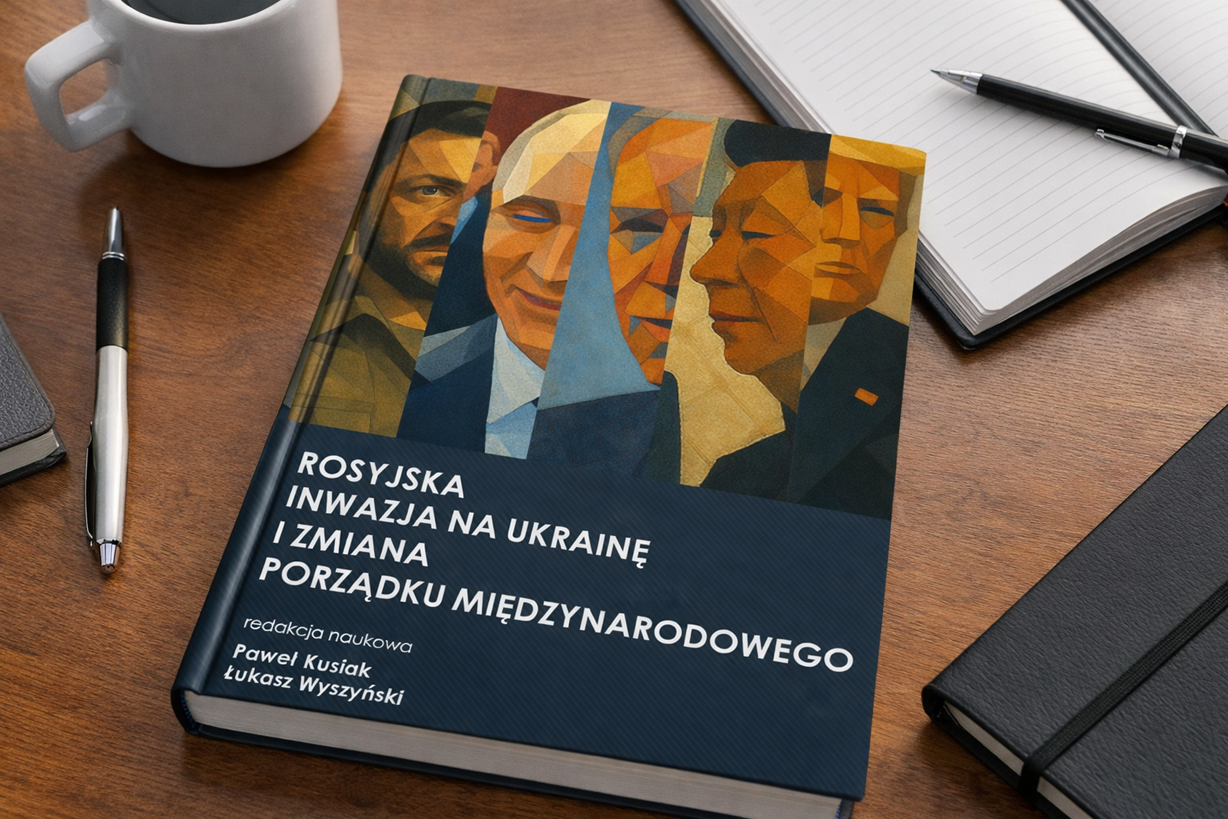
There are books that describe war. And there are those that attempt to answer whether war reshapes the world itself. “Rosyjska inwazja na Ukrainę i zmiana porządku międzynarodowego” belongs firmly to the latter category. This distinction matters. Hundreds of analyses have already examined Russia’s aggression-frontlines, tanks, drones, sanctions. This volume goes a step further. Its authors ask whether February 24, 2022 marked the end of the post-Cold War order, and whether the West has genuinely grasped that it now operates in a fundamentally different reality.
education marine lifestyle pomerania tricity news05 april 2026 | 07:46 | Source: Gazeta Morska | Prepared by: Kamil Kusier | Print
graf. Gazeta Morska
The most compelling thread in the book addresses an issue increasingly discussed in Poland, often in hushed tones: nuclear weapons. Ukraine relinquished the world’s third-largest nuclear arsenal in exchange for security assurances. Today, its territory remains partially occupied, while guarantors have limited their response to sanctions and arms deliveries. The authors stop short of stating it bluntly, yet the conclusion is difficult to avoid. The Budapest Memorandum has become a cautionary tale for any state that believes paper guarantees can substitute for credible deterrence.
In this sense, “Rosyjska inwazja na Ukrainę i zmiana porządku międzynarodowego” is far more unsettling than it initially appears. It raises fundamental questions about the future of the global non-proliferation regime. If Ukraine-a country that gave up nuclear weapons-became the victim of aggression by a nuclear power, what lesson will others draw? Tehran? Seoul? Taipei? These are not abstract considerations; they are central to the future architecture of international security.
Another key dimension of the book frames the war as a laboratory of the 21st century. Ukraine has become a testing ground for drones, electronic warfare, industrial-scale ammunition production, and rapid, improvised innovation. At the same time, the authors soberly observe that this is not a revolution, but rather an acceleration of existing trends. Tanks have not disappeared from the battlefield. Artillery remains the deadliest force. Technology has not replaced mass—it has amplified it.
The regional dimension is equally significant. Poland is not portrayed as a passive observer. On the contrary, it emerges as a state that has shifted from the periphery of the West toward its strategic core. The question remains whether this is a lasting geopolitical transformation or a temporary effect of wartime mobilization. The authors do not offer a definitive answer but effectively illustrate the scale of the reshaping underway in Central and Eastern Europe.
Equally insightful is the perspective beyond the West. The analysis of India’s position highlights that, for much of the world, the war in Ukraine is not a binary clash of good and evil, but a conflict between competing blocs—one that calls for strategic flexibility. This underscores a critical point: the post–February 24 world has not become more unified; it has become more fragmented.
One of the book’s greatest strengths is its restraint. It avoids both apocalyptic rhetoric and Western self-congratulation. It neither proclaims the triumph of democracy nor predicts inevitable dominance by Russia or China. Instead, it captures a gradual erosion-of norms, of trust, and of the belief that the post-1991 trajectory of history was leading toward greater stability.
“Rosyjska inwazja na Ukrainę i zmiana porządku międzynarodowego” is essential reading for those seeking to understand why the war in Ukraine is not merely about Donbas or Crimea. It is a stress test for the entire international system-from NATO and the United Nations to global energy markets.
The most important question that remains after reading is disarmingly simple: has the West truly accepted that the era of the “end of history” is over? If not, this war may only be the beginning of a far deeper geopolitical realignment.
Kamil Kusier
redaktor naczelny
comments
Add the first comment
see also
StartupHack 3.0 at GPNT: Space and maritime technologies at the core of innovation
From Gdynia to the Atlantic. Dar Młodzieży sets sail for Sail4th 250 marking U.S. independence anniversary
Poland launches research vessel project. Maritime University of Szczecin to build next-generation training ship
WAT strengthens NATO logistics capabilities. Polish military university joins elite training network
Polish universities and industry join forces to develop dual-use autonomous underwater drone swarms
Contract signed for the construction of a new training sailing vessel for Gdynia Maritime University
MON, Arka Gdynia and AMW sign letter of intent supporting "Green Industrial District - Kashubia" project
Naval Academy cadets take military oath in Gdynia
Advanced ROV trials conducted at CTO to validate subsea technologies for offshore applications
University of Gdańsk and PGZ Naval Shipyard join forces for innovation and security
ADVERTISEMENT
ADVERTISEMENT