Shipbuilding Industry is Next-Level. Why Shipbuilders Still Need Concrete Specialists
While ferrocement ships – so-called “concrete vessels” – are now mostly historical curiosities, the use of cementitious and mineral-based materials in modern shipbuilding remains essential. Contemporary naval and commercial vessels rely on highly specialized interior systems, many of which depend on the skills of professionals still referred to, colloquially, as “shipyard concreters.”
business maritime economy work at mare shipbuilding industry shipbuilding industry is awesome equipment and technology news09 july 2025 | 09:19 | Source: Gazeta Morska | Prepared by: Kamil Kusier | Print
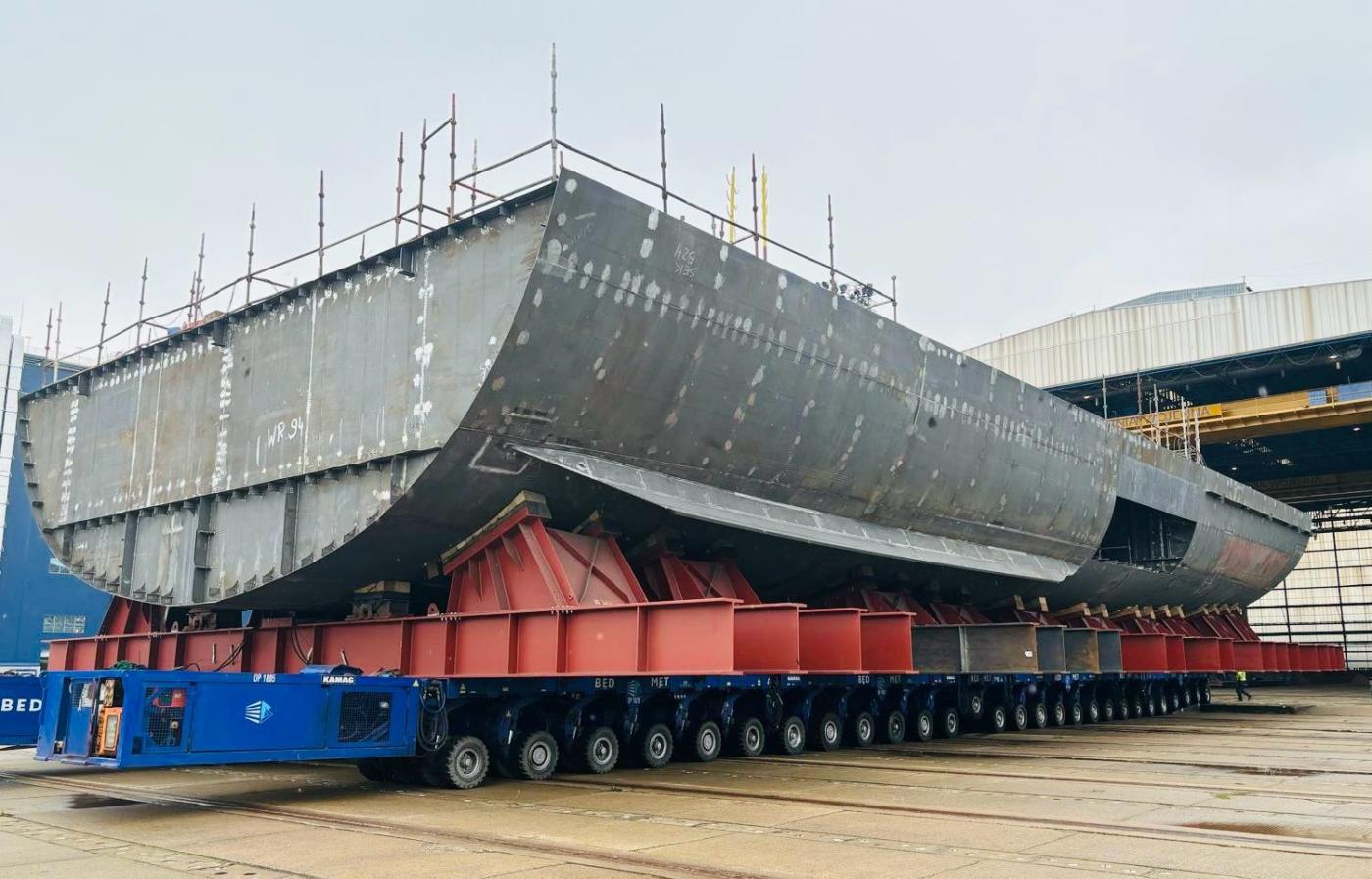
fot. Marcin Ryngwelski / PGZ Stocznia Wojenna
Self-Leveling Compounds – Still at Sea
In the outfitting phase of ship construction, self-leveling floor compounds are a key component. These mineral-based layers serve multiple critical functions:
- leveling uneven surfaces before final floor systems are applied,
- providing fire and acoustic insulation,
- enabling vibration absorption and structural compliance in high-mobility environments.
These materials are far removed from traditional concrete. They are engineered systems designed for the extreme conditions of life at sea, and their application must meet the rigorous standards of classification societies and international maritime regulations.
- Installing floor systems aboard a ship is one of the most overlooked yet technically demanding parts of the build,"says Marcin Ryngwelski, President of PGZ Stocznia Wojenna (Polish Naval Shipyard). - It’s not standard concrete work — it’s a multi-layered, certified process that interacts with the ship’s structure, onboard systems, and even its acoustic profile.
see also
IMO-Certified Materials – Installed with Millimeter Precision
All materials used in marine flooring systems must comply with IMO Fire Test Procedures Code (FTPC), including Part 2 (smoke/toxicity) and Part 5 (fire spread), and be certified by major classification societies such as DNV, Bureau Veritas, or Polish Register of Shipping (PRS).
Installation often occurs in confined, complex spaces, requiring absolute precision. Irregular surfaces, movement tolerances, and structural flex of the hull are all taken into account.
- We’re talking about environments where even a small crack or an uneven slope can compromise equipment mounting or insulation systems, explains Marcin Ryngwelski. - The flooring must flex with the hull, resist mechanical load cycles, and remain structurally sound over time.
Who Are “Shipyard Concreters” Today?
The term “betoniarz” or “concreter” might sound outdated, but these professionals are a vital part of any shipyard's outfitting team. They:
- prepare steel substrates according to system specs,
- apply certified self-leveling and fire-resistant underlayments,
- ensure compliance with shipyard-specific quality assurance and safety protocols.
It’s a profession that bridges construction technology, marine engineering, and compliance expertise.
Why It Matters
Poorly executed subflooring can lead to:
- failure of acoustic or fire-protection systems,
- accelerated material degradation due to vibration or flex,
- misalignment of mounted equipment or crew safety hazards.
In warships, offshore platforms, and modern naval support vessels, every structural layer must perform under extreme operating conditions. Floor and underlayment systems are no exception.
- Shipbuilding isn’t just about welding steel and launching hulls, adds Ryngwelski. - It’s about precision throughout the entire structure — and yes, that includes mineral-based flooring systems laid by experts who understand the ship environment.
In the age of modular outfitting, acoustic control, and fire safety certification, concrete-related work is still very much part of shipbuilding — just redefined. The modern “concreter” is a certified specialist operating at the intersection of marine engineering, safety regulation, and construction science.
see also
Buy us a coffee, and we’ll invest in great maritime journalism! Support Gazeta Morska and help us sail forward – click here!
Kamil Kusier
redaktor naczelny
comments
Add the first comment
see also
StartupHack 3.0 at GPNT: Space and maritime technologies at the core of innovation
Polish technology powers zero-emission public transport. AREX secures largest municipal contract
Defence.Hub strengthens capabilities in technologies supporting maritime infrastructure security
Hanseatic Global Terminals takes full ownership of Florida International Terminal
Aleksandra Kosiorek: The sea has always been a space of openness for us, and that will not change
Gdańsk to launch Baltic Sea monitoring center
Türkiye advances indigenous GNSS ambitions: what FGN-100-D3 means for the maritime sector
Lithium at the core. TKMS and E3 Lithium align on Canada’s submarine ambitions
Błażej Konkol appointed vice president for infrastructure at the Port of Gdańsk Authority
WB Group expands into Romania, strengthening presence in the Black Sea region
ADVERTISEMENT
ADVERTISEMENT