









Russia’s silent retreat - last submarine leaves the Mediterranean as naval influence crumbles
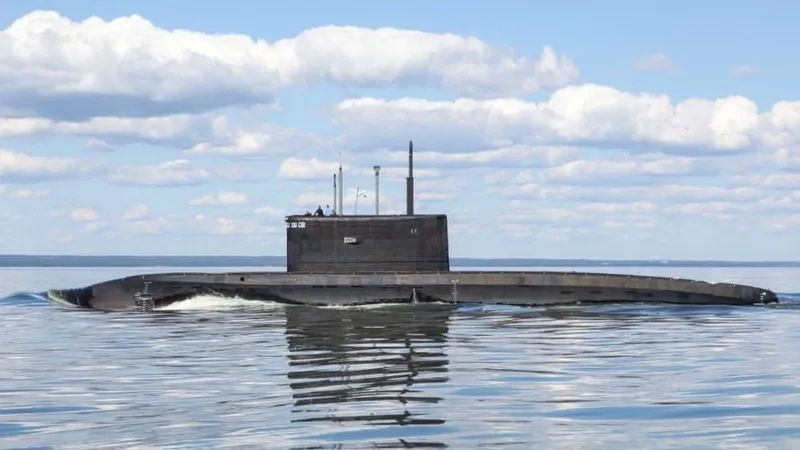
Russia has quietly withdrawn its only conventional submarine from the Mediterranean Sea, marking a symbolic retreat from a region where the Kremlin once projected significant naval power. On Sunday, the Krasnodar—a diesel-electric Kilo-class submarine—departed the Mediterranean, escorted by the naval tug Yevgeny Churov, en route back to its home base in the Baltic Fleet.
In brief
The Russian submarine Krasnodar left the Mediterranean Sea on Sunday and is returning to its home Baltic Fleet, escorted by the naval tug Jewgienij Czurow. Krasnodar was the only Russian conventional submarine in this body of water, and its movements were monitored by NATO aircraft, drones and ships, as noted by the Italmilradar portal. Russia lost access to the base in the Syrian port of Tartus after the overthrow of Bashar al-Assad in December last year. Russian forces in the Mediterranean have been reduced to a frigate, a corvette and a spy ship.
The withdrawal comes just months after the Krasnodar had entered the region in early February, only to find itself ineffective and heavily monitored. According to Italian maritime tracking portal Italmilradar, NATO aircraft, drones, and surface vessels maintained constant surveillance over the sub, especially in the eastern Mediterranean near Syria.
Its deployment was hampered further by the loss of Russia's logistical foothold in the region. The long-standing Russian naval base in Tartus became inaccessible following the overthrow of Syrian dictator Bashar al-Assad in December last year. Without access to the Tartus facility—formally known as the 720th Material-Technical Support Point—Russian naval units lost vital port support, fueling, and maintenance capabilities.
The Krasnodar's operations were so constrained that it reportedly waited in vain for permission to dock in Tartus. Denied entry, the sub and its tug turned westward toward Algeria, Russia’s only remaining regional ally with naval infrastructure capable of servicing the vessel.
Diesel-electric submarines like the Krasnodar require frequent port visits for refueling and upkeep. Without Tartus, sustaining long-term submarine deployments in the Mediterranean is logistically unfeasible for the Russian Navy.
Currently, the Russian naval footprint in the Mediterranean has shrunk to just three vessels: a frigate, a corvette, and an intelligence-gathering ship—a far cry from Moscow’s ambitions of a robust blue-water presence in the region.
Source: PAP / Gazeta Morska · Compiled by: Kamil Kusier
Related articles
 Safety and rescue Polish SAR’s new rescue vessel Mistral launched at Kewatec in Finland
 Safety and rescue Icelandic Coast Guard and police delegation visits Polish Border Guard’s Maritime Division
 Safety and rescue Polish Navy helicopter evacuates man from Baltic platform 100 km off Władysławowo
 Navy and defence SNMG2 joins Allied warships in PASSEX as Italy's Mare Aperto 2026 gets under way
 Safety and rescue From lightships to solar power: 160 years of the Grundkallen light station
 Education 254 people, manikins and life rafts: Maritime University of Szczecin joins national CPR record attempt
Comments (0)
The discussion is moderated by the editors: a comment appears after review. Your e-mail address is not published.
Nobody has commented on this article yet.