









Russian Shahed drone explodes in Poland: a stress test for air defenses and political resolve
On the night of August 19–20, 2025, a Russian Shahed drone crashed and exploded in the village of Osiny, in eastern Poland’s Lublin region. The blast shattered windows in several houses, while scorched debris was found across a cornfield. This is not the first time a missile or drone has landed on Polish soil, raising questions about Warsaw’s air defense posture, NATO’s deterrence credibility, and the political resolve of Poland’s leadership in the face of Moscow’s provocations.
In brief
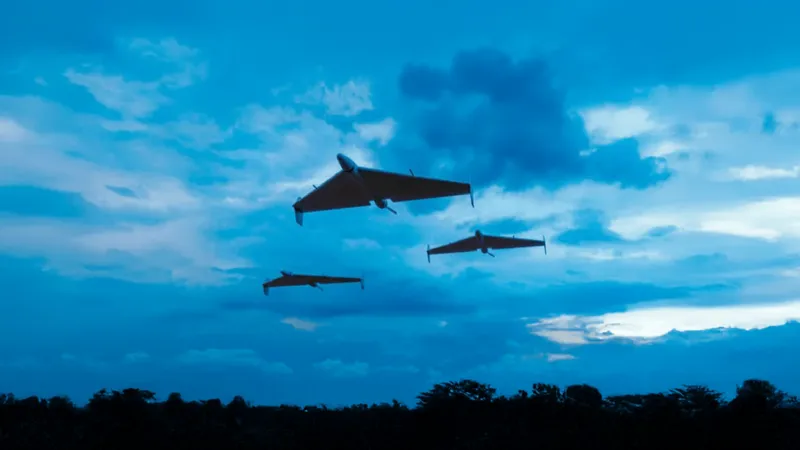
A Russian Shahed-type drone crashed and exploded on the night of 19 to 20 August 2025 in the village of Osiny in the Lublin region. The shock wave blew out windows in several houses, and the charred remains of the drone were found in a maize field. Shahed-136 and Shahed-131 kamikaze drones, produced by Iran's Shahed Aviation Industries, fly low and slowly, which makes detection by radar systems difficult. Earlier, in November 2022 in Przewodów, two people were killed after a missile explosion.
To rosyjski dron spadł na terytorium Polski Grzegorz Trusiewicz z Prokuratury Okręgowej w Lublinie Mamy do czynienia z dronem wojskowym / fot. x.com
Shaheds: cheap weapons with outsized impact
Developed by Iran’s Shahed Aviation Industries, Shahed drones have become an emblem of modern asymmetric warfare. The most common variants – Shahed-136 (known in Russia as Geran-2) and Shahed-131 (Geran-1) – are loitering munitions designed to overwhelm defenses rather than impress with speed or sophistication.
Slow, noisy, but inexpensive (20,000–50,000 EUR apiece), Shaheds fly at low altitude, often below radar coverage, and strike with explosive warheads weighing up to 50 kg. Moscow has been using them en masse in Ukraine to target energy infrastructure and saturate air defenses. In recent years, Russia has localized production, reportedly building thousands annually with Western and Asian components.
Poland in the firing line
The Osiny incident is not an isolated case. In November 2022, two Polish civilians were killed in Przewodów when a missile — later identified as part of Ukraine’s air defense — struck a grain facility. Since then, multiple reports have surfaced of Russian cruise missiles and drones crossing into NATO airspace during large-scale strikes on Ukraine.
The fact that a Shahed exploded on Polish soil underscores that Poland is within reach of Russia’s drone campaign. Analysts suggest such incidents may be deliberate probes: testing radar coverage, gauging the political threshold for escalation, and sending a psychological message to NATO’s eastern flank.
A double test: technology and political nerve
Poland has been investing in counter-UAS (unmanned aerial systems) solutions — from radars and electronic jamming to homegrown anti-drone systems and NATO procurement programs. Yet the Osiny strike illustrates how low-cost, low-flying Shaheds can slip through even layered defenses.
The test, however, goes beyond technology. It is also about political nerve and decision-making. Will Warsaw frame the incident as collateral damage of a nearby war — or as a deliberate Russian provocation, requiring stronger diplomatic and military responses? The answer will shape not only Poland’s defense posture but also NATO’s deterrence credibility.
The geopolitical dimension
For Moscow, Shaheds represent a cost-effective strategic tool: cheap to deploy, expensive to counter. Each drone forces adversaries to expend costly interceptors or risk damage to infrastructure and morale. In the NATO context, this means that Russia can destabilize the regional security environment with relatively modest investment.
Every drone or missile that breaches Polish airspace blurs the line between the Ukraine war and NATO’s direct security. These incidents are not just technical failures — they are strategic signals, probing cohesion, readiness, and willingness of the Alliance to act collectively.
Source: Gazeta Morska · Compiled by: Kamil Kusier
Related articles
 Safety and rescue Polish SAR’s new rescue vessel Mistral launched at Kewatec in Finland
 Safety and rescue Icelandic Coast Guard and police delegation visits Polish Border Guard’s Maritime Division
 Safety and rescue Polish Navy helicopter evacuates man from Baltic platform 100 km off Władysławowo
 Navy and defence SNMG2 joins Allied warships in PASSEX as Italy's Mare Aperto 2026 gets under way
 Safety and rescue From lightships to solar power: 160 years of the Grundkallen light station
 Education 254 people, manikins and life rafts: Maritime University of Szczecin joins national CPR record attempt
Comments (0)
The discussion is moderated by the editors: a comment appears after review. Your e-mail address is not published.
Nobody has commented on this article yet.