









Quicksink a cheap bomb that sinks warships in 20 seconds as US drills near Russia
The US Air Force has successfully tested Quicksink, a low-cost precision-guided bomb capable of sinking surface vessels in just 20 seconds. Conducted in the Norwegian Sea near Russia’s northern borders, the trial showcased both the weapon’s destructive potential and NATO’s integrated readiness in strategically sensitive waters.
In brief
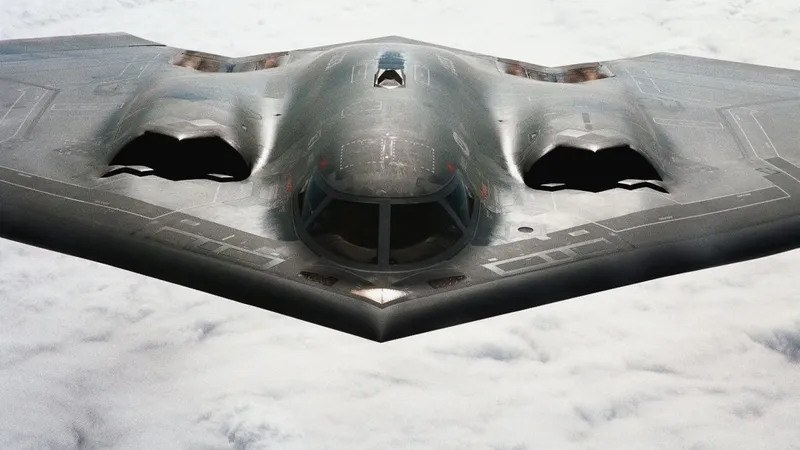
A test over the Norwegian Sea confirmed the effectiveness of the Quicksink aerial bomb, which broke apart a target ship in 20 seconds. The trial involved a B-2 Spirit bomber, Norwegian F-35 fighters and a P-8 Poseidon patrol aircraft, and the participation of allied forces was recorded for the first time. Quicksink comes in 227 kilogram and 900 kilogram versions with an anti-ship guidance module, and a B-2 Spirit can carry as many as 80 light bombs instead of about 16 heavy ones. In 2024 B-2 bombers sank the ships USS Dubuque and USS Tarawa with similar munitions.
How Quicksink works
Unlike a traditional torpedo that strikes the hull directly, Quicksink detonates just off the target’s side. The resulting blast generates a massive wave that lifts the ship’s hull out of the water and tears its structure apart. During the latest test, the target vessel broke apart and sank within seconds.
Two available versions:
- 227 kg — lightweight, cost-effective, optimized for mass deployment
- 900 kg — heavier, designed for larger or reinforced ships
Both variants feature a modular anti-ship guidance kit, making them far cheaper to manufacture and deploy than advanced heavyweight torpedoes.
Payload advantage of the B-2 Spirit
Operational flexibility is one of Quicksink’s biggest strengths. A B-2 Spirit stealth bomber, which typically carries around 16 conventional heavy bombs, can be loaded with up to 80 Quicksink munitions. This dramatically increases the potential for saturation strikes against surface fleets or amphibious groups without requiring large numbers of naval assets.
Previous trials and Arctic demonstration
This was not the first time Quicksink has been employed. In 2024, B-2 bombers used the system to sink two decommissioned US Navy amphibious assault ships: USS Dubuque and USS Tarawa.
The recent test in the High North, however, carried broader significance. Conducted close to Russia’s northern flank and involving Norwegian F-35 fighters and a P-8 Poseidon patrol aircraft, it was the first demonstration where allied forces participated. This highlighted NATO’s interoperability and strategic messaging as much as the weapon’s performance.
Implications for naval warfare and shipbuilding
Quicksink presents three critical advantages for maritime strategy:
- Cost and scalability — delivers “torpedo-like” effects at a fraction of the cost, aligning with the growing need to counter mass-produced, low-cost threats such as unmanned surface and aerial drones.
- Tactical flexibility — enables a single bomber to conduct saturation strikes against multiple vessels, reshaping fleet defense requirements.
- Design challenges for warships — external-blast lethality forces reconsideration of hull resilience, compartmentalization, watertight doors, and structural redundancy in naval engineering.
Risks and strategic questions
Widespread adoption of Quicksink raises important challenges:
- how can coastal defenses detect and neutralize lightweight aerial anti-ship bombs?
- what changes are needed in fleet air-defense doctrines and joint operations with air forces?
- what are the political and legal implications of deploying such a system in contested border zones?
For naval shipbuilders, it signals a need to invest in active and passive protection systems, structural hardening, and counter-explosive technologies.
A shift in the cost-to-effect equation
Quicksink is not a “silver bullet” that will decide future maritime conflicts on its own. Yet it fundamentally changes the cost-effectiveness ratio of anti-ship warfare. For nations defending sea lanes and coastal infrastructure, it serves as an alarm bell: upgrade fleets, revise doctrines, and expand integrated air-maritime exercises.
For the defense and shipbuilding industries, it represents both an opportunity and a responsibility — to deliver solutions that enhance survivability and resilience in an age where cheap precision strikes can achieve catastrophic results.
Source: Gazeta Morska / PAP · Compiled by: Kamil Kusier
Related articles
 Safety and rescue Polish SAR’s new rescue vessel Mistral launched at Kewatec in Finland
 Safety and rescue Icelandic Coast Guard and police delegation visits Polish Border Guard’s Maritime Division
 Safety and rescue Polish Navy helicopter evacuates man from Baltic platform 100 km off Władysławowo
 Navy and defence SNMG2 joins Allied warships in PASSEX as Italy's Mare Aperto 2026 gets under way
 Safety and rescue From lightships to solar power: 160 years of the Grundkallen light station
 Education 254 people, manikins and life rafts: Maritime University of Szczecin joins national CPR record attempt
Comments (0)
The discussion is moderated by the editors: a comment appears after review. Your e-mail address is not published.
Nobody has commented on this article yet.