









Q1 2026 at Polish SAR: 86 rescue operations, 16 lives saved and the persistent GMDSS false alert problem
Poland’s Maritime Search and Rescue Service (MSPiR) conducted 86 rescue operations and 37 incident verification cases in the first quarter of 2026, handling more than 120 maritime incidents overall. A total of 16 people were rescued. The figures once again highlight two defining characteristics of the Polish SAR system: the operational dominance of life-saving and medical response missions, alongside the continuing issue of false alerts generated through the Global Maritime Distress and Safety System (GMDSS).
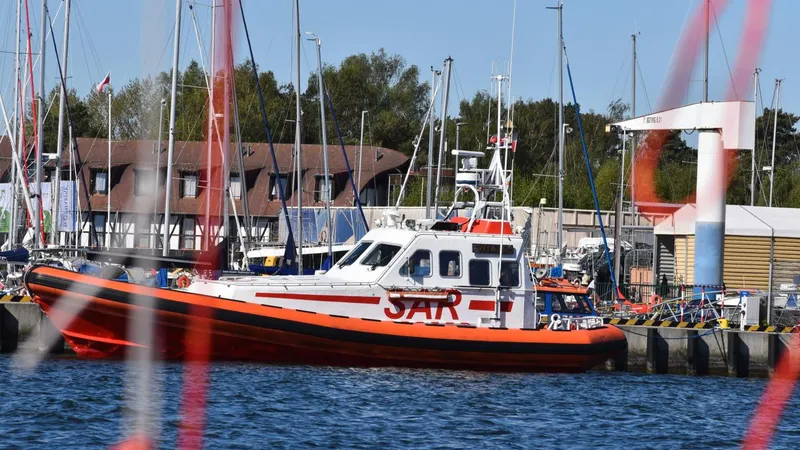
In brief
The Polish Maritime Search and Rescue Service carried out 86 rescue operations and 37 investigative operations in the first quarter of 2026, rescuing 16 people. The statistics include 17 life-saving operations, 17 medical evacuations, 12 rescue assists and three spill response operations, with no property salvage operations. Most operations were conducted from Władysławowo, 16, Łeba, 13, and Świbno, 10, while the stations in Tolkmicko and Gdynia recorded no operations. Of the 37 investigative operations, 18 were classified as false alarms, including 13 false GMDSS alarms, and the most frequent partner was the State Emergency Medical Services, 24 times.
Medical and life-saving missions remain the operational core
Among all rescue activities, two categories clearly dominated operational workload, each accounting for 17 cases: life-saving operations at sea and medical evacuations.
These numbers underline the reality of modern Polish SAR operations. In nearly four out of ten activations, crews respond directly to life-threatening situations or medical emergencies requiring immediate intervention.
By comparison, rescue assistance operations accounted for 12 cases, pollution response for three, while no property salvage missions were recorded during the quarter. This reflects the service’s core mandate - protection of life rather than property.
Interagency cooperation statistics reinforce this trend. The most frequent operational partner was Poland’s State Medical Rescue system, involved in 24 joint actions, including ambulance teams and the Polish Medical Air Rescue service.
This operational profile increasingly positions Polish SAR not only as a conventional maritime rescue service, but also as a maritime emergency medical extension linking offshore incidents with the national healthcare response system.
A further operational indicator deserves attention: 17 life-saving missions resulted in 16 people rescued. On a quarterly scale, this ratio illustrates both the service’s operational effectiveness and the inherent limitations of maritime rescue, regardless of professional capability and asset readiness.
Operational geography: central coast remains the busiest sector
Statistics by rescue station show a clear concentration of operational activity in Poland’s central coastal sector.
The three busiest stations were:
- Władysławowo - 16 operations
- Łeba - 13 operations
- Świbno - 10 operations
The next tier included:
- Kołobrzeg - 6 operations
- Górki Zachodnie - 5 operations
- Ustka - 3 operations
- Trzebież - 3 operations
No operations were reported from Tolkmicko or Gdynia during the quarter. The latter is particularly notable given Gdynia’s status as MSPiR headquarters and one of Poland’s major port centres.
The concentration of incidents from Władysławowo through Łeba, Ustka and Świbno reflects both geographic and traffic realities: exposed Baltic sectors with rapidly changing weather conditions, intensive fishing activity, recreational boating, vessel traffic near the Vistula estuary, and adjacent port and leisure infrastructure.
GMDSS false alerts remain a systemic challenge
Of the 37 incident verification cases, 18 were classified as false alerts, including:
- 4 false alerts requiring MSPiR asset deployment
- 1 false alert without deployment
- 13 GMDSS false alerts
The latter remains particularly significant.
Since its introduction in the 1990s, the Global Maritime Distress and Safety System has formed the backbone of modern maritime safety communications. At the same time, it has consistently faced a high volume of unintended activations.
Common causes include incorrectly registered or improperly handled EPIRBs, accidental DSC distress transmissions from VHF equipment - particularly during power failures or servicing - and configuration issues following vessel ownership changes.
Each alert triggers verification procedures involving MSPiR and partner Maritime Rescue Coordination Centres (MRCCs).
Thirteen GMDSS false alerts in a single quarter align with a long-term industry trend familiar across maritime administrations. The issue continues to require systemic mitigation through improved operator training, stronger equipment certification standards, better MMSI registry maintenance, and greater end-user awareness across both commercial and recreational sectors.
Operational network spans domestic and international partners
MSPiR’s cooperation matrix demonstrates the breadth of the Polish SAR operational ecosystem.
Most frequent domestic partners included:
- State Medical Rescue - 24
- State Fire Service - 14
- ARCC Warsaw - 14
- ODOR-COM - 10
- Police - 9
- Polish Navy aviation and units - 9
- Maritime Offices and VTS services - 9
- Maritime Border Guard - 2
- WOPR water rescue service - 1
International coordination was equally extensive, involving MRCCs and partner institutions from Bremen, Madrid, Funchal, Etel, Gris-Nez, Hong Kong, Malta, Rome, Curaçao, Lisbon, Panama and Rarotonga in the Cook Islands, among others.
Additional domestic stakeholders included Wody Polskie, BSM Darłowo, Marina Sopot, Port Authority Gdańsk, the Office of Electronic Communications (UKE), Civil Aviation Authority (ULC), and TOPR mountain rescue service.
This geographic spread - from the North Sea to the Pacific - is operational rather than symbolic. Polish SAR remains integrated within the global maritime rescue architecture, particularly in incidents involving Polish-flagged vessels or Polish crews outside national SAR responsibility zones.
The first quarter of 2026 confirms familiar operational patterns for MSPiR: sustained dominance of medical and life-saving incidents, heavy workload concentration along the central Polish coast, persistent GMDSS false alert pressure, and intensive domestic and international coordination.
A fuller annual operational picture will emerge only after the summer season, traditionally the most demanding period for Polish maritime rescue assets.
Even at this stage, however, Q1 figures clearly reaffirm MSPiR’s critical role in maintaining safety across Poland’s Baltic Search and Rescue Region.
Source: Gazeta Morska · Compiled by: Kamil Kusier
Related articles
 Safety and rescue Polish SAR’s new rescue vessel Mistral launched at Kewatec in Finland
 Safety and rescue Icelandic Coast Guard and police delegation visits Polish Border Guard’s Maritime Division
 Safety and rescue Polish Navy helicopter evacuates man from Baltic platform 100 km off Władysławowo
 Navy and defence SNMG2 joins Allied warships in PASSEX as Italy's Mare Aperto 2026 gets under way
 Safety and rescue From lightships to solar power: 160 years of the Grundkallen light station
 Education 254 people, manikins and life rafts: Maritime University of Szczecin joins national CPR record attempt
Comments (0)
The discussion is moderated by the editors: a comment appears after review. Your e-mail address is not published.
Nobody has commented on this article yet.