Shipbuilding industry is awesome.. Technical drawing: the universal language of shipyards
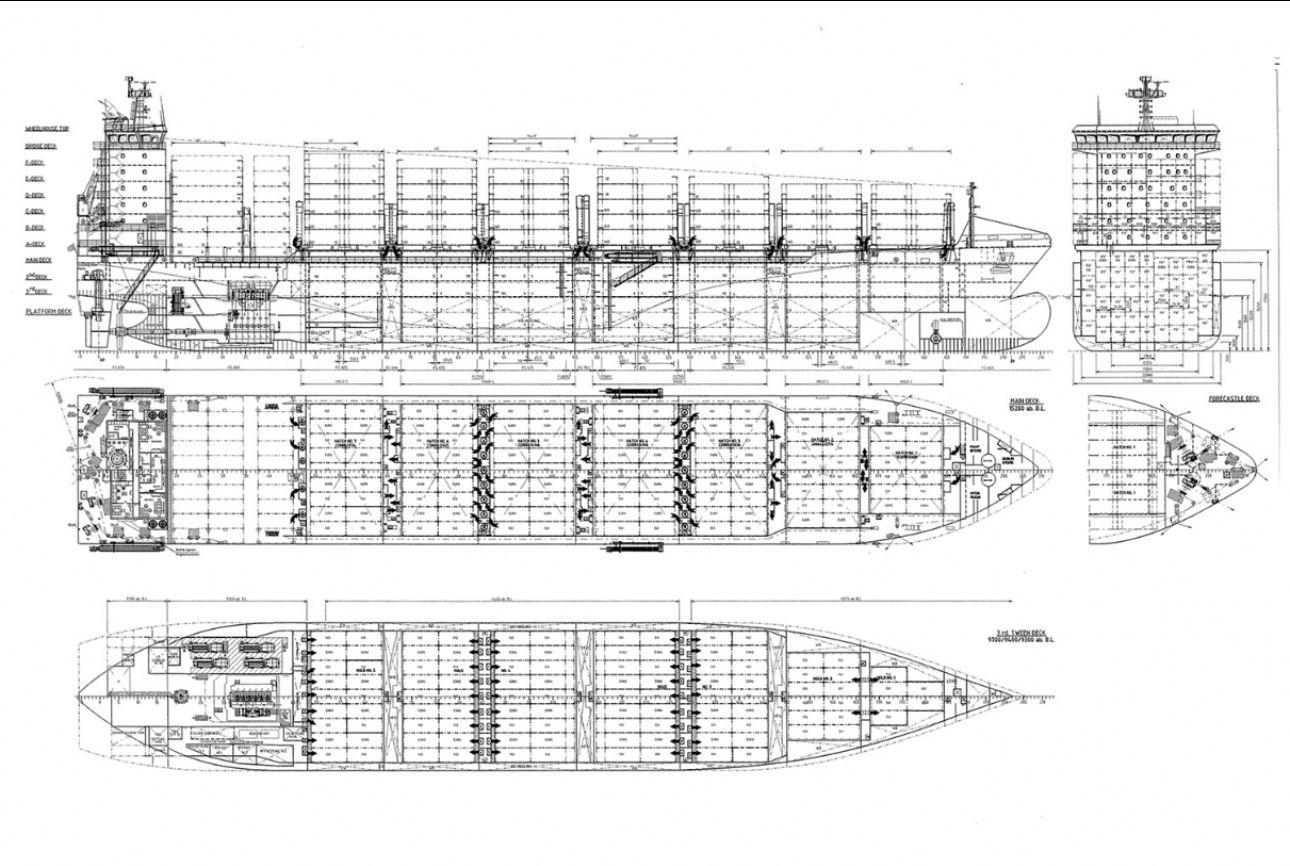
Across shipyards around the world, vessels are built that differ in size, purpose and level of complexity. Although design processes take place in different countries and cultural environments, they are all united by one common code of communication – the technical drawing.
business education maritime economy work at mare shipbuilding industry shipbuilding industry is awesome equipment and technology news14 october 2025 | 18:45 | Source: Gazeta Morska | Prepared by: Kamil Kusier | Print
fot. Marcin Ryngwelski / PGZ Stocznia Wojenna
For engineers and designers, it is the primary working tool. A Polish shipbuilder may struggle to hold a conversation with a colleague from South Korea, Qatar or Brazil. Yet the moment both of them look at a drawing, all language barriers disappear. Technical documentation becomes a universal language, where lines, symbols and projections replace words.
From “the Line” to a global standard
- Every student of naval architecture, marine engineering, mechanics or mechatronics learns technical drawing from day one – and this standard holds true everywhere in the world. And it’s not just theory; everyone must learn to draw by hand, reminds Marcin Ryngwelski, CEO of PGZ Naval Shipyard.
Older generations will remember the subject under its former name – Descriptive Geometry, informally called simply “The Line”. Demanding and unforgiving, it was a true test of precision and patience. Professors would have students redo the same drawing multiple times until absolute accuracy was achieved.
Thousands of drawings – one ship
Designing a vessel means working through hundreds, often thousands of drawings. The documentation covers everything from initial concept sketches to detailed production plans. Before any blueprint reaches the production hall, it undergoes rigorous verification and a multi-stage approval process. It’s this discipline that ensures every finished ship meets the highest standards of quality and safety.
A shared technical language of the industry
- Any drawing created by a Polish or Korean shipyard design office is perfectly understandable to both sides, regardless of native language. If our shipyard received documentation from international partners today, we could immediately begin calculations and production planning – because the standards are unified globally, emphasizes the CEO of PGZ Naval Shipyard.
This standardization enables seamless international collaboration. Polish shipyards frequently work on projects developed by foreign design offices. Thanks to the universal language of technical drawing, such contracts progress smoothly – unaffected by linguistic or cultural differences.
Series: Shipbuilding industry is awesome
This article is part of Daily Mare’s series showcasing the world of Polish shipyards. We offer an inside look at the everyday work of engineers and designers, the tools they rely on and the strategic importance of the shipbuilding industry for national security and the economy. The series draws inspiration from the insights and observations of Marcin Ryngwelski, CEO of PGZ Naval Shipyard.
see also
Buy us a coffee, and we’ll invest in great maritime journalism! Support Gazeta Morska and help us sail forward – click here!
Kamil Kusier
redaktor naczelny
comments
Add the first comment
see also
StartupHack 3.0 at GPNT: Space and maritime technologies at the core of innovation
Polish technology powers zero-emission public transport. AREX secures largest municipal contract
Defence.Hub strengthens capabilities in technologies supporting maritime infrastructure security
Hanseatic Global Terminals takes full ownership of Florida International Terminal
Aleksandra Kosiorek: The sea has always been a space of openness for us, and that will not change
Gdańsk to launch Baltic Sea monitoring center
Türkiye advances indigenous GNSS ambitions: what FGN-100-D3 means for the maritime sector
Lithium at the core. TKMS and E3 Lithium align on Canada’s submarine ambitions
Błażej Konkol appointed vice president for infrastructure at the Port of Gdańsk Authority
WB Group expands into Romania, strengthening presence in the Black Sea region
ADVERTISEMENT
ADVERTISEMENT