









Polish fighters intercept Russian Il-20 over the Baltic, the tenth such intercept this year
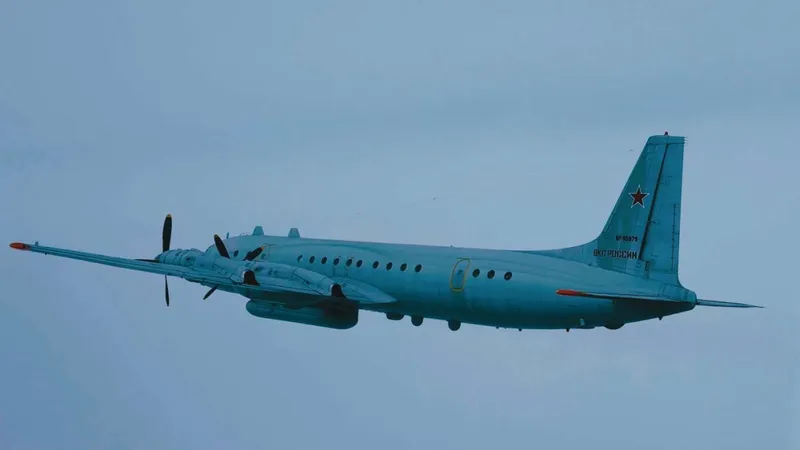
Polish fighter jets intercepted a Russian Il-20 reconnaissance aircraft over the Baltic on Thursday, flying around 40 km north of the port of Ustka without its identification devices switched on, Deputy Prime Minister and Defence Minister Władysław Kosiniak-Kamysz announced. Polish airspace was not violated. It was the tenth intercept of an aircraft of this type by Polish aviation this year and the second such intervention this week.
In brief
A Russian Il-20 reconnaissance aircraft without its identification devices switched on was intercepted by Polish fighter jets on Thursday about 40 km north of Ustka. Deputy Prime Minister Władysław Kosiniak-Kamysz said the aircraft posed a threat to civil aviation and that Polish airspace was not violated. Thursday's interception of the Il-20 is the tenth this year and the second this week, after an intervention on Monday, 31 August, about 30 km north of Łeba. According to the Operational Command of the Polish Armed Forces, the number of interceptions of Russian aircraft along NATO's eastern flank has increased by more than 250 percent.
An incident 40 km off Ustka
The defence minister announced the intercept on Thursday afternoon on social media, pointing directly to the danger posed by flights conducted without identification.
– Another incident over the Baltic involving a Russian Il-20 reconnaissance aircraft. 40 km north of Ustka our fighters intercepted a Russian aircraft which did not have its identification devices switched on and posed a threat to civilian aviation. There was no violation of Polish airspace – said Władysław Kosiniak-Kamysz.
The second intervention this week, the tenth this year
Thursday's event fits into a clear pattern. The previous intercept of a Russian reconnaissance aircraft over the Baltic took place on Monday, 31 August, around 30 km north of Łeba. Polish airspace was not violated on that occasion either. Earlier, Polish fighters intervened against Il-20 aircraft at the beginning of August, around 56 km north-west of Koszalin, in mid-July, when intercepts were reported three days in a row, and on 13 May. According to Poland's Armed Forces Operational Command, the number of intercepts of Russian aircraft along NATO's eastern flank has risen by more than 250 per cent.
What the Il-20 is and how an intercept works
The Il-20M, known under the NATO reporting name Coot-A, is an imagery and electronic reconnaissance aircraft built on the basis of the Il-18 airliner. Russian reconnaissance and combat aircraft regularly appear over the Baltic without filed flight plans and with their transponders switched off, which makes remote identification impossible and complicates the work of air traffic control. That is precisely why such flights pose a real danger to civilian aircraft using the same areas of airspace. According to experts, the Russians are in this way testing, among other things, the reactions of NATO states and their air defence systems.
Intercepting a foreign aircraft over international waters is a standard security procedure. It consists above all of the fighter pilots identifying the aircraft with optoelectronic systems and visual contact, attempting to establish communication, and escorting it out of the area of responsibility of Polish aviation. To this end the pilots may perform a range of manoeuvres, from closing in on the foreign aircraft to demonstrating their armament.
Source: Gazeta Morska · Compiled by: Kamil Kusier
Related articles
 Safety and rescue Polish SAR’s new rescue vessel Mistral launched at Kewatec in Finland
 Safety and rescue Icelandic Coast Guard and police delegation visits Polish Border Guard’s Maritime Division
 Safety and rescue Polish Navy helicopter evacuates man from Baltic platform 100 km off Władysławowo
 Navy and defence SNMG2 joins Allied warships in PASSEX as Italy's Mare Aperto 2026 gets under way
 Safety and rescue From lightships to solar power: 160 years of the Grundkallen light station
 Education 254 people, manikins and life rafts: Maritime University of Szczecin joins national CPR record attempt
Comments (0)
The discussion is moderated by the editors: a comment appears after review. Your e-mail address is not published.
Nobody has commented on this article yet.