









Poland and Sweden strengthen defence cooperation in the Baltic Sea
Poland and Sweden have announced plans to deepen their military cooperation in the Baltic Sea region. Joint capability development, coordinated defence procurement, and closer cooperation between the two countries’ defence industries are expected to strengthen regional security and contribute to building a new security architecture in the Baltic.
In brief
Deputy Prime Minister and Minister of National Defence Władysław Kosiniak-Kamysz met Swedish Minister of Defence Pål Jonson on 12 March 2026 at the Naval Port in Gdynia, announcing deeper military cooperation in the Baltic Sea. The talks covered joint capabilities, joint equipment purchases, cooperation between defence industries and protection of critical infrastructure. The command responsible for Baltic security is currently held by Germany for four years, after which Poland will take it over, followed by Sweden. Pål Jonson pointed to Russian drones violating airspace in the region.
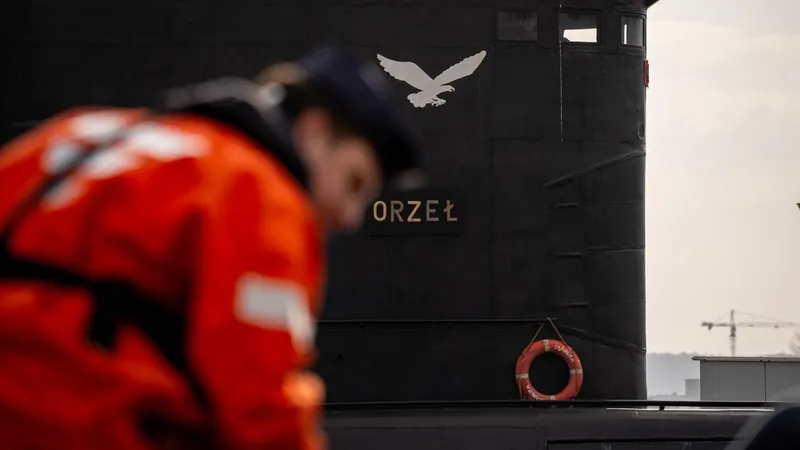
On 12 March 2026, at the Naval Port in Gdynia, Poland’s Deputy Prime Minister and Minister of National Defence Władysław Kosiniak-Kamysz met with Sweden’s Minister for Defence Pål Jonson. The meeting took place during a visit by a Swedish Navy submarine, whose entry into the port was described as a symbolic gesture highlighting the growing allied cooperation between the two countries.
– The new security architecture in the Baltic Sea is based on the Polish-Swedish alliance: building joint capabilities, joint procurement, cooperation and training. We have a great future ahead with Sweden. We will develop all these capabilities and skills. We will jointly invest in the defence industry and build a new security architecture in the Baltic Sea – said Deputy Prime Minister Władysław Kosiniak-Kamysz.
The Polish defence minister also pointed to the symbolic significance of the meeting, which coincided with the anniversary of Poland’s accession to NATO.
– The entry of a Swedish Navy submarine into the port of Gdynia has symbolic meaning. It reflects allied capabilities, cooperation and responsibility for one another. It is also a symbol of the agreement we concluded at the end of last year. We are meeting on a symbolic day as well. Twenty-seven years ago Poland joined the North Atlantic Alliance – NATO. Sweden is the country that most recently joined the Alliance and changed NATO’s strategic position. The Baltic Sea has become NATO’s internal sea – the minister stressed.
The talks also covered the future command structure responsible for security in the Baltic Sea region. Both Poland and Sweden are expected to take rotational leadership roles in the command responsible for the Baltic.
– We are also preparing to take command of the Baltic. For now, Germany holds the command for four years, followed by Poland and then Sweden. The Baltic Sea is not only a transport and trade route, but also one of NATO’s most sensitive areas in terms of threats from the Russian Federation – Władysław Kosiniak-Kamysz added.
Another key issue discussed during the meeting was the protection of critical infrastructure in the Baltic Sea, particularly in the context of hybrid threats and increased Russian activity in the region.
– We live in difficult and dangerous times. Russia is testing our unity and our determination. We see this also in your region, where Russian drones violate airspace and threaten security. Just two weeks ago we observed Russian drone activity in the region. Russia is testing us, but we remain united and that produces results. That is why it is so important that we continue to modernise our armed forces and strengthen NATO so that the Alliance remains capable of defending and protecting every part of its territory – said Sweden’s Minister for Defence Pål Jonson.
The meeting at the Naval Port in Gdynia was held in connection with the official state visit of the King and Queen of Sweden to Poland and aimed at strengthening the Polish-Swedish partnership in defence and security within the framework of the Baltic Sea Security Pact.
Source: Gazeta Morska · Compiled by: Kamil Kusier
Related articles
 Safety and rescue Polish SAR’s new rescue vessel Mistral launched at Kewatec in Finland
 Safety and rescue Icelandic Coast Guard and police delegation visits Polish Border Guard’s Maritime Division
 Safety and rescue Polish Navy helicopter evacuates man from Baltic platform 100 km off Władysławowo
 Navy and defence SNMG2 joins Allied warships in PASSEX as Italy's Mare Aperto 2026 gets under way
 Safety and rescue From lightships to solar power: 160 years of the Grundkallen light station
 Education 254 people, manikins and life rafts: Maritime University of Szczecin joins national CPR record attempt
Comments (0)
The discussion is moderated by the editors: a comment appears after review. Your e-mail address is not published.
Nobody has commented on this article yet.