









PGZ secures 120 billion zlotys in defense contracts and plans major rxpansion of production capacity
In a major announcement that underscores Poland’s growing defense capabilities, Polska Grupa Zbrojeniowa (PGZ) revealed it has signed approximately 50 large-scale contracts worth a total of PLN 120 billion over the past year. The Group is now preparing to significantly expand its production capacity, with a focus on armored vehicles, artillery systems, and air defense platforms.
In brief
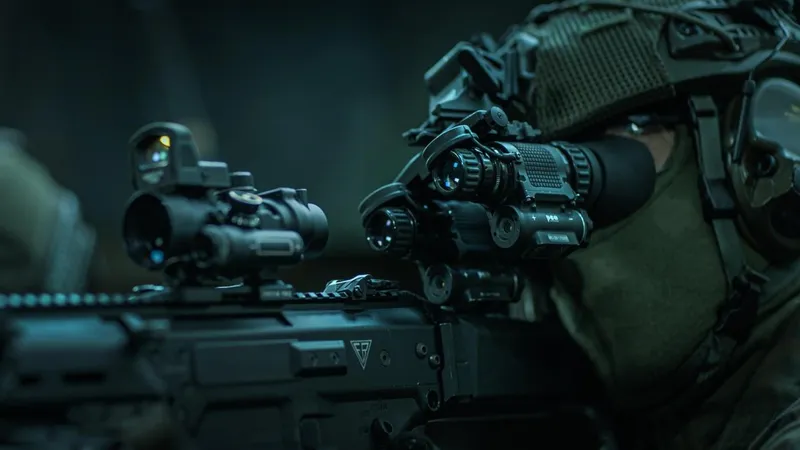
Polska Grupa Zbrojeniowa signed 50 large contracts worth a total of about 120 billion zlotys over the past year, acting CEO Arkadiusz Bąk said. The largest contracts concern air defence under the Narew programme, which provides for acquiring 23 batteries of 6 launchers each for CAMM and CAMM-ER missiles. Polska Grupa Zbrojeniowa plans to build a new Jelcz factory, with the company set to receive about 700 million zlotys for the expansion, and to restore tracked vehicle production at Bumar Łabędy.
During a recent press briefing, Acting CEO Arkadiusz Bąk outlined the company’s achievements and strategic plans following the departure of former CEO Krzysztof Trofiniak. Among the most high-profile contracts are those related to the Narew short-range air defense program, developed in cooperation with British partners. Under this program, the Polish Armed Forces are set to acquire 23 air defense batteries, each comprising six launchers for CAMM and CAMM-ER missiles.
Several PGZ subsidiaries play a central role in this endeavor, including PIT-RADWAR, Jelcz, and the Military Communications Works No. 1 (WZŁ-1), which are responsible for key components like fire control and reconnaissance systems.
In the land systems sector, PGZ continues to deliver Borsuk infantry fighting vehicles (IFVs), Krab self-propelled howitzers, and hundreds of heavy-duty military trucks produced by Jelcz. A recent contract for the delivery of 116 Borsuk IFVs marks a significant step in fulfilling the Polish military’s broader demand for up to 1,500 units across multiple configurations.
Given the current production load, PGZ is actively exploring diversification strategies across its manufacturing sites. Huta Stalowa Wola (HSW) remains heavily engaged in delivering not only Borsuk and Krab, but also mortar carriers (RAK), command and ammunition vehicles, and the ZSSW-30 unmanned turret system—already fielded on both Borsuk and Rosomak platforms.
One of the Group’s priorities is to revitalize production at Bumar Łabędy, a historic facility previously responsible for T-72 and PT-91 tanks. While earlier plans focused on a second Krab production line, PGZ now considers establishing production of the Universal Modular Tracked Platform (UMPG) there, forming the backbone of future armored systems.
Looking forward, PGZ is also preparing for next-generation platforms requested by the Polish Armed Forces, including the New Wheeled Armored Personnel Carrier (NKTO), envisioned to succeed the Rosomak, and the Heavy Infantry Fighting Vehicle, intended to operate alongside M1 Abrams tanks. In contrast, Borsuk is optimized for amphibious operations and will complement lighter platforms like the K2 and Leopard MBTs.
According to Bąk, two scenarios are currently under consideration for future development: conducting a full-scale R&D program using PGZ’s domestic resources, or entering a licensed production partnership with a foreign OEM. The decision will likely hinge on delivery timelines, as international collaboration may accelerate fielding capabilities.
As part of its long-term industrial strategy, PGZ also plans to establish a brand-new production facility for Jelcz vehicles. While the current Jelcz-Laskowice site is operating at full capacity, physical constraints within outdated buildings are hindering output. A completely new factory—location yet to be confirmed—would significantly boost Jelcz’s manufacturing capabilities. Additionally, PGZ plans to utilize the production capacity of Autosan in Sanok, also under HSW’s oversight.
Bąk emphasized that meeting the evolving needs of the Polish Armed Forces requires rapid scaling of domestic industrial capabilities: “Our teams are doing everything they can with existing infrastructure, but we must now build for the future.”
The announcements come amid a broader push by the Polish government to modernize its armed forces and strengthen the country’s defense industry through strategic investments and international collaboration.
Source: PAP / Gazeta Morska · Compiled by: Kamil Kusier
Related articles
 Navy and defence Norwegian submarine Utstein completes NATO patrol guarding offshore oil and undersea infrastructure
 Safety and rescue Polish SAR’s new rescue vessel Mistral launched at Kewatec in Finland
 Safety and rescue Icelandic Coast Guard and police delegation visits Polish Border Guard’s Maritime Division
 Safety and rescue Polish Navy helicopter evacuates man from Baltic platform 100 km off Władysławowo
 Navy and defence SNMG2 joins Allied warships in PASSEX as Italy's Mare Aperto 2026 gets under way
 Safety and rescue From lightships to solar power: 160 years of the Grundkallen light station
Comments (0)
The discussion is moderated by the editors: a comment appears after review. Your e-mail address is not published.
Nobody has commented on this article yet.